
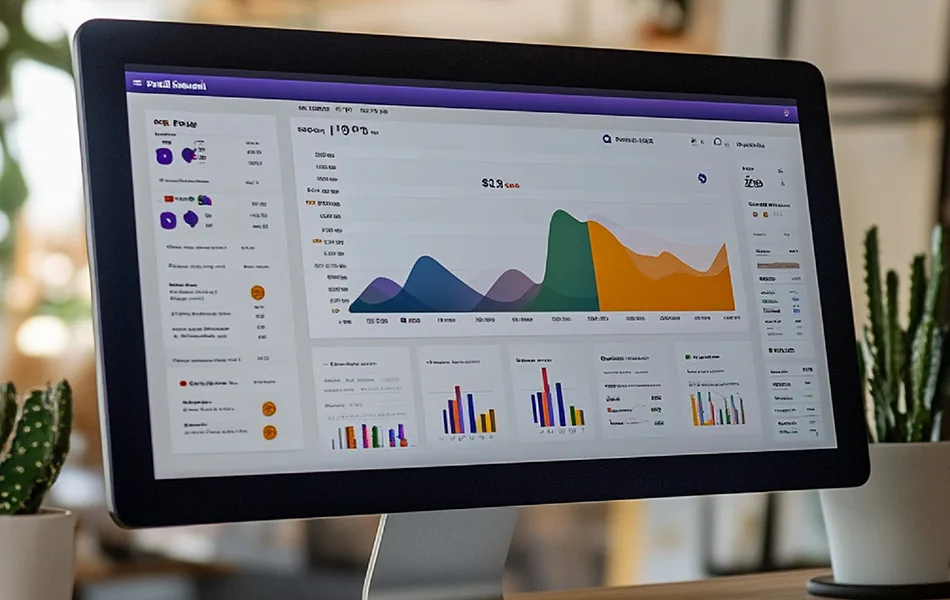
5 Ways To Make Brand Impact More Quantifiable
You’ve poured time, budget, and creative energy into brand-building efforts. But once the campaigns are live and content is out in the world, a recurring question often follows: Is this working?
For many marketing leaders, the answer feels elusive. Traditional branding has long been viewed as a soft science—a vital piece of the business puzzle, but not one that easily lends itself to hard numbers. But Maria Van, Director for EMEA at a global enterprise spanning 37 markets, disagrees. She argues that it’s not only possible to measure brand performance—it’s essential.
In her conversation with Semrush Enterprise, Maria lays out a modern framework for quantifying brand impact, urging marketers to abandon outdated thinking and adopt data-driven practices. This interview is a must-watch for CMOs, brand strategists, and digital marketers looking to link brand initiatives to real, measurable business value.
Watch the Interview
If you’ve ever struggled to connect top-funnel brand efforts to ROI—or convince stakeholders that your branding is doing more than “raising awareness”—Maria’s insights will arm you with data, structure, and language to shift the narrative.
The biggest mindset shift? Don’t treat a brand as a cost center—treat it as a performance asset.
Why Brand Needs Measurement More Than Ever
Maria begins with a compelling observation:
“Luxury brands win hearts with storytelling. Tech brands win trust with data. The most successful brands blend both.”
In today’s omnichannel landscape, where customer touchpoints span digital, physical, and everything in between, the ability to measure brand performance with accuracy is no longer optional. It’s the only way to justify spend, align teams, and drive growth.
Companies that lean into this kind of brand intelligence unlock:
- Executive buy-in through tangible outcomes.
- Cross-functional collaboration between brand, product, and growth teams.
- Stronger consumer loyalty built on both emotional and data-backed engagement.
To get there, Maria recommends anchoring brand strategy in five key practices that make the invisible visible.
Essential Methods for Measuring Brand Impact
1. Social Listening
Real-time feedback is the foundation of modern brand analytics. Social listening tools for marketing give brands immediate access to public sentiment—before, during, and after campaign launches.
With the right tools, you can track:
- Mentions across platforms.
- Topic and tone trends.
- Sudden spikes or drops in reputation.
These insights reduce dependency on slow, lagging brand studies. By using social listening tools for marketing, teams can identify issues early, optimize messaging, and stay culturally relevant—all while continuing to measure brand performance as it evolves.
2. Brand Perception Surveys
Next, Maria stresses the importance of brand perception survey strategies. While social listening tells you what people are saying, surveys tell you why.
Consider asking:
- How do audiences describe your brand in their own words?
- Which qualities do they associate with your competitors vs. you?
- What adjectives or emotions does your brand evoke?
This qualitative data builds a clearer understanding of market positioning and guides brand evolution. More importantly, incorporating structured brand perception survey strategies multiple times a year provides a baseline from which to track progress and quantify brand impact consistently.
3. Attribution Modeling
It’s time to move beyond last-click logic. Branding may live at the top of the funnel, but its impact cascades through every layer of customer interaction. That’s why brand attribution modeling is key.
Maria encourages teams to analyze:
- Video engagement depth: Did users watch the entire ad?
- Branded search lift: Did campaign exposure result in more searches for your name?
- GA4 insights: Can you trace long-term behavior back to brand touchpoints?
By embracing brand attribution modeling, marketers stop relying solely on direct conversions and begin to measure brand performance holistically across the journey.
4. Omnichannel Integration
Consumers don’t differentiate between digital and physical anymore—and neither should your analytics. Maria advocates for full omnichannel brand measurement.
Examples include:
- Mapping foot traffic during major online pushes.
- Measuring offline sales triggered by digital engagement.
- Leveraging QR codes to track conversion across media types.
Without true omnichannel brand measurement, brand insights remain fragmented. The goal is to connect impressions, actions, and outcomes in a unified view to accurately quantify brand impact.
5. Unified Experience Metrics
A brand isn’t just a logo or a voice. It’s the entire user experience. From downloads to checkouts, Maria recommends tracking metrics that reflect customer behavior across platforms.
These include:
- App installs during campaign windows.
- Patterns in website visits and bounce rates.
- Lead form submissions from brand content.
- In-store purchases tied to digital promos.
When these behaviors trend together, it signals that branding is doing more than setting a tone—it’s driving decisions. Integrated with brand attribution modeling and real-time social listening tools for marketing, these metrics bring depth to your brand ROI analytics.
Key Takeaways
In Maria’s words:
- “If you can measure it, you can manage it. And if you can manage it, you can scale it.”
- The new age of branding isn’t abstract—it’s accountable. Here’s what to remember:
- Quantifying brand impact brings brand closer to bottom-line conversations.
- Structured brand perception survey strategies uncover hidden strengths (or gaps).
- Modern brand attribution modeling allows marketers to see long-tail influence.
- True omnichannel brand measurement reflects how people actually engage today
- Continuous brand ROI analytics ensures brand is seen as a revenue driver, not a creative cost.
Partner with our Digital Marketing Agency
Ask Engage Coders to create a comprehensive and inclusive digital marketing plan that takes your business to new heights.
Contact Us
To support these goals, tools like Insights24 and MFour (offered by Semrush Enterprise) make real-time brand ROI analytics more accessible than ever. Insights24 provides instant visibility into sentiment shifts and trend forecasts, while MFour adds behavioral and location data to complete the brand intelligence picture.
Ready to turn your brand into a measurable growth engine? Partner with Engage Coders for data-driven digital strategies that connect creativity with real ROI.


