
Demand Generation vs. Lead Generation: A CMO’s Guide to Smarter Marketing
As a CMO, you’re juggling budgets, teams, and the pressure to deliver measurable growth. In the B2B world, two strategies often dominate the conversation: demand generation and lead generation. While both aim to fuel revenue, they play different roles in the marketing funnel. Misunderstanding their purposes can lead to wasted budgets or missed opportunities. This guide breaks down demand generation vs lead generation, offering practical insights to help startups, small businesses, enterprises, and e-commerce brands scale smarter. We’ll explore how to balance long-term brand building with immediate pipeline wins, optimize your marketing budget allocation, and navigate modern buyer behavior to drive results.
Whether you’re launching a new product or refining an existing strategy, understanding these approaches is key to lowering customer acquisition cost and building a sustainable B2B marketing funnel. Let’s dive in with a conversational, no-nonsense look at how to make these strategies work for you.
What Is Demand Generation?
Demand generation is about creating buzz and trust around your brand, especially at the top of funnel marketing. It’s not about pushing for a quick sale but about planting seeds that make prospects more likely to choose you when they’re ready to buy. Think of it as warming up the market—educating your audience, showcasing expertise, and building a reputation that sticks.
Core Elements of Demand Generation
Demand generation focuses on long-term engagement. Here’s what it involves:
- Valuable Content: Share ungated thought leadership content like blogs, videos, or social posts that solve problems without asking for contact info. For instance, a LinkedIn post on industry trends can position you as a go-to resource.
- Brand Visibility: Use brand awareness campaigns—think organic social media or SEO-driven articles—to reach broad audiences without a hard sell.
- Top-of-Funnel Engagement: Target prospects early in their journey, even if they’re just researching solutions.
- Scalable Reach: Boost organic branded search volume through consistent content across channels like YouTube or industry forums.
When to Prioritize Demand Generation
Demand generation shines in specific scenarios:
- Entering New Markets: If you’re launching a product or targeting a new audience, demand generation builds awareness from scratch.
- Rising Acquisition Costs: When customer acquisition cost creeps up, demand generation can nurture prospects organically, reducing reliance on pricey ads.
- Complex Sales Cycles: For SaaS demand generation or high-value B2B products, long-term nurturing is essential to earn trust.
- Building Authority: Establish your brand as a thought leader in competitive markets to stand out.
Tracking Demand Generation Success
Measuring demand generation isn’t as straightforward as counting leads, but it’s critical for long-term growth. Focus on:
- Organic Branded Search Volume: Are more people searching your brand name? That’s a sign your visibility is growing.
- Direct Traffic: Increased visits to your site without paid ads show brand recall.
- Sales Velocity Metrics: Look at how quickly prospects move through the B2B marketing funnel—faster movement signals effective nurturing.
- Engagement: Track time on site, social shares, or content downloads to gauge interest.
Pro tip: Use tools like Google Analytics or CRM dashboards to monitor these trends, but don’t obsess over short-term spikes. Demand generation is a marathon, not a sprint.
What Is Lead Generation?
Lead generation is all about capturing high intent leads ready to take action. It’s the bottom-of-funnel strategy that turns interest into tangible prospects—think names, emails, or demo requests. It’s tactical, measurable, and designed to feed your sales team with sales qualified leads.
Core Elements of Lead Generation
Lead generation is direct and conversion-focused. Here’s what it entails:
- Gated Assets: Offer eBooks, webinars, or trials in exchange for contact details.
- Clear CTAs: Use landing pages and forms optimized to convert visitors into leads.
- Immediate Goals: Target the small percentage of prospects ready to buy now.
- Targeted Campaigns: Leverage PPC, email marketing, or SEO to reach prospects with purchase intent.
When to Prioritize Lead Generation
Lead generation works best when:
- Brand Trust Exists: In mature markets, where your brand is known, lead generation capitalizes on existing awareness.
- Short Sales Cycles: For products with quick decisions, like affordable SaaS tools or e-commerce, lead generation drives fast conversions.
- Sales Teams Are Ready: A strong lead nurturing process ensures leads don’t go cold.
- Testing Campaigns: Use lead generation metrics like CPL to measure new messaging or audience segments.
Tracking Lead Generation Success
Lead generation is easier to measure thanks to its focus on conversions. Key metrics include:
- Cost Per Lead (CPL): Are your campaigns cost-effective? Compare CPL across channels to optimize spending.
- MQL-to-SQL Conversion: Track how many marketing-qualified leads become sales qualified leads.
- Conversion Rates: Measure form completions or demo requests to assess campaign performance.
- ROI: Calculate revenue generated from leads against campaign costs.
Be cautious: Over-focusing on CPL can lead to low-quality leads. Balance quantity with quality by prioritizing intent.
Demand Generation vs. Lead Generation: The Key Differences
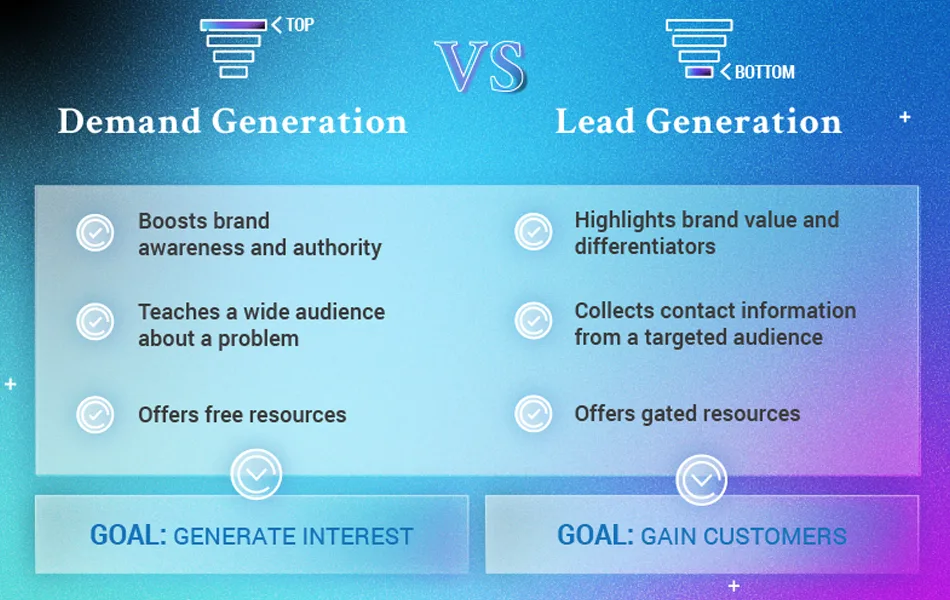
While both strategies drive revenue, they differ in focus, timeline, and execution. Here’s a quick comparison:
- Focus: Demand generation builds trust at the top of the funnel; lead generation captures high intent leads at the bottom.
- Timeline: Demand generation plays the long game; lead generation seeks quick conversions.
- Content: Demand generation uses ungated thought leadership content; lead generation relies on gated assets.
- Metrics: Demand generation tracks engagement and organic branded search volume; lead generation focuses on cost per lead optimization.
- Audience: Demand generation casts a wide net; lead generation targets ready-to-buy prospects.
Blending the Two for Maximum Impact
The magic happens when you combine demand creation strategies with pipeline development strategies. Here’s how to make them work together:
Start with Demand Generation
Build a foundation with content that educates and engages. For example, publish blog series or videos on industry challenges to boost brand awareness campaigns. This primes prospects for later lead generation efforts by making your brand familiar and trusted.
Pivot to Lead Generation
Once awareness grows, offer gated content like webinars or whitepapers to capture leads. Use retargeting ads or personalized emails to nurture these prospects, guiding them through the lead nurturing process.
Align Sales and Marketing
Seamless collaboration is key. Demand generation warms prospects, while lead generation delivers sales qualified leads. Regular syncs between teams ensure leads are followed up quickly, improving sales velocity metrics.
Smart Budget Allocation
Marketing budget allocation depends on your goals. Startups might lean 70:30 toward demand generation to build a presence, while enterprises with established brands can allocate more to lead generation for faster ROI. Adjust based on market maturity and sales cycle length.
Advanced Strategies for Demand Generation
To elevate your B2B demand generation tactics, go beyond the basics:
- AI-Driven Personalization: Use AI tools to tailor content to audience segments, like recommending relevant blogs based on browsing behavior.
- Zero-Party Data: Collect preferences directly from prospects (e.g., via quizzes) to create hyper-relevant content, boosting engagement.
- Account-Based Marketing (ABM) Integration: Pair demand generation with ABM to target high-value accounts with personalized campaigns, increasing relevance.
- Community Building: Engage audiences on platforms like Slack or LinkedIn groups to foster trust and loyalty.
Advanced Strategies for Lead Generation
Take lead generation to the next level with these approaches:
- Dynamic Landing Pages: Use tools to personalize landing pages based on visitor data, improving conversion rates.
- Intent-Based Targeting: Leverage platforms like LinkedIn to target prospects showing purchase intent, optimizing cost per lead optimization.
- Automated Nurturing: Set up drip campaigns with behavior-triggered emails to streamline the lead nurturing process.
- Cross-Channel Attribution: Use analytics to track lead sources across channels, ensuring accurate ROI measurement.
Navigating Attribution Challenges
One of the biggest hurdles in demand generation vs lead generation is attribution. Demand generation’s impact is often diffuse—how do you measure the value of a blog read six months ago? Lead generation is easier to track but can overemphasize last-click conversions. To tackle this:
- Use Multi-Touch Attribution: Track all touchpoints in the B2B marketing funnel to understand how demand generation influences later conversions.
- measuring sales velocity metrics or engagement, ensuring you’re not overestimating immediate conversions.
Technical Optimization for Success
A strong website is the backbone of both strategies. Optimize with:
- Mobile Responsiveness: Ensure seamless performance across devices, as mobile traffic dominates.
- Fast Load Times: Compress images and streamline code to keep users engaged.
- Keyword-Rich URLs: Use clear, descriptive URLs like /b2b-demand-generation to boost SEO.
- Structured Data: Add Article schema for richer search results.
- Internal Links: Guide users to related content to increase time on site.
Content Formats That Engage
Choose formats that resonate with your audience:
- Nek: How-to guides for practical top of funnel marketing content.
- Listicles: Scannable lists of B2B demand generation tactics or lead generation tips.
- Comparisons: Help prospects evaluate solutions, perfect for lead generation.
- Videos: Boost engagement with dynamic brand awareness campaigns.
Common Pitfalls to Avoid
- Keyword Stuffing: Don’t overdo keywords like demand generation vs lead generation. Keep it natural.
- Thin Content: Avoid short, low-value posts that don’t serve users.
- Over-Optimization: Ensure titles and headings remain user-friendly.
- Neglecting Nurturing: Follow up on leads to maintain momentum.
Partner with our Digital Marketing Agency
Ask Engage Coders to create a comprehensive and inclusive digital marketing plan that takes your business to new heights.
Contact Us
Conclusion
CMO marketing strategies thrive on blending demand and lead generation. Demand generation builds a trusted brand over time, while lead generation captures immediate opportunities. By balancing demand creation strategies with pipeline development strategies, leveraging advanced tactics like ABM and AI personalization, and optimizing your website, you can drive sustainable growth and maximize ROI in today’s competitive digital landscape.


