
Google Clarifies Why Link Disavow Files Aren’t Processed Immediately
Google has confirmed that submitting a link disavow file does not trigger immediate reprocessing of links. Additionally, the sequence of URLs and domains within the file holds no significance. Filing link disavows is often ineffective for handling spam links, but it can be a valuable tool for addressing unnatural links created by SEOs or publishers, which may require prompt action. The pressing question remains: how long does Google take to process these requests? Someone posed this exact query to John Mueller, and his response sheds light on how link disavows are managed internally at Google.
Understanding Google’s Link Disavow Tool
The disavow tool serves as a mechanism for publishers and SEOs to manage unwanted backlinks that they prefer Google not to count against them. Essentially, the publisher is renouncing those links.
Google introduced this tool in response to demands from SEO professionals who sought an efficient way to disavow paid links they were responsible for acquiring but could not remove from the sites where they were placed. Accessible via Google Search Console, the tool allows users to upload a spreadsheet listing URLs or domains from which they wish to disavow links in Google’s index.
According to Google’s official guidance, the disavow tool is intended for SEOs and publishers who need to disavow paid or otherwise unnatural links they have obtained and cannot remove. Google explicitly states that the majority of websites do not need to use this tool, particularly for low-quality links unrelated to their activities.
How Google Handles the Link Disavow Tool
A user recently asked John Mueller on Blue Sky about the specifics of how Google processes newly added links in a disavow file.
The question was:
“When we add domains to the disavow file, i.e., update the list, can I assume the new domains are treated separately as new additions?
Do you reprocess the entire file?”
John Mueller responded by clarifying that the order of domains and URLs in the file is irrelevant.
His explanation:
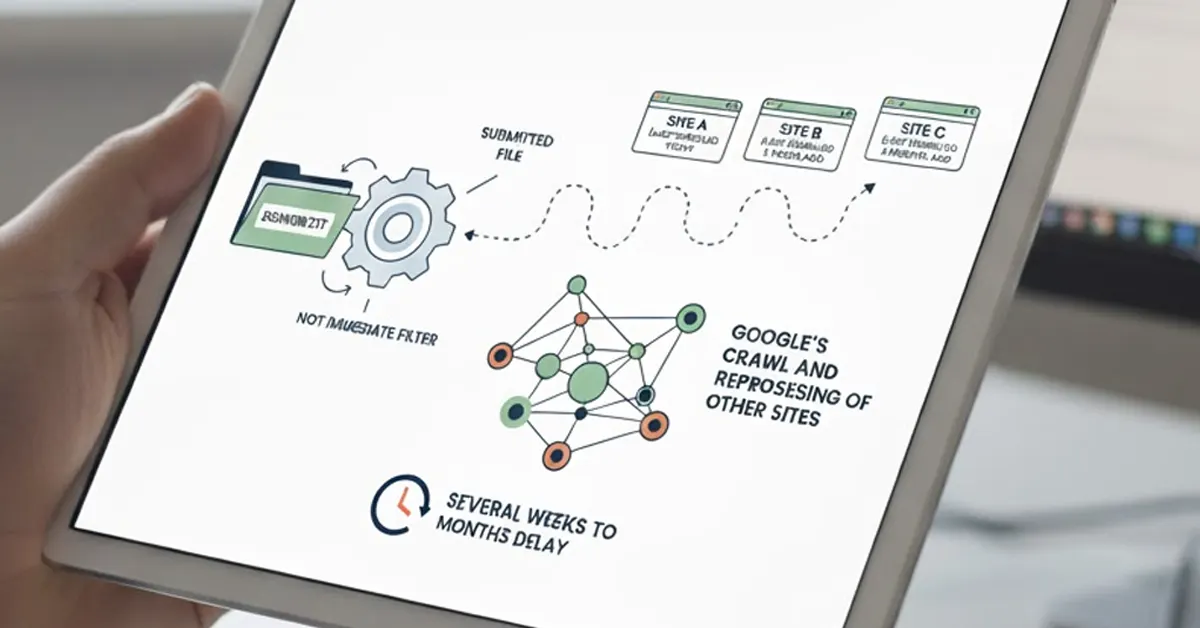
“The order in the disavow file doesn’t matter. We don’t process the file per-se (it’s not an immediate filter of ‘the index’), we take it into account when we recrawl other sites naturally.”
This statement is intriguing because it suggests that Google does not act on the link disavowfile immediately. Instead, the “filtering” of disavowed links occurs during subsequent crawling and indexing processes.
In simpler terms, the disavow tool does not trigger an instant reaction. Instead, the data within the file is incorporated during the regular course of crawling and indexing.
Key Takeaways
- Submitting a disavow file does not lead to immediate reprocessing of links.
- The arrangement of URLs or domains in the file is inconsequential.
- The filtering of disavowed links happens naturally as part of Google’s routine crawling process.
By understanding how Google processes link disavow files, SEO professionals and website owners can better manage their backlink profiles while adhering to SEO best practices.
Why Spam Links Matter in Google Search Ranking
Spam links can negatively impact your site’s Google Search ranking, especially if they violate Google’s guidelines. While Google’s algorithms are designed to ignore most low-quality links, unnatural or manipulative backlinks can still trigger manual actions. These penalties can severely affect your site’s visibility, making it crucial to address such issues promptly.
Using the disavow tool effectively requires understanding the context of your backlink profile. For instance, if you’ve participated in link schemes or purchased backlinks, these actions can lead to penalties unless mitigated through proper disavowal. Regularly auditing your backlinks and monitoring Google Search Console notifications can help identify potential risks before they escalate.
Algorithm Updates and Their Role in Crawling
Google frequently rolls out algorithm updates to refine its ability to detect and handle spam links. These updates aim to improve the accuracy of crawling and indexing, ensuring that only high-quality content ranks well in search results. By aligning your strategies with SEO best practices, you can minimize the risk of being affected by sudden ranking changes.
For example, core algorithm updates often emphasize the importance of natural backlinks and user-focused content. If your site relies heavily on artificial backlinks, it may lose visibility during these updates. Monitoring announcements from John Mueller or the Google Search Central Blog can provide early insights into upcoming changes and help you adapt proactively.
Partner with our Digital Marketing Agency
Ask Engage Coders to create a comprehensive and inclusive digital marketing plan that takes your business to new heights.
Contact Us
Final Insights
Managing your site’s backlink profile is an ongoing process that requires vigilance and strategic planning. Tools like the disavow tool and resources such as Google Search Console play a vital role in maintaining a healthy link profile. By staying informed about algorithm updates and adhering to SEO best practices, you can safeguard your site’s performance and achieve sustainable growth in Google Search ranking.


