
Subdomain or Subdirectory? What’s Best for Your Business
When you’re expanding your digital presence—whether it’s launching a blog, creating new tools, or entering international markets—how to structure website URLs becomes a pivotal decision. The choice between a subdomain or subdirectory for blog, ecommerce, or multilingual content can influence everything from SEO performance to technical maintenance.
It’s not just about URL aesthetics. It’s about performance, scalability, and your long-term vision.
In this guide, we’ll break down the subdomain vs subdirectory SEO debate and give you practical pointers to determine what fits best for your website.
What Is a Subdomain?
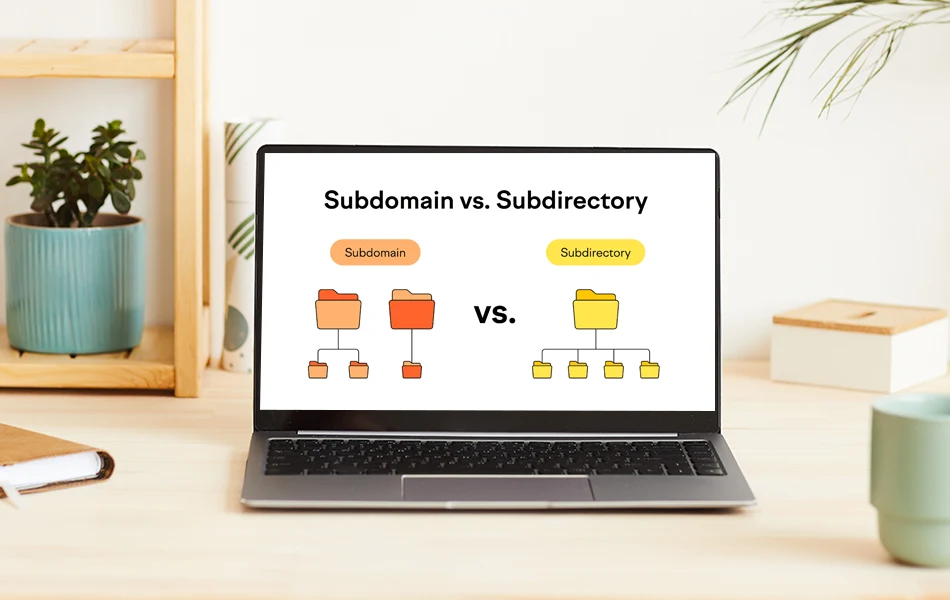
A subdomain acts as a separate subdivision of your main website, appearing before the root domain in the URL. For instance, if your main domain is example.com, a subdomain might look like blog.example.com.
Each subdomain can function independently. Brands like Velasca use them effectively—eu.velasca.com for Europe, uk.velasca.com for the UK—allowing regional customization while still connecting to the main brand.
SEO Impact of Subdomains
The SEO impact of subdomains is a common concern. Search engines often treat them as standalone sites, which means you’ll need to earn domain authority for each subdomain individually. While this can delay results, subdomains offer greater flexibility for teams, designs, and market-specific strategies.
What Is a Subdirectory?
A subdirectory (also called a subfolder) sits within your main domain—like example.com/blog. This keeps all content under one digital roof, passing link equity across all pages.
For example, many SaaS and content-driven websites use this structure to organize different types of content:
- example.com/tools for product tools
- example.com/templates for downloadable resources
- example.com/guides for educational material
The major subdirectory SEO advantages include streamlined analytics and faster authority building across content.
How Subdirectories and Subdomains Affect SEO
Let’s look at how these structures play out in the real world when it comes to SEO.
Link Equity and Website Authority
Subdirectories benefit from consolidated link equity. A backlink to one page strengthens the entire domain. This gives subdirectories an edge when building topical authority quickly.
By contrast, subdomains must build credibility independently. This means every subdomain or subdirectory for blog content should be backed by a distinct link-building strategy when hosted on a subdomain.
Ranking Potential
In general, subdirectory SEO advantages often show quicker gains in search rankings because of the shared domain authority.
However, subdomains are no slouch. With the right backlinks and content depth, they can climb the ranks just fine. Just expect a longer runway.
Search Performance Analytics
From a tracking perspective, subdirectories shine. All your performance data lives in one Google Search Console property, allowing a unified view.
Subdomains require separate GSC setups. While this may seem tedious, it can be beneficial when to use subdomains is justified—like for different products or markets needing isolated metrics.
International SEO Considerations
International SEO subdomain vs subfolder choices can make or break global campaigns.
Subdirectories with hreflang tags support seamless multilingual strategies within a unified architecture. But if your offerings differ widely by region—or you need unique content, currencies, or language rules—subdomains are your friend.
Subdomains vs. Subdirectories: 5 Critical Factors to Consider
Let’s now break it down to five core areas that can guide your decision.
1. Business Objectives
If your new section is closely tied to your core offerings—say, adding a resource hub—opt for a subdirectory. But if it’s a separate service line or regional version with distinct branding, a subdomain fits better. Knowing how to structure website URLs around your business vision is key to future-proofing.
2. Technical Setup
Think about your CMS, server limitations, and tool stack. Subdirectories are easier if everything is centralized. Subdomains allow for modular setups—ideal when to use subdomains across multiple departments or vendors.
3. Analytics and Tracking
Unified performance tracking? Subdirectory wins. But if your team wants to split analytics for individual sections, especially in international SEO subdomain vs subfolder scenarios, go with subdomains.
4. Team Structure
Subdirectories suit centralized content teams, while subdomains benefit large teams or external agencies who need their own playground. Again, a technical and logistical decision as much as an SEO one.
5. Scalability
Planning new offerings down the line? Subdomains give each product or brand room to grow on its own terms. But if you’re sticking to your main niche and just scaling content, subdirectories are a smart choice.
Common Reasons to Use Subdomains
Still unsure when to use subdomains? These use cases will clarify things:
International Websites
Brands like MyProtein use subdomains to serve localized versions in different languages—us.myprotein.com, au.myprotein.com, etc. This allows for targeted SEO campaigns without muddying a single domain.
Branded Properties
Companies with multiple core offerings—like Intuit with turbotax.intuit.com and quickbooks.intuit.com—prefer subdomains. It creates clarity while still rooting everything in the main brand.
Varied Technical Setups
When different teams or services require separate backends, subdomains are ideal. Think Adobe: help centers, product suites, and creative libraries—all structured separately. If how to structure website URLs for technical independence is your concern, subdomains solve it.
Common Reasons to Use Subdirectories
Looking to stay within a single domain? Then these subdirectory cases apply to you:
Simple Website Structure
Many modern websites organize tools, AI features, and use cases under one domain using subdirectories—example.com/tools, example.com/ai, example.com/use-cases. It keeps navigation intuitive and content consolidated.
Theme-Based Content Hubs
Subdirectories shine for creating topic-based resources. Educational hubs, knowledge bases, or SEO-focused learning centers are often organized this way to support topical authority and deeper user journeys.
Ecommerce Product Categories
Retailers frequently break down categories using subdirectories—like site.com/c/mens-clothing, site.com/c/camping. This helps both users and search engines understand the hierarchy.
So if you’re wondering about the best URL structure for SEO for ecommerce, subdirectories often win.
Subdirectory vs. Subdomain: What’s the Best Fit for Your Needs?
There’s no one-size-fits-all answer. But here’s a guideline:
Choose subdirectories for quicker SEO wins, centralized tracking, and content closely tied to your brand.
Opt for subdomains if you’re launching independent offerings, targeting global markets, or using varied tech stacks.
Both approaches have merit—it depends on your priorities.
No matter where you land in the subdomain vs subdirectory SEO conversation, just remember: your structure should align with your goals, team, and tech—not just trends.
Partner with our Digital Marketing Agency
Ask Engage Coders to create a comprehensive and inclusive digital marketing plan that takes your business to new heights.
Final Thoughts
Choosing between a subdomain and a subdirectory isn’t just an SEO decision—it’s a strategic one that affects branding, performance, and long-term scalability. While subdirectories offer faster SEO gains, subdomains provide structural flexibility. Evaluate your goals, resources, and growth plans carefully to pick the best URL structure for SEO that aligns with your business vision.
Want to rank higher and get more customers? Let Engage Coders handle your SEO and grow your business with smart, results-driven strategies. Get started today!


