
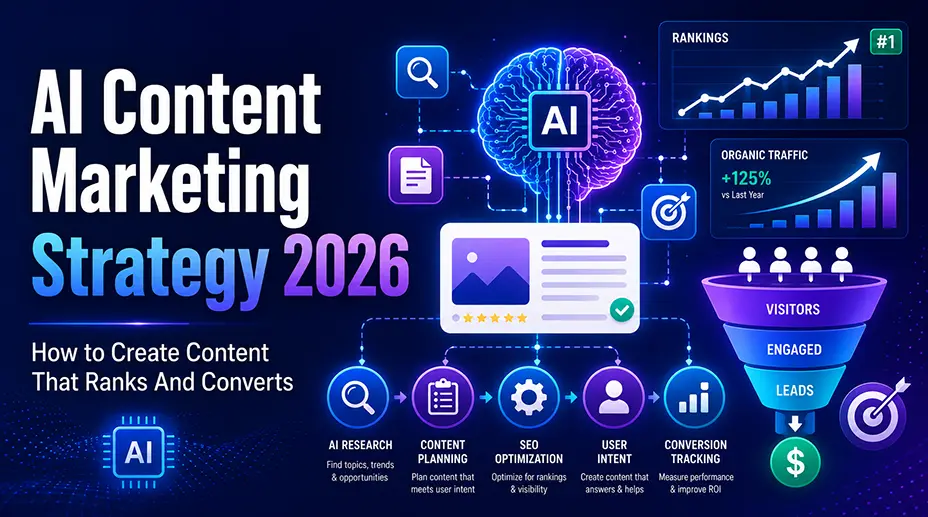
AI Content Marketing Strategy 2026: How to Create Content That Ranks And Converts
For years, content marketing success was measured by rankings, traffic, and clicks. In 2026, visibility extends far beyond traditional search.
In today’s content marketing AI era, buyers increasingly rely on AI-powered search, answer engines, and digital assistants to research solutions and make decisions. Instead of browsing multiple websites, they expect immediate, trusted answers.
That shift demands a different approach. A successful AI content marketing strategy 2026 is not just about ranking on Google. It’s about becoming a source that AI platforms cite, recommend, and trust. Brands that adapt can strengthen authority, improve visibility across emerging search experiences, and generate more qualified opportunities.
This guide explores how to build content that ranks, gets cited, and converts in an AI-driven search landscape.
Table of Contents
- Why Traditional Content Marketing Is Losing Effectiveness in the AI Era?
- What is an AI Content Marketing Strategy in 2026?
- What is the New Visibility Framework? (SEO, AEO, GEO and AgO)
- Why Retrieval Demand Matters More Than Search Volume?
- How Generative Intent is Changing Content Strategy?
- The Role of AI-Assisted Content Creation
- Measuring Content Marketing ROI in an AI-Driven Market
- The Future of Content Marketing Belongs to Trusted Sources
Why Traditional Content Marketing Is Losing Effectiveness in the AI Era?
Show readers that the problem is not content production.
The problem is changing discovery behaviour.
For years, marketers focused on a simple formula: publish content, rank in search results, attract traffic, and convert visitors into customers. That approach worked when buyers actively explored multiple websites before making a decision.
Today, the buying journey looks very different.
In the content marketing AI era, consumers increasingly rely on AI-generated summaries, answer engines, and digital assistants to evaluate products, compare services, and find solutions. Instead of clicking through several websites, users often receive a single recommendation or a condensed answer generated from multiple sources.
This shift creates a new challenge for brands. Content can still be accurate, valuable, and well-optimised, yet receive fewer visits because users never leave the AI interface. As AI systems become the primary gateway to information, visibility depends less on earning a click and more on becoming a trusted source that AI platforms reference and recommend.
The consequences extend beyond traffic. AI-driven discovery is reshaping how people research, compare options, and make purchasing decisions. Brands that fail to adapt risk becoming invisible during critical moments of the buyer journey, even when their content ranks well in traditional search.
Key Changes Driving This Shift
- AI-generated answers reduce the need to visit multiple websites.
- Recommendation engines increasingly influence buying decisions.
- Consumers expect faster, more direct answers.
- Search behaviour is shifting from browsing to asking.
- Brand visibility is becoming just as important as rankings.
The question is no longer whether your content ranks on Google. The question is whether AI systems recognise your content as credible enough to cite, recommend, and surface when potential customers are looking for answers.
What is an AI Content Marketing Strategy in 2026?
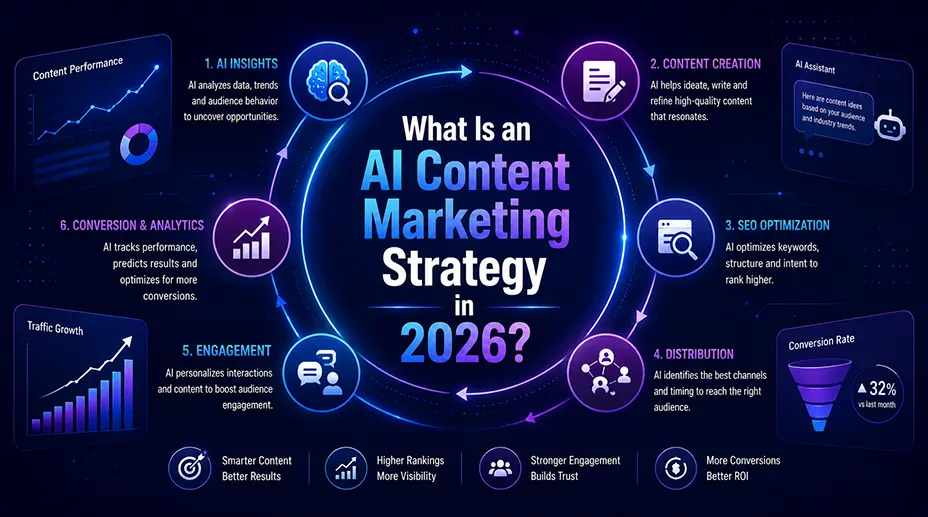
An effective AI content marketing strategy 2026 goes beyond creating content for traditional search engines. It focuses on making your brand visible wherever people seek information, whether through Google, AI-powered search experiences, answer engines, or emerging AI assistants.
For years, content marketing strategies were built around a single objective: rank higher in search results and attract more website traffic. While search visibility remains important, the rise of AI-generated answers is changing how people discover information and evaluate businesses.
Today, content must do more than earn a click. It must provide clear, credible, and structured information that AI systems can understand, reference, and recommend.
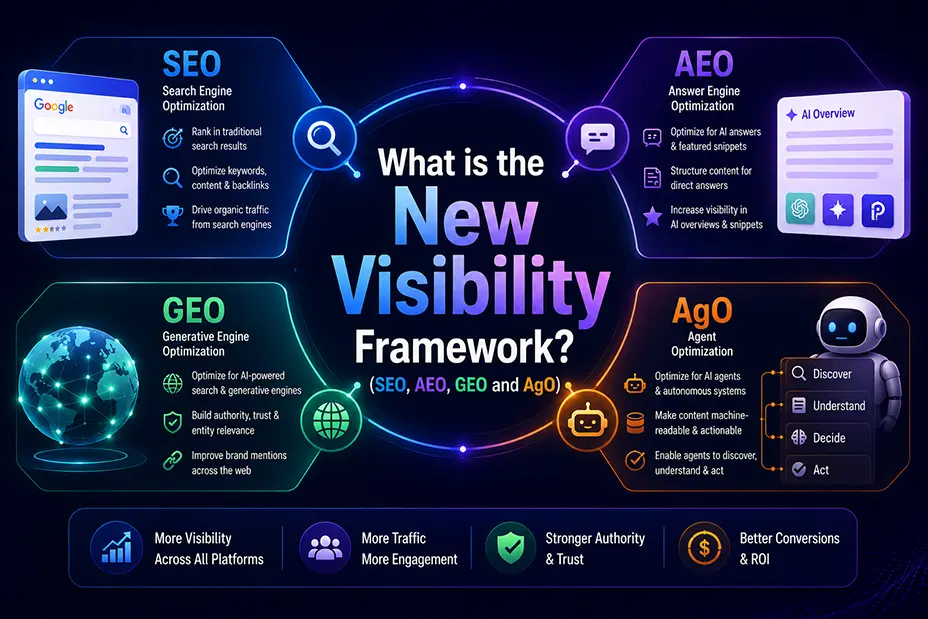
This shift has given rise to a new visibility framework that extends beyond traditional SEO.
SEO: Getting Found in Search Results
Search Engine Optimisation (SEO) remains the foundation of digital visibility. It helps businesses rank for relevant searches, attract organic traffic, and build authority within their industry.
Strong SEO still matters because AI systems often rely on trusted, high-ranking content when generating answers and recommendations.
AEO: Getting Cited in AI Answers
Answer Engine Optimisation (AEO) focuses on helping content appear in AI-generated responses.
Rather than simply ranking on a search results page, AEO aims to position your content as a trusted source that answer engines can reference when responding to user questions.
Content that answers specific questions clearly, provides expert insights, and demonstrates credibility is more likely to earn visibility in AI-powered search experiences.
GEO: Getting Recommended by Generative Search
Generative Engine Optimisation (GEO) expands on AEO by focusing on how AI systems evaluate and recommend information.
Instead of retrieving a list of links, generative search platforms analyse multiple sources and create a single response. Brands that consistently publish authoritative, well-structured, and evidence-backed content are more likely to become part of those generated recommendations.
In practical terms, GEO focuses on becoming a source AI trusts rather than simply a page that ranks.
AgO: Preparing for Agent-Driven Discovery
Agent Optimisation (AgO) represents the next stage of digital visibility.
As AI agents become more capable of researching products, comparing solutions, and assisting with purchasing decisions, businesses will need content that supports these interactions. Rather than influencing only search rankings, brands will need to influence how AI agents evaluate, select, and recommend options on behalf of users.
While this shift is still developing, it highlights a growing reality: visibility is moving beyond search and into AI-mediated decision-making.
The New Goal of Content Marketing
The most successful brands are no longer creating content solely to rank for keywords. They are building content ecosystems designed to rank in search, earn citations in AI answers, appear in generative recommendations, and remain visible as AI agents become part of the buying journey.
That is the foundation of a modern AI content marketing strategy 2026. It combines SEO, AEO, GEO, and AgO into a unified approach that helps businesses maintain visibility, authority, and conversion opportunities as digital discovery continues to evolve.
What is the New Visibility Framework? (SEO, AEO, GEO and AgO)
For years, digital visibility was largely a search engine challenge. Businesses invested in rankings, backlinks, and keyword targeting because appearing on the first page of Google often determined who earned traffic and who was overlooked.
That model is expanding.
Today’s digital landscape requires brands to think beyond rankings alone. Visibility now exists across search engines, answer engines, generative platforms, and emerging AI agents. The businesses that maintain authority in this environment understand that discovery happens across multiple layers, each influencing how customers find and evaluate information.
SEO Gets You Found
Search Engine Optimisation remains the foundation of online visibility.
When potential customers search for solutions, products, or services, strong SEO helps your content appear in relevant search results. It strengthens authority, drives organic traffic, and creates opportunities to enter the buyer’s research process.
Despite rapid advances in AI search, SEO remains critical because many AI systems still rely on trusted web content as part of their information retrieval process. Businesses that ignore SEO often struggle to establish the authority needed to compete elsewhere.
The objective is straightforward: become visible when people search.
AEO Gets You Quoted
Answer Engine Optimisation focuses on becoming part of the answer itself.
Instead of presenting users with a list of links, answer engines increasingly provide direct responses to questions. Whether someone asks about marketing trends, software recommendations, or business strategies, AI systems now generate summaries using information gathered from trusted sources.
This creates a new opportunity.
Brands that publish clear, authoritative, and well-structured content are more likely to be referenced when AI platforms generate responses. The goal shifts from earning a click to earning a citation.
The objective is no longer just visibility. It is credibility.
GEO Gets You Recommended
Generative Engine Optimisation takes visibility one step further.
Generative platforms do more than answer questions. They synthesise information, compare options, and help users make decisions. In many cases, they influence which brands, products, or solutions receive consideration before a user ever visits a website.
This means content must demonstrate expertise, originality, and trustworthiness. Generic information is easy for AI systems to replicate. Unique insights, practical experience, and evidence-backed perspectives are far more valuable.
Businesses that consistently publish authoritative content increase their chances of becoming part of AI-generated recommendations rather than simply appearing as another source.
The objective is to become a preferred source of information.
Get a Custom AI Content Strategy for Your Business
Build authority, visibility, and sustainable growth in the AI era.
Free Consultation
AgO Gets You Selected
Agent Optimisation represents the next evolution of digital visibility.
As AI agents become more capable of researching options, comparing vendors, and assisting with transactions, businesses will need to think beyond search and recommendation. The challenge will be ensuring that AI systems understand not only what a company offers but also why it should be chosen.
In practical terms, this means building strong brand authority, maintaining accurate digital information, and creating content that clearly communicates expertise, value, and trust signals.
While widespread agent-driven purchasing is still emerging, forward-thinking businesses are already preparing for a future where AI agents influence decisions on behalf of customers.
The objective is simple: become the option AI systems confidently select.
Visibility Is No Longer a Single Channel Strategy
The most successful brands are not choosing between SEO, AEO, GEO, or AgO. They are building authority across all four layers.
SEO helps people discover you. AEO helps AI platforms reference you. GEO helps AI systems recommend you. AgO helps position your business for a future where intelligent agents increasingly shape purchasing decisions.
Together, these frameworks create a more resilient approach to digital visibility, ensuring your brand remains discoverable as search behaviour, customer expectations, and AI technologies continue to evolve.
Why Retrieval Demand Matters More Than Search Volume?
Most content strategies still revolve around one question: How many people search for this topic each month?
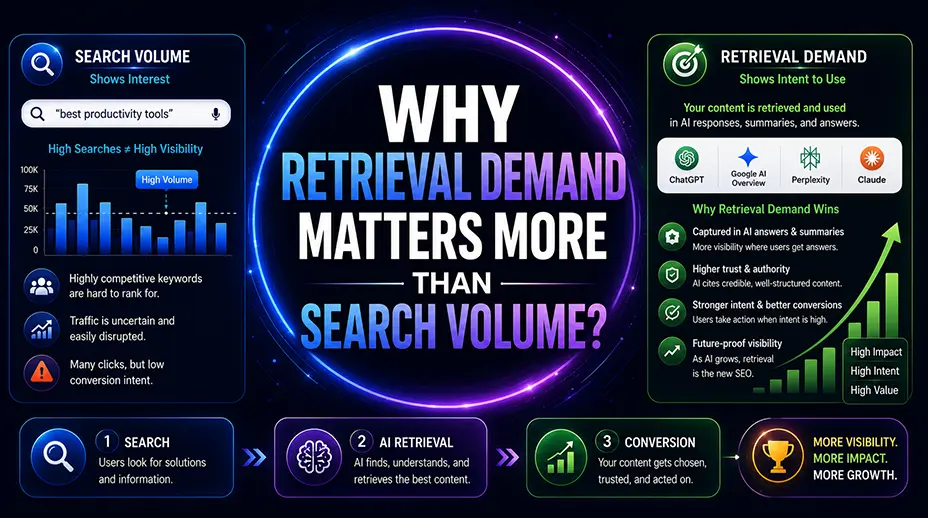
While search demand remains valuable, AI-powered discovery introduces another factor that many businesses are not measuring: retrieval demand.
Retrieval demand refers to how often AI systems retrieve, reference, summarise, or recommend your content when responding to user queries. As answer engines and generative search platforms become part of the buying journey, visibility increasingly depends on being selected as a source, not just ranking for a keyword.
A page can generate modest traffic while still influencing thousands of decisions if AI platforms consistently use it to answer questions, compare solutions, or provide recommendations.
This shift changes how businesses evaluate performance.
When measuring content marketing ROI 2026, rankings and traffic still matter, but they should be viewed alongside metrics such as:
- AI citations
- Recommendation frequency
- Brand mentions in AI-generated responses
- Assisted conversions
- Pipeline contribution
The objective is no longer limited to earning clicks. The objective is becoming a trusted source that AI systems repeatedly surface when users are researching products, services, and solutions.
In traditional search, visibility was measured by rankings. In generative search, visibility is increasingly measured by retrieval and recommendation.
How Generative Intent is Changing Content Strategy?
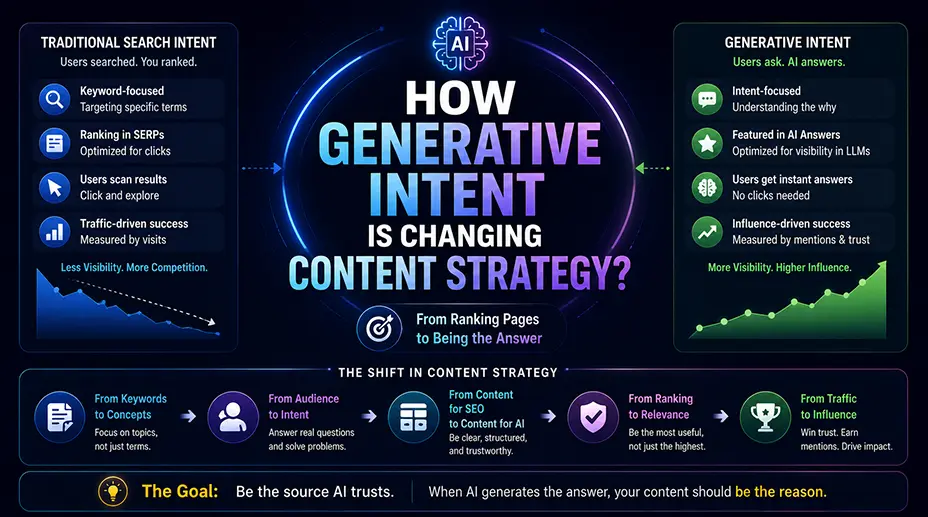
Traditional SEO focused on matching keywords. Generative search focuses on solving problems.
Today, users ask AI platforms to compare options, recommend solutions, and provide strategic guidance. As a result, a successful content strategy for AI search focuses on answering complex questions rather than targeting isolated keywords.
| Query Type | What Users Want | Content That Performs Best |
|---|---|---|
| Decision-Based Queries | Help making a choice | Decision guides, pros and cons, expert insights |
| Comparative Queries | Compare options | Side-by-side comparisons and use cases |
| Recommendation Queries | Find the best solution | Evidence-backed recommendations |
| Strategic Planning Queries | Build a future plan | Frameworks, roadmaps, and actionable advice |
The shift is simple. Instead of creating content around keywords alone, businesses need content that helps users evaluate, decide, and take action. That’s the type of content AI platforms are increasingly choosing to surface and recommend.
The Role of AI-Assisted Content Creation
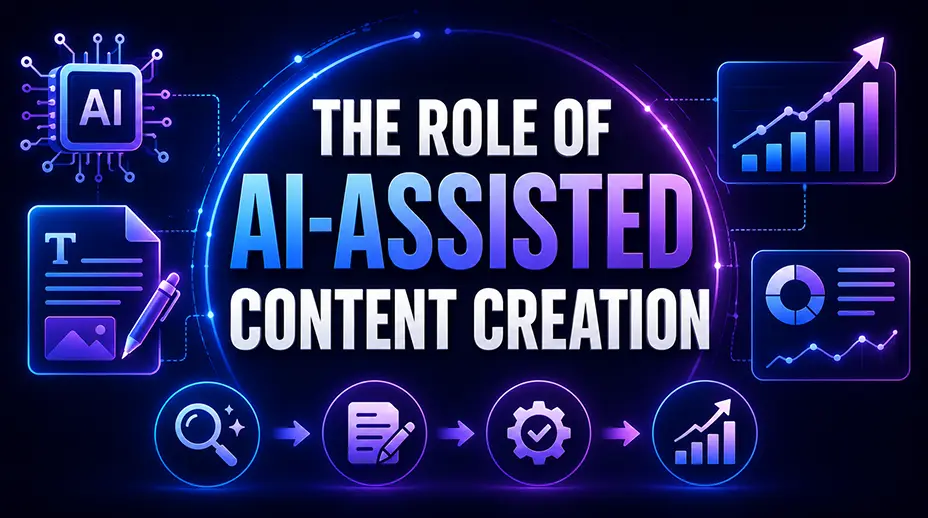
The most effective organisations use AI-assisted content creation to accelerate research and drafting while relying on human expertise for strategy, judgement, and originality.
AI Accelerates
- Research
- Outlining
- Drafting
- Content optimisation
Humans Differentiate
- Strategic thinking
- Industry expertise
- Customer insights
- Original perspectives
Why AI Cannot Replace Original Expertise
AI can generate content. It cannot generate experience. As content becomes easier to produce, unique expertise becomes more valuable. The brands that stand out will be those offering insights that AI cannot simply pull from existing sources.
Measuring Content Marketing ROI in an AI-Driven Market
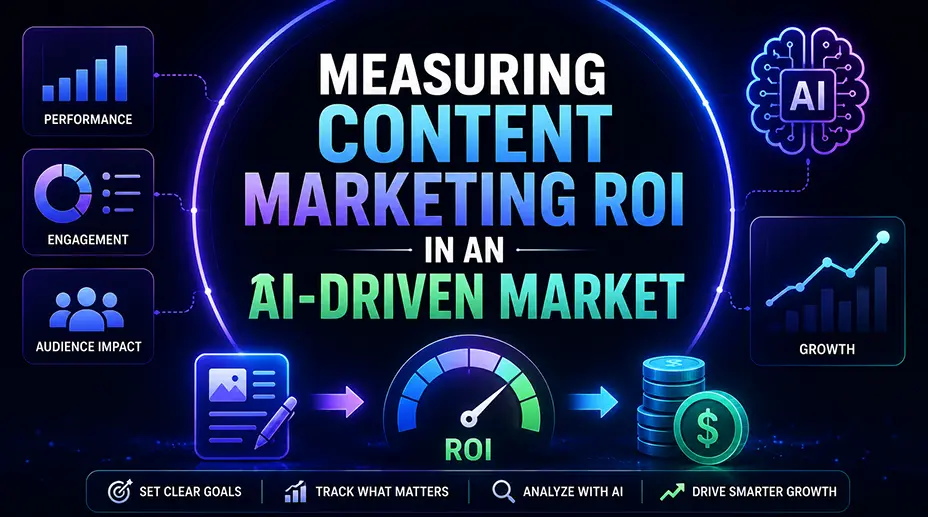
Measuring content marketing ROI 2026 requires looking beyond traffic and rankings. As AI becomes part of the discovery process, businesses need to understand how content influences visibility, trust, and conversions.
An effective AI content strategy USA businesses can depend on should track:
- Organic traffic, rankings, and engagement
- AI citations, mentions, and recommendations
- Qualified leads and conversion rates
- Pipeline contribution and attributed revenue
The most valuable content is not always the content generating the most clicks. It is the content that consistently influences buying decisions and contributes to measurable business growth.
The Future of Content Marketing Belongs to Trusted Sources
The rules of content marketing are changing. Rankings still matter, but they are no longer the only measure of success. As AI-powered search, answer engines, and intelligent agents become part of the buying journey, brands must focus on creating content that earns trust, demonstrates authority, and influences decisions wherever discovery happens.
A successful AI content marketing strategy 2026 is built around visibility, credibility, and measurable business outcomes. Businesses that invest in original expertise, structured content, and a strong content strategy for AI search will be better positioned to remain discoverable as search behaviour continues to evolve.
Whether you’re refining an existing content programme or building a new strategy for the AI era, Engage Coders can help you create a framework designed for sustainable growth.
Contact Engage Coders today for a free consultation and discover how a tailored AI content strategy can help your business increase visibility, strengthen authority, and generate more qualified opportunities.


