

AI Search Trends You Should Know in 2026 and How to Adapt Them Effectively!
AI has rewritten the rules of online discovery. Search is no longer a mechanical process of matching keywords. Rather, it’s evolving into a deeply intuitive exchange between humans and intelligent systems. The global AI search engine market is rapidly expanding, with an estimated value of approximately $18.28 billion in 2025, projected to reach over $50 billion by 2033.
In 2026, the way people find, understand, and act on information will depend less on search bars and more on context, intent, and dialogue.
For brands and businesses, this shift means rethinking everything from how content is created to how visibility is built. Instead of chasing algorithms, the focus now is on building trust with an AI that understands audiences more deeply than ever before.
Key Takeaways:
- AI is transforming how users search and interact with information.
- Multimodal and structured searches are redefining visibility.
- Visibility metrics now include AI citations and mentions.
- Clear, factual, and adaptable content wins in AI-driven search.
Below, we explore top AI Search Trends in 2026 and how you can position yourself to thrive in this new landscape:
Table of Contents
1. Search Queries Are Getting Longer and More Detailed
Online searches are no longer short or surface-level. With AI now delivering complete answers, users are moving away from quick keyword fragments and toward more detailed, conversational questions.
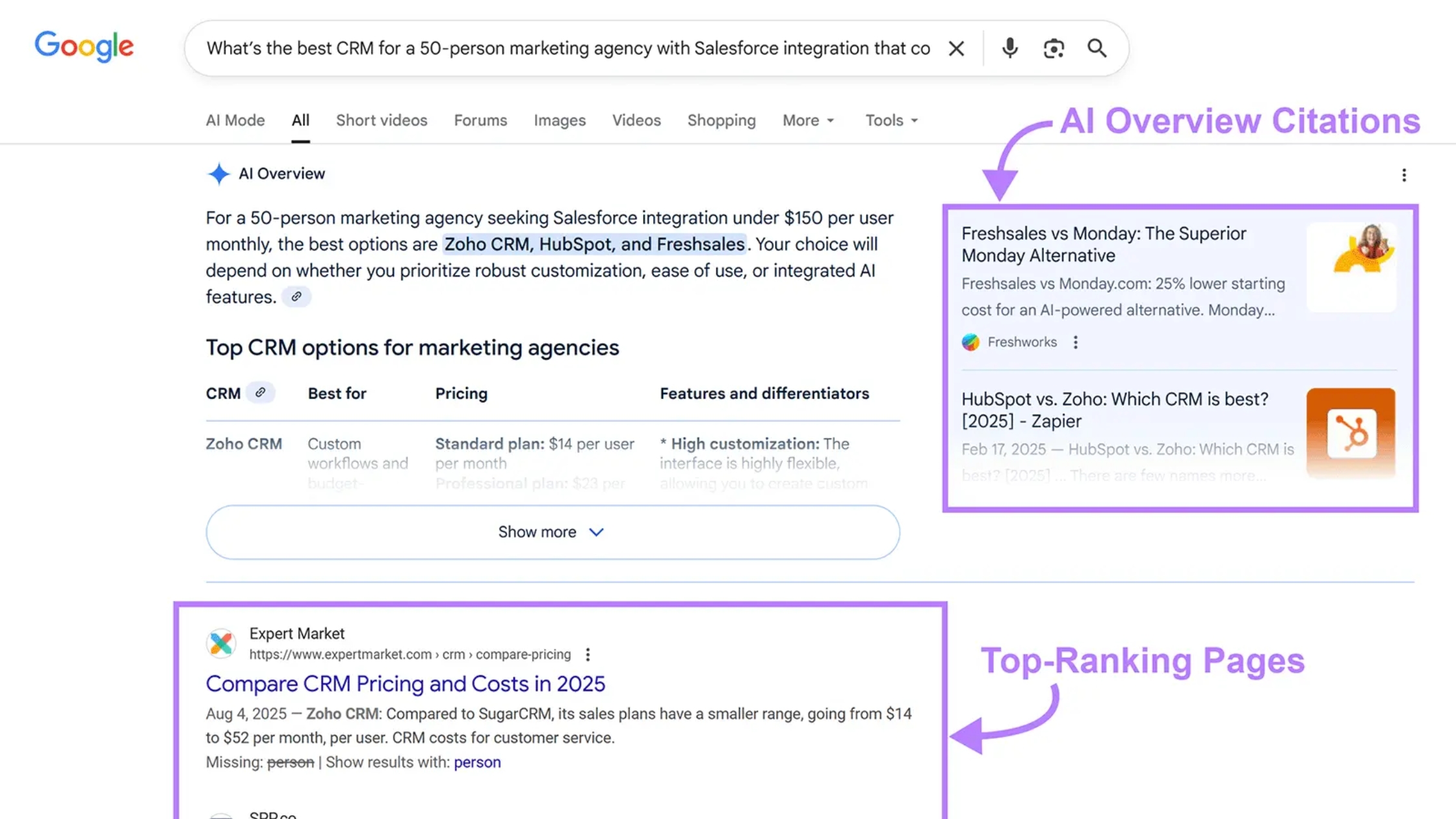
Instead of typing something simple like “CRM software pricing” and running several follow-up searches, people now search with full context in mind. For example: “What is the best CRM for a 50-person marketing agency that integrates with Salesforce and costs under $150 per user each month?”
Modern search results still include links for further exploration. However, Google’s AI Overview now blends insights from multiple trusted sources into one structured and synthesized response, allowing users to get well-rounded information in a single view.
What This Means for Marketers
This evolution in search behavior signals a major shift, from focusing purely on keywords to prioritizing context and intent. To remain visible in AI-powered results, your content must be easy for search systems to understand, extract, and reference.
To align with this shift, marketers should:
- Craft content that answers specific, real-world questions.
- Use natural, conversational language in headings and copy.
- Write clearly and avoid vague or overly broad phrasing.
By creating content that reflects how users think and speak, your brand becomes more discoverable, credible, and ready for the next generation of search.
2. Multimodal and Structured Search Is on the Rise
AI-powered search is no longer limited to text. Today, users can search using a mix of text, images, voice, and even video. In return, AI delivers unified, synthesized responses drawn from multiple formats.
Adoption is already massive. For example, Google Lens now handles more than 12 billion visual searches every month, reflecting how people are blending visual and textual discovery into a single experience.
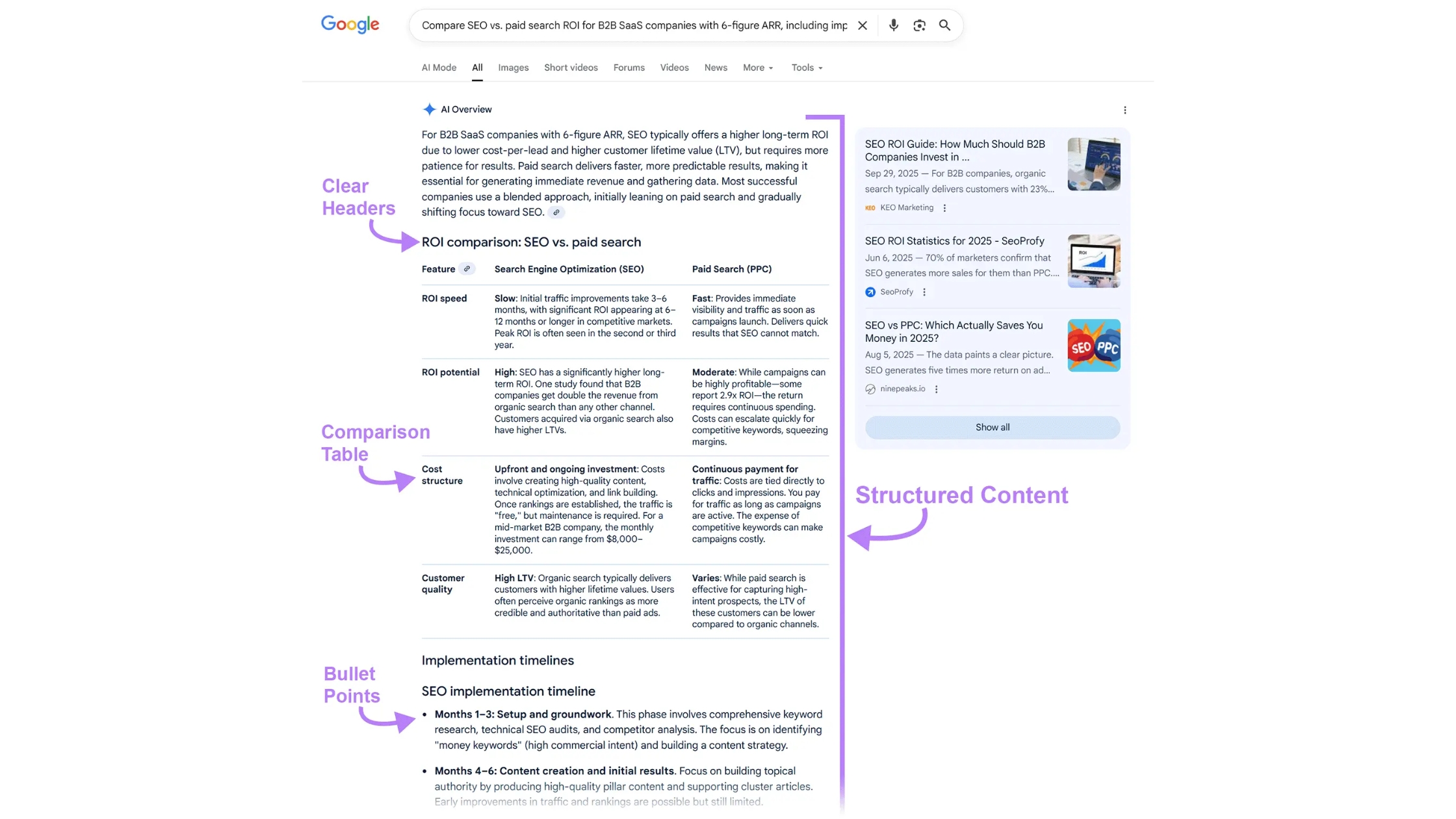
But the transformation doesn’t stop with how users search. Why? This is because it’s also changing how information is presented. AI systems now organize results into tables, lists, and step-by-step summaries, creating an experience that feels more like an interactive tutorial than a static list of links.
What This Means for Marketers
The growth of multimodal and structured search means your content must be clear, accessible, and adaptable across every format. To stay visible and relevant, make sure your assets are machine-readable and well-organized.
- Add transcripts to make audio and video content searchable.
- Include descriptive alt text so both users and AI systems can understand your images.
- Use captions to enhance accessibility and provide richer context for visual content.
The more structured and complete your content is, the easier it becomes for AI to surface it, and for audiences to trust, engage with, and act on it.
3. Adoption and User Behavior Trends
Understanding who uses AI tools and how can provide marketers in 2026 valuable direction for shaping an effective marketing strategy.
Younger Generations Are Leading AI Adoption
AI search adoption is accelerating fastest among Gen Z and younger millennials, who are far more likely than older adults to experiment with AI and weave it into everyday routines.
Recent studies make this shift clear:
- 34% of U.S. adults have used ChatGPT, about double the share in 2023
- 31% of Gen Z users say they begin their searches on AI platforms or chatbots -compared with roughly 20% of the overall population
This behavior signals a fundamental shift. The next generation of internet users is already turning to AI as their primary source for learning, searching, and decision-making.
What This Means for Marketers
Brands targeting younger audiences have a first-mover advantage in the evolving AI search landscape. With Gen Z and younger millennials adopting AI tools at nearly twice the rate of older groups, early visibility in these spaces can translate into long-term brand recognition and trust.
To capture this opportunity:
- Be present where they search. Build visibility within conversational and AI-assisted environments such as Perplexity, Gemini, and ChatGPT Search.
- Speak their language. Reflect the natural, question-based phrasing that younger users prefer when interacting with AI tools.
- Diversify your formats. Create short-form, visual, and summary-ready content that AI can easily cite or condense.
- Track beyond rankings. Measure performance not just through SEO, but through citations, mentions, and engagement within AI-driven platforms.
By aligning your content strategy with these behavior patterns, you can position your brand where the next generation of digital discovery is already happening.
4. Traffic and Visibility Trends
AI-driven search is redefining how brands appear online and how users interact with results. As search engines increasingly display AI-generated summaries, users are finding the information they need without leaving the results page — directly impacting website visibility and engagement.
Click-Through Rates Are Declining
Click-through rates (CTR) have fallen as AI summaries provide immediate answers, reducing the need for users to visit individual sites. Recent studies highlight this shift clearly:
| Source | Finding |
|---|---|
| Amsive | CTR dropped by 15.5% across queries that trigger AI Overviews |
| Pew Research | Clicks are nearly twice as high when no AI summary appears (15% vs. 8%) |
| Pew Research | Only 1% of users click links within AI summaries |
What This Means for Marketers
Traffic alone is no longer a reliable measure of visibility. In the AI-search era, brands must track citations, mentions, and on-SERP presence alongside traditional performance metrics like sessions and conversions.
Use Google Search Console (GSC) to monitor organic CTR trends, and leverage tools such as Semrush Position Tracking and the AI SEO Toolkit to evaluate how your brand appears in AI-enhanced search results.
By expanding your visibility metrics, you can better understand how your content performs, not just in clicks, but in influence and discoverability within AI-driven environments.
5. AI Overviews Are Appearing in More Searches
The presence of AI Overviews in search results is expanding rapidly. Between January and March 2025, their appearance rate increased from 6.49% to 13.1% of all searches, a significant growth in just a few months.
AI Overviews most commonly appear for:
- Complex or multi-part questions (e.g., “how to combine,” “compare,” “best way to”)
- Instructional or product comparison queries
- Current events and information-dense topics
These summaries often reference three to eight sources, drawing from pages that provide clear, structured, and concise information. Content is more likely to be cited when it includes:
- Direct, well-written answers in one or two sentences
- Self-contained sections focused on a single idea
- Concrete data or statistics that add credibility and context
What This Means for Marketers
Being cited in AI Overviews is quickly becoming a new benchmark for online visibility. As AI-generated responses cover a wider range of queries, the brands that earn citations gain top-of-funnel exposure and credibility directly within search results.
To position your content for inclusion:
- Optimize for clarity and structure. Write concise, self-contained sections that directly answer specific questions.
- Strengthen trust signals. Keep your data current, cite reputable sources, and display clear author or brand attribution.
- Track citation visibility. Use tools such as Semrush Position Tracking to identify when and where your content appears in AI Overviews and monitor visibility trends over time.
In this new search environment, the goal is no longer just ranking. Instead, it’s being recognized and referenced as a trusted source within AI-generated answers.
How to Optimize for AI Search: A Practical Framework
Visibility in AI-powered search now depends on how clearly your content communicates meaning and trust, not just to human readers, but to the AI systems interpreting it.
The path forward blends clarity, adaptability, and continuous measurement to ensure your content remains both discoverable and credible.
Phase One: Build Clarity and Context (Weeks 1–4)
Start by creating a strong foundation that helps both users and AI models understand your content easily. Focus on structural clarity, topic alignment, and relevance:
- Define clear topical clusters that reflect your brand’s expertise.
- Use straightforward language and consistent terminology.
- Add schema markup to help AI systems recognize key entities and relationships.
- Ensure every page serves a distinct informational purpose with supporting internal links.
This stage sets the groundwork for how AI interprets your content and determines its contextual value.
Phase Two: Optimize and Enrich Content (Weeks 5–8)
Once your foundation is in place, shift focus toward content depth, quality, and multimodal accessibility. Your goal is to create pages that are genuinely valuable and easy for AI systems to extract information from.
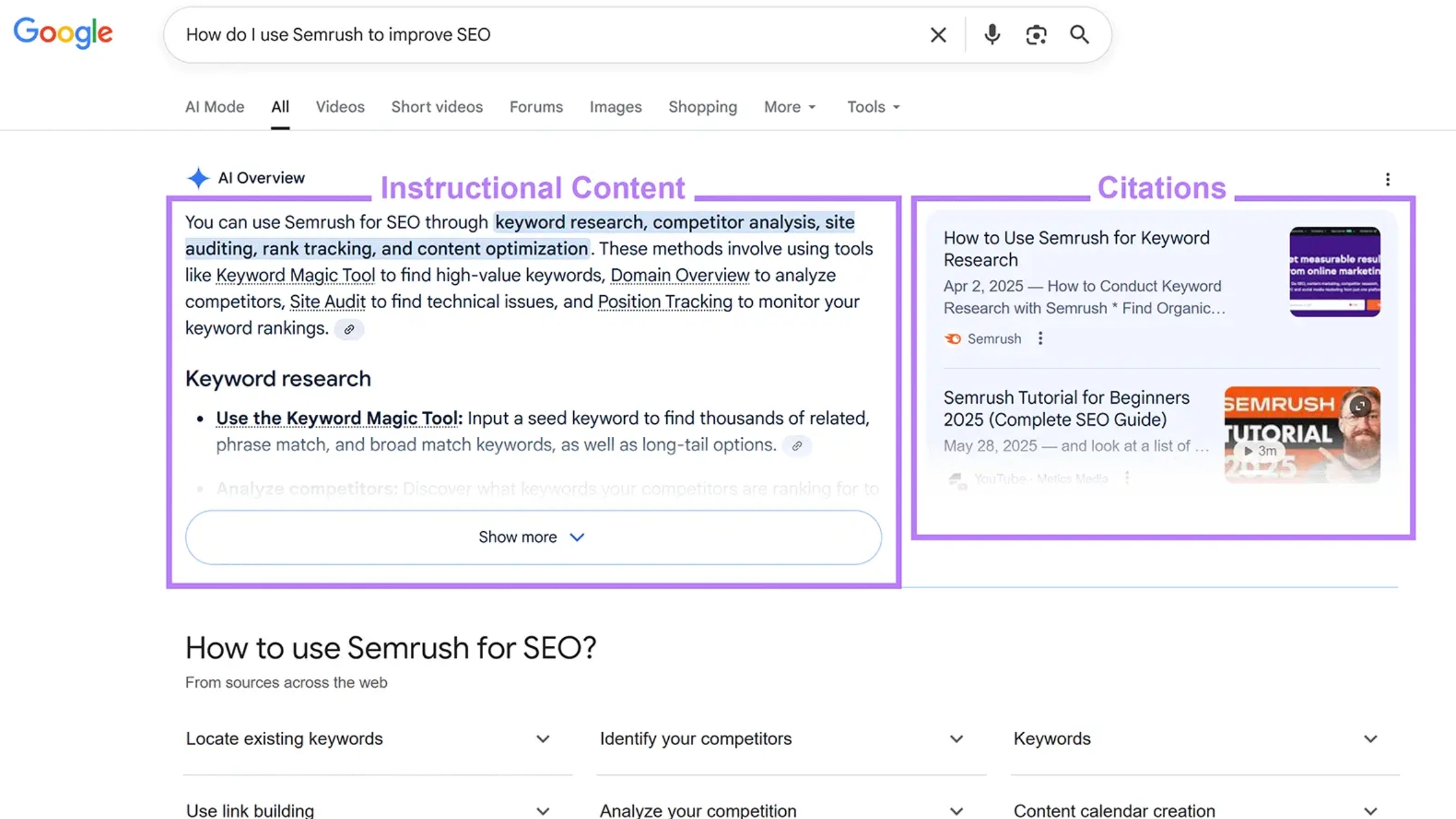
- Incorporate visuals, videos, and real-world examples to simplify complex topics.
- Add descriptive alt text and transcripts so AI systems can interpret non-text content effectively.
- Refresh outdated material to maintain accuracy and topical relevance. AI favors recent, credible information.
- Use natural, conversational phrasing that reflects how people phrase questions in AI tools (for example, “What’s the best…” or “How do I…”).
Phase Three: Refine Performance and Usability (Weeks 9–12)
AI visibility also relies on the overall user experience your site provides. A fast, accessible, and intuitive interface helps AI systems understand and prioritize your content.
- Improve mobile performance and page speed by compressing images, minimizing JavaScript, and reducing render-blocking elements.
- Enhance user experience clarity with simple layouts, clear CTAs, and logically grouped sections.
- Validate structured data using Google’s Rich Results Test and the Thematic Report in Semrush Site Audit to confirm proper schema implementation.
Ongoing: Track and Evolve Visibility
AI search visibility is dynamic because it shifts as algorithms and models evolve. Continuous tracking ensures your brand stays visible and relevant.
Go beyond traditional ranking metrics. Measure how often your brand is referenced, cited, or summarized in AI-generated responses across platforms.
Use tools such as Semrush Position Tracking and the AI SEO Toolkit to monitor:
- Mentions and citations in AI tools like ChatGPT, Gemini, and Perplexity
- Referral traffic and engagement from AI-affected queries
- Changes in overall brand visibility, impressions, and click-through performance over time
By following this structured framework, your content not only ranks, but also earns recognition as a trusted, extractable source that AI systems rely on to inform and engage users.
Partner with our Digital Marketing Agency
Ask Engage Coders to create a comprehensive and inclusive digital marketing plan that takes your business to new heights.
Contact Us
Conclusion
AI search is changing how people find and interact with information, and the shift is only accelerating. For brands and businesses, success now depends on clarity, adaptability, and structure — the very elements AI systems reward.
At Engage Coders, we help you stay ahead of these changes with data-driven SEO, AI-ready content, and smart digital strategies that keep your brand visible in the new search landscape. Wan to know how we can help? Get a free quote now!
Also read:
AI-Driven SEO Strategies for 2025: Thriving in Google’s AI Overviews
2025’s Top AI Voice Generators Put to the Test –The Results Were Shocking!


