

Are Blogs Dead? Here’s What Marketing Experts Have to Say
Every few years, a new trend steals the spotlight — whether it’s short-form video, podcasts, or AI-generated content — and the same question resurfaces: “Is blogging dead?”
It’s a valid question. As platforms change and audience behaviors evolve, it’s easy to assume that blogging has lost its value. But the notion that blogs no longer matter? That’s a misconception I wanted to dig into.
To find out the truth, I reached out to marketers specializing in SEO, content, and digital strategy to learn whether blogging still deserves a spot in today’s marketing toolkit. Here’s what they had to say.
Are Blogs Dead? Marketers Say: Not Even Close
Blogs aren’t just surviving — they’re evolving. According to HubSpot’s 2025 State of Blogging report, half of marketers saw stronger ROI from blogging in 2024 compared to the previous year. And nearly half say they plan to increase their investment in blogging in 2025.
But make no mistake: the blogging landscape is changing fast. Over 90% of marketers now incorporate AI tools into their workflow, and Google’s AI Overviews are already transforming how — and whether — blog content gets found in search.
The bar for quality and relevance is higher than ever, but so is the potential reward for those who rise to meet it.
Still, the question “Are blogs dead?” keeps coming back. Every time a new platform gains traction — be it TikTok, podcasting, or the latest AI breakthrough — people start predicting the end of blogging. And honestly, it’s not a baseless fear. Audience behaviors are shifting, attention spans are tighter, and video continues to dominate.
To be fair, search interest in the word “blog” has steadily declined. Google Trends shows a consistent drop in the term’s popularity over the past five years.
So, is blogging outdated? Or just overdue for a reinvention? Let’s dig into what today’s marketers are seeing — and where blogging is headed next.
Video May Be Flashier — But Blogs Still Deliver
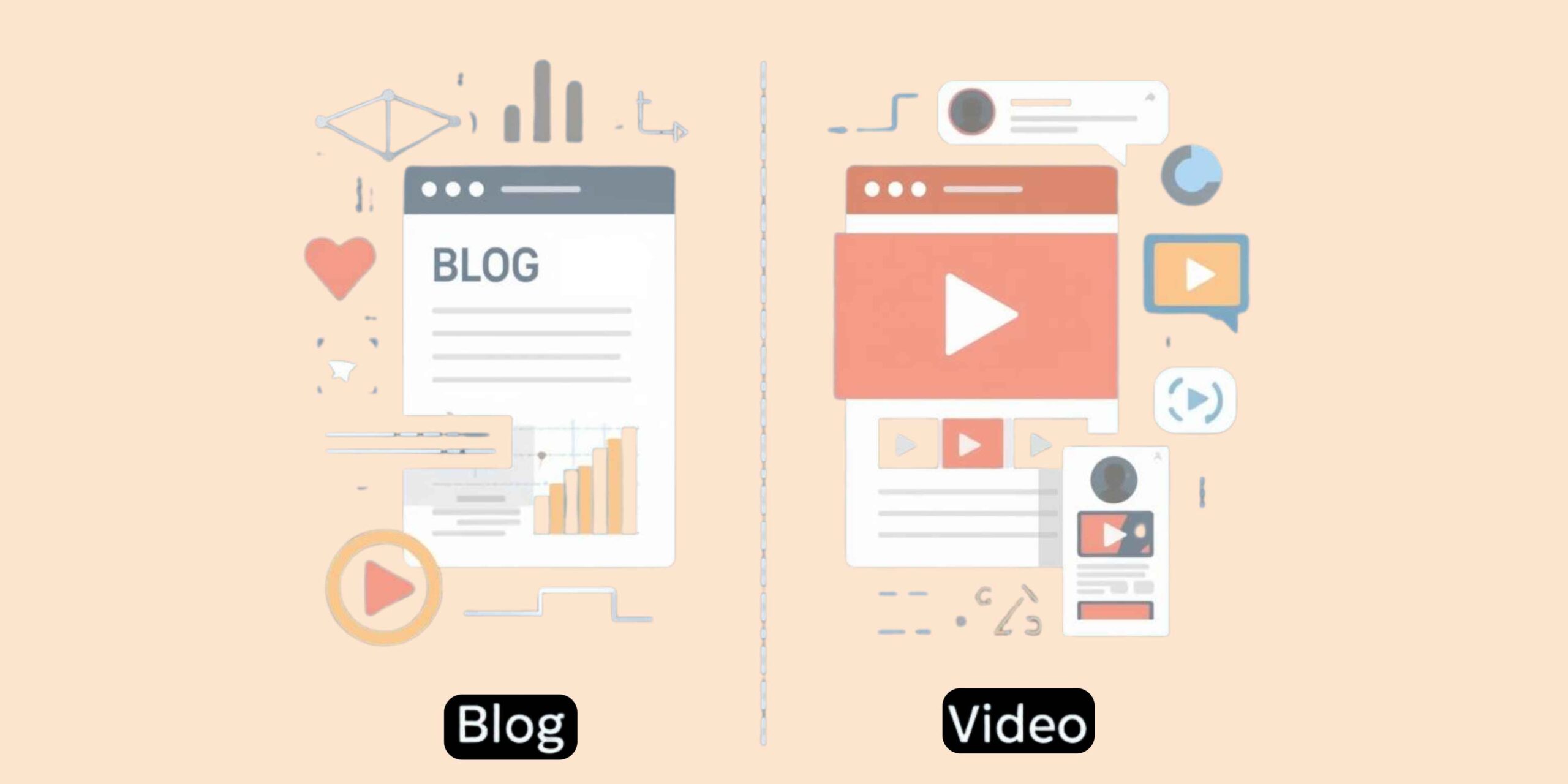
When you compare “blog” and “video” side by side on Google Trends, the contrast is hard to ignore. Video content has captured the spotlight, commanding attention spans, headlines, and marketing budgets, while blogs have quietly continued doing what they do best: driving results.
So yes, the question “Are blogs dead?” makes sense in context.
But here’s the truth: blogs are far from dead — and in the right hands, they’re more powerful than ever.
According to HubSpot’s latest State of Blogging report, 65% of marketers say their company runs a blog, with most publishing multiple times a week. Even more telling, a whopping 93% of marketers say blogging is important — or very important — to their overall content strategy.
And when it comes to the budget? Nearly three out of four marketers dedicate over 10% of their marketing spend to blogging. That kind of investment doesn’t happen without returns.
The global numbers tell a similar story. Tech Business News reports there are now over 600 million blogs worldwide, with more than 7 million new posts published every day. That’s not just scale — that’s momentum.
And it’s not just about quantity — it’s about impact.
Ross Simmonds, a B2B content strategist and founder of Foundation, has seen firsthand how strategic blogging can move the needle.
“At Foundation, blogging with intent has helped us generate millions of dollars in the pipeline for both us and our clients,” Simmonds says. “It’s also elevated our brand in the market — and more importantly, helped others in the industry learn and grow.”
In other words, blogging works when done with purpose, precision, and a clear strategy.
Neil Patel — one of the world’s most recognized digital marketers, whose blog consistently ranks among the most influential in the industry — puts it simply:
“Owning a website and ranking on Google is one of the best long-term marketing strategies. Starting a blog is the easiest marketing strategy in 2025.”
But blogging today isn’t what it used to be. The low-effort, keyword-stuffed posts of a decade ago don’t cut it anymore.
Lisa Dahmani, former Director of Global Content at HubSpot and now CMO at UX Design Institute, puts it into perspective:
“You need to consistently create content that is more valuable than your competition’s content. You need to be an SEO expert to get your articles ranking on page one of Google, and you need a distribution strategy to promote your content across all the channels your audience likes to consume content on.”
She adds,
“It’s a lot more complex to win at blogging now, but if you can master it, it’s worth the investment.”
That insight stuck with me — because it’s something I’ve heard again and again from other content leaders.
Brian Dean, founder of Backlinko — often called an “SEO genius” by Entrepreneur and listed by Forbes as a top blog to follow — puts it like this:
“All in all, today, SEO is less about optimizing your site to help Google and more about being the best result that deserves to be #1.”
And that mindset? It’s reshaping what blogging success looks like.
Publishing for the sake of publishing won’t get you noticed anymore. To stand out, you need a strategy built on quality, authority, and clear value for your audience — especially now, when AI-generated content is flooding the web.
Being the “best result” today means being trustworthy, original, and genuinely useful.
So yes — blogging takes more work than it used to. But when done right, it still delivers. The return on investment is real, and for brands that commit to doing it well, it’s a long-term asset that keeps growing in value.
Which brings us to a critical follow-up:
Even if blogs aren’t dead, how do they measure up against the other content formats dominating today’s landscape?
Blogs vs. Other Marketing Channels
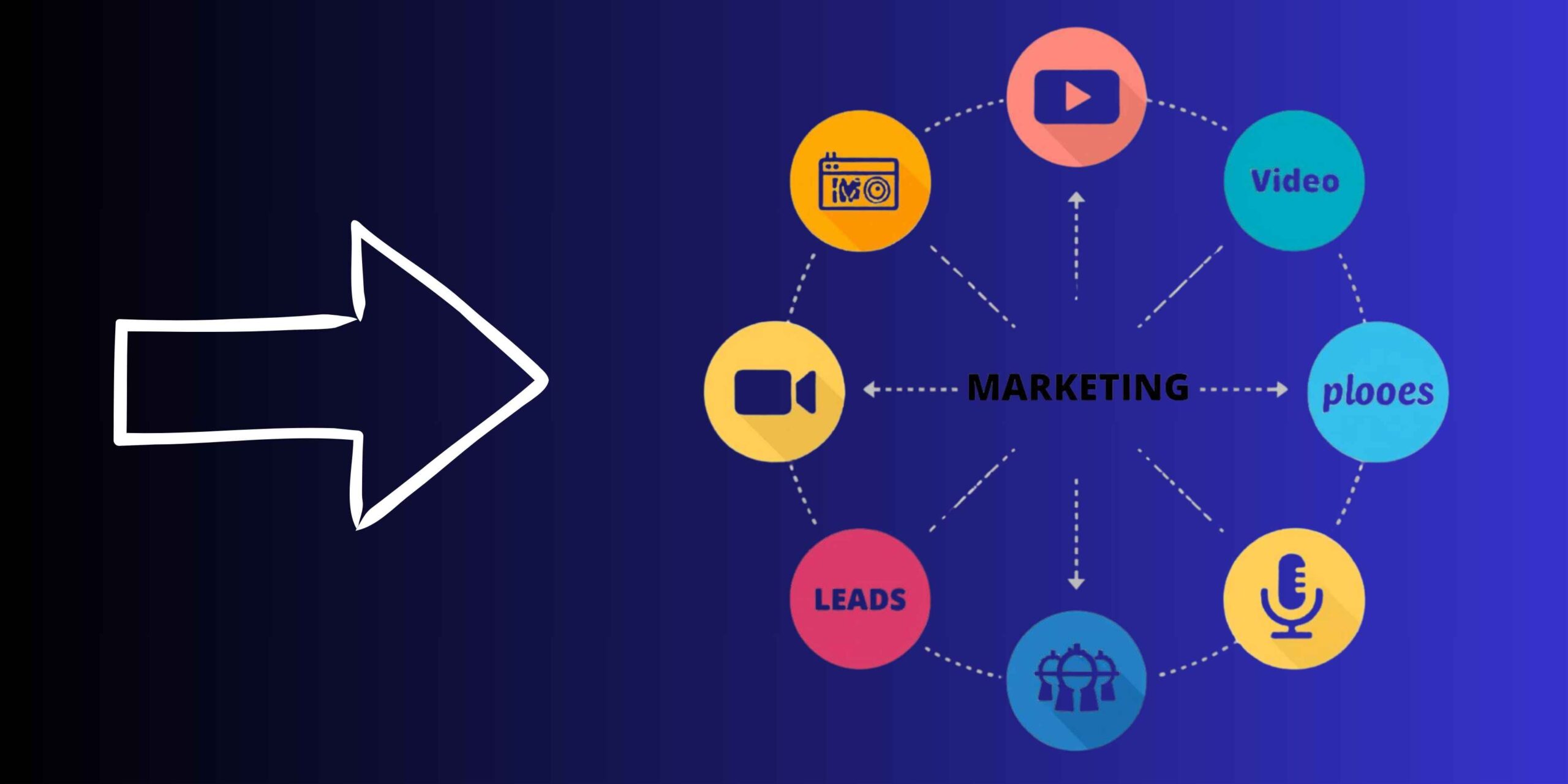
With the rise of content marketing channels like video and podcasting, it’s easy to wonder: are blogs about to become redundant?
The answer? Not necessarily. It all comes down to your audience — and your goals.
While it’s true that formats like video and podcasts have surged in popularity, blogs still offer distinct advantages that make them a core part of many content strategies.
Matthew Brown, Senior Lead Producer of YouTube & Podcast at HubSpot, puts it into perspective:
“Podcasting is not without its own set of limitations. There are plenty of discoverability and audience growth challenges. At this point, blogs have a pretty well-dusted playbook for scaling. That’s not true for podcasts.”
He adds,
“A company can use its likely limited resources to invest in a blog that will basically give consistent, easily measurable, and reliable performance. Blogs also have a direct line to the company’s bottom dollar — podcasts do not.”
In other words, blogs are still one of the most efficient and predictable ways to drive traffic, leads, and conversions.
But what if your team can manage both?
Nelson Chacon Guzman, a marketing fellow at HubSpot, points out that you don’t need to choose one over the other. If your bandwidth allows, combining platforms can deepen audience engagement.
“Creating a blog constructed of articles around the benefits of your product will be helpful. Having a video showcasing its use or how to install it would be beneficial for your audience,” says Chacon Guzman.
He uses Home Depot as an example:
“They educate their customers through blogs and complement that with short, informative how-to videos — perfect for people who just want quick answers.”
Then there’s social media — a completely different beast.
Annabelle Nyst, former Senior Content Manager at HubSpot and now Principal Social Content Manager at G-P, emphasizes that comparing blogs and social content directly doesn’t make sense.
“Social content doesn’t always have the shelf life or discoverability of blog posts,” she says. “It’s more about meeting your audience in the moment, engaging one-on-one, and building trust through community.”
Still, blogs and social can work hand-in-hand. Nyst suggests using your blog as a foundation to create bite-sized, social-first content that leads back to the blog — amplifying your reach and repurposing your insights.
Of course, blogs aren’t without their drawbacks.
AJ Beltis, Principal Content Marketing Manager at HubSpot, notes that engagement can drop off quickly with blog content:
“Blogs lack the interactivity that many crave due to its nature as written content. That challenges blog writers to hook readers fast — without the benefit of audio or visual effects that video and podcasts provide.”
Ultimately, it comes down to aligning your content channel with your business objective.
Matthew Brown makes the distinction clear:
“Blog posts are an acquisition juggernaut. There’s a clear path that any seasoned marketer can follow. Podcasts, however, best serve as a brand opportunity.”
He adds,
“You wouldn’t measure a series of blog posts on brand uplift, just like you wouldn’t measure a podcast’s success on lead generation. That is, unless you enjoy gray hairs and insomnia.”
There’s no one-size-fits-all approach. But for consistent, scalable, and ROI-driven performance, blogs still hold their ground. And for brands ready to invest in doing them well, there’s still a long runway ahead.
Why Blogs Are Still Worth the Investment
Despite the growing dominance of video, podcasts, and social media, blogs continue to be one of the most cost-effective, long-term strategies for driving leads and shaping brand identity — especially when executed with intention.
Lisa Dahmani, CMO at UX Design Institute and former Global Content Director at HubSpot, breaks it down in simple terms:
“I could spend $200K to hire a full-time writer, SEO expert, and CRO specialist to work on my blog. By combining those skill sets, I’m going to be able to create a blog that drives organic traffic to my website and converts it into leads for my business all year long.”
Now compare that to the alternative:
“Or, I could put the same $200K into an advertising campaign and maybe get a couple of thousand leads over the course of the ad campaign. But once the campaign ends, so does my lead flow.”
That’s the power of a high-performing blog: it keeps working long after you hit “publish.”
In fact, Dahmani points out that many of HubSpot’s blog-generated leads come from posts published months — or even years — earlier. It’s the kind of evergreen impact that makes blogging a smart, compounding asset in your marketing toolkit.
Aja Frost, Senior Director of Global Growth at HubSpot, echoes the value of organic content:
“Organic traffic is more important than ever. Unlike paid traffic, which stops the second your budget runs out, organic traffic is mostly self-sustaining after you’ve put in the time and effort to create a blog post.”
Plus, most modern CMS platforms come with built-in SEO tools, which means even smaller teams can optimize their content for discoverability.
Blogs Shape Brand Narrative
Beyond traffic and conversions, blogs give brands a powerful platform to communicate value.
Alex Girard, Product Marketing Manager at HubSpot, explains:
“Blogs are still one of the best channels we have to create narratives around our product. They let us address trends we’re seeing in the market, how those trends impact the reader, and how our product might help.”
He adds that a promotional tone isn’t required — trust and authority built through education will often lead audiences to explore your products organically.
But It’s Not Just About Writing Good Content
As Karla Hesterberg, Director of Content Marketing at HubSpot, points out, a high-traffic blog means little if it’s attracting the wrong audience:
“Growth without a goal isn’t going to help your business — if 10,000 people are reading your blog but none of them fit your persona, that’s not going to do anything for your company.”
Instead, she recommends aligning each post with a clear, attainable goal — like generating contacts or nurturing leads — and writing for every stage of the buyer’s journey.
SEO Strategy Still Matters
Many marketers separate “blogging” from “link building” — and that’s a mistake.
Irina Nica, former HubSpot Senior Product Marketing Manager (now at SurveyMonkey), says:
“What I often notice is that marketers see blogging and link building as two different disciplines. First, they write blog posts, then they think about how to earn backlinks.”
Instead, she suggests integrating link-worthy content, like original research or stats, directly into your editorial calendar to support natural backlink growth over time.
Blogs Aren’t Always the Right Fit
All of that said, blogging isn’t the right play for every business.
Sandra Mpouma, Head of Digital Marketing at Centura (formerly RationalFX), explains that for some brands, direct email marketing may offer more value than a public-facing blog:
“Some brands have great email communication and workflows where they provide people with downloadable offers. You don’t necessarily need a blog as long as you’re offering something in exchange.”
In other words, blogs aren’t dead — but they may be irrelevant if your audience doesn’t consume content that way.
Why Marketing Isn’t Dead
If you’ve made it this far and are still wondering whether marketing itself is on its way out, let’s set the record straight: it’s not. Despite what sensational headlines might suggest, marketing is alive, thriving, and more influential than ever.
Marketing’s reach and importance have only grown, both in traditional formats and across digital platforms.
Take content marketing, for example. Just a few years ago, the global content marketing industry was valued at around USD 63 billion. Now, according to Statista, it’s projected to exceed $107 billion by 2026. That’s not a dying industry — that’s explosive growth.
Ross Simmonds, founder of Foundation Marketing, puts it simply:
“There’s a reason why Nike and McDonald’s continue to invest millions every month in marketing even though they’re already household names. There’s a reason why top musicians still do promo tours before an album drop.”
The logic is clear:
“Marketing isn’t just an expense. It’s an investment. And if you make that investment strategically, it can pay off for years — even decades.”
So no, marketing isn’t dead. It’s evolving.
And for brands that are willing to adapt — by creating quality content, building strong distribution strategies, and delivering a clear value proposition — marketing remains one of the most powerful levers for sustainable growth.
Why Marketing Isn’t Dead
Here’s the truth: not every marketing strategy fits every brand, and that’s okay. But let’s be clear — blogs are not disappearing anytime soon.
They remain one of the most powerful tools for building trust, boosting traffic, and generating long-term leads. Yes, the landscape has changed. Yes, success requires more strategy and effort than ever. But blogs aren’t obsolete — they’re evolving.
So, for now, blogs?
Partner with our Digital Marketing Agency
Ask Engage Coders to create a comprehensive and inclusive digital marketing plan that takes your business to new heights.
You’re safe — and still very much in the game. Looking for the best content marketing services in USA? Contact Engage Coders Today!
FAQs
Yes. Modern blogging trends show that blogs act as a central hub for in-depth information, while social media serves as a discovery channel to drive traffic there.
Absolutely. Instead of ads, businesses focus on blog traffic growth that converts visitors into high-quality leads and drives direct product sales.
AI aids efficiency, but Blogging SEO rewards original, expert insights. Relying solely on AI without human editing can result in lower rankings.
Blogs are superior for attracting new visitors via search, while newsletters excel at nurturing existing subscribers. Both are essential for blogging in 2025.
Marketers know that blog traffic growth is more sustainable than paid ads. A single optimized post can generate leads for years without additional cost.
While video entertains, blogs provide skimmable, searchable answers. This distinct value is why the question “Are blogs dead?” is consistently answered with a “no.”
Success requires high-quality, authoritative content. Blogging in 2025 is about depth, user experience, and solving specific problems—not just keyword stuffing.
Yes, blogs remain a top lead generation tool. Good Blogging SEO ensures your content attracts users actively searching for solutions to their problems.
People ask “Are blogs dead?” when they see low-quality, outdated sites failing. The mistake is ignoring modern standards for speed, mobile optimization, and relevance.
Blogs compound in value. Unlike social posts that vanish, optimized articles continue driving blogging trends in traffic and revenue long after publishing.


