
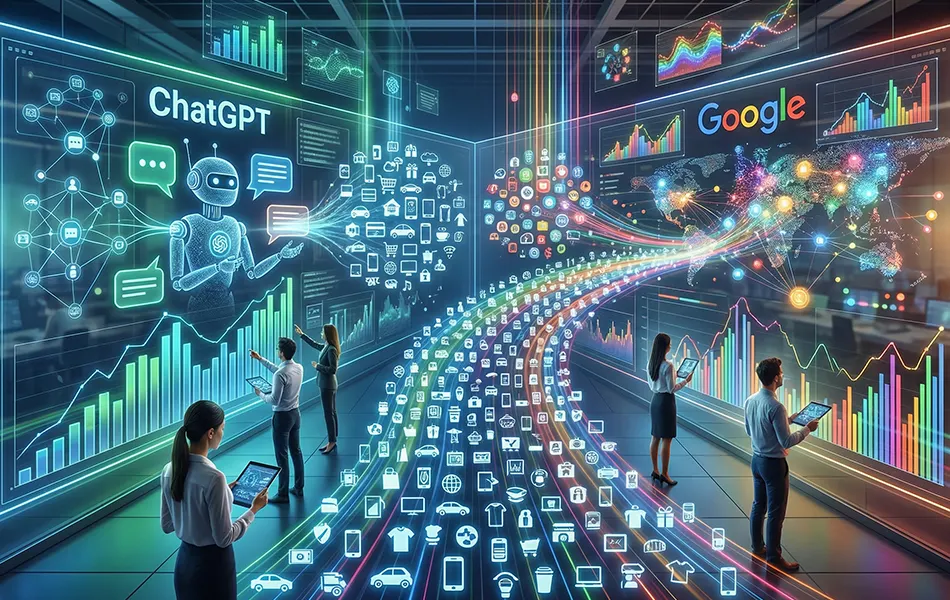
ChatGPT vs Google: What New Brand Mention Data Reveals About the AI Conversation
The Race for AI Mind Share Intensifies
The contest between ChatGPT and Google has shaped nearly every conversation surrounding modern artificial intelligence. While both companies continue releasing new models and features, the more subtle battle is taking place in a different arena: public attention.
Search Engine Land’s recent breakdown of a Mode Analytics brand mention report offers a clear picture. It shows how often people reference each brand in online conversations, industry news, public forums, and AI-related discussions. These insights matter because brand mentions reflect the one resource every company values yet cannot buy outright: mind share.
Mind share influences product adoption, public trust, and investment trends. It determines which tools people discover first, recommend most, and rely upon daily. The report’s findings show a landscape that is shifting rapidly, shaped by excitement, curiosity, and the influence of major platforms.
Here is what the latest data reveals about where ChatGPT and Google stand in the wider AI conversation.
Table of Contents
Brand Mentions: The New Metric for AI Influence
Traditional market share reveals financial performance. Search market share reflects traffic and visibility. But brand mentions show something different. They provide an immediate indicator of who leads the cultural and professional conversation.
The Mode report tracks:
- Frequency of brand references
- Sentiment attached to those references
- Share of voice across media sources
- Topic clusters associated with each brand
This creates a detailed snapshot of which company holds the narrative advantage in AI.
The findings highlight one central truth: ChatGPT has become the default reference point whenever people discuss generative AI, and that influence is now tightly competing with Google’s long-standing presence.
ChatGPT’s Rise: A Model Becoming a Household Name
The report shows ChatGPT receiving a substantial volume of brand mentions across both professional and public spaces. This visibility stems from several factors.
A Clear Identity
People refer to ChatGPT by name rather than by version number or product category. This consistency helps build recognition that spreads naturally across industries.
Strong Positioning as the Face of Generative AI
ChatGPT is widely understood as the product that made AI accessible to the average user. When people talk about using AI to write, summarize, research, or learn, ChatGPT appears as the point of reference.
High Social and Media Engagement
Many public conversations on platforms such as YouTube, LinkedIn, and Reddit include direct mention of ChatGPT. This widespread usage keeps the brand constantly present in real time.
The report notes a pattern similar to how Google became synonymous with search in the early 2000s. The more often people mention ChatGPT when discussing AI, the more the model becomes the default frame of reference for the entire field.
Google’s Position: A Legacy Giant Adapting to a New Era
Google remains one of the most recognized brands in technology. Yet the Mode report reveals a noticeable shift in how the public discusses the company within the AI domain.
Broader Brand Identity
Unlike ChatGPT, Google is not only an AI company. It stretches across search, cloud tools, mobile software, advertising, and hardware. This means public conversation is more distributed, decreasing the density of AI-specific mentions.
Competing Product Names
Google AI, Gemini, Google Search, and DeepMind all appear in discussions. This produces fragmentation that can dilute a unified brand presence.
Decline in AI-specific References
ChatGPT’s accelerated rise has indirectly reduced Google’s dominance in AI discussions, even though Google remains influential in research.
The report does not suggest Google is losing relevance. Instead, it shows that people increasingly reference Google through the lens of comparison. Many discussions frame Google’s AI announcements in relation to ChatGPT rather than on their own merits. This shift signals a subtle yet important change in public perception.
What Brand Mention Data Reveals About AI Strategy
When companies compete for public attention, the way people talk about them influences product adoption and trust. The report highlights a few underlying dynamics.
Conversational AI Drives Recognition
People remember brands that sit inside their daily communication, which explains ChatGPT’s rise. Tools that exist in the flow of conversation gain faster recognition than tools that operate behind the scenes.
Simple Branding Wins
A single product with a simple name often outperforms a suite of tools with multiple labels. ChatGPT benefits from this pattern. Google’s more complex product naming creates a wider, less concentrated set of references.
Mind Share Predicts Long-Term Market Position
Attention does not always translate into revenue immediately, but it sets the stage for adoption. Developers, consumers, and enterprises make decisions based on familiarity, and familiarity grows through repeated exposure.
Share of Voice Shapes Market Expectations
High brand mentions tend to raise audience expectations. When people constantly hear about ChatGPT, they expect continued improvements. When they hear less about Google’s AI initiatives, they assume slower progress, even when that is not the case.
This dynamic influences how companies communicate, how they launch products, and how they compete for relevance.
Why This Matters for Marketers and Businesses
Marketing teams and business leaders follow this data closely for a simple reason. The tool with the strongest presence often becomes the first option for users exploring AI for the first time.
Brand mention patterns can:
- Shape purchasing decisions
- Influence enterprise adoption
- Affect how agencies recommend tools
- Shift attention toward the brands that stay top of mind
If ChatGPT maintains its momentum, companies building AI-driven products may favor OpenAI’s ecosystem because it offers immediate recognition. If Google consolidates its branding under a clearer identity, it may regain stronger presence in public discussion.
Either way, the competition will continue shaping how people discover and trust AI tools.
Conclusion
The Mode brand mention report shows a rapidly shifting narrative landscape. ChatGPT has become one of the most referenced names in modern technology, while Google’s position reflects both its broad identity and its need for clearer AI branding.
Partner with our Digital Marketing Agency
Ask Engage Coders to create a comprehensive and inclusive digital marketing plan that takes your business to new heights.
Contact Us
The data does not reveal a final winner. Instead, it captures a turning point. Public conversation is moving toward tools that play a central role in daily communication, and ChatGPT currently sits at the center of that shift.
As AI adoption grows, mind share will influence market share. Companies that understand these trends and respond with clarity, consistency, and strong positioning will shape the direction of the next wave of AI tools.
To follow new insights like this one, visit Engage Coders for clear analysis on AI, marketing, and digital strategy.
FAQs
It often does. Increased visibility influences user familiarity and can support long-term adoption.
ChatGPT is a focused product with a single identity, while Google’s AI presence is split across several brands.
No. The report reflects conversational visibility, not research output or product development quality.
Simple branding, consistent communication, and strong naming conventions help tools gain recognition faster.
Yes. New product releases, public announcements, and evolving user habits can shift the conversation quickly.


![These AI workflows can 10X your marketing productivity [+ video]](https://www.engagecoders.com/wp-content/uploads/2025/07/These-AI-workflows-can-10X-your-marketing-productivity-450x350.jpg)