
How Zappi’s CMO Builds AI Marketing Agents That Capture Brand Voice
In today’s dynamic marketing environment, AI marketing agents are rapidly reshaping how brands operate—offering a blend of efficiency and strategic depth. These tools go far beyond simple automation; they are becoming integral members of modern marketing teams, especially when properly trained to align with brand voice and compliance needs. When applied with precision, they enable teams to streamline operations, scale campaigns effectively, and maintain creative authenticity.
AI Marketing Agents in Action
AI marketing agents are far more than chatbots or reactive tools. They are intelligent systems designed to execute marketing functions proactively, with minimal human input. For example, within marketing teams, specialized AI agents can analyze customer data, develop packaging concepts, optimize in-store displays, and even manage compliance-related reviews.
This shift from general-purpose tools to specialized AI agents is significant. Rather than relying on a one-size-fits-all solution, organizations are building specific agents for different parts of their marketing workflow automation. This approach enhances consistency, quality, and brand voice alignment across all content and campaigns.
A Step-by-Step Guide to Training AI Marketing Agents
1. Set Clear Goals with Specific Examples
1. Set Clear Goals with Specific Examples
The foundation of effective agent training lies in clarity. When determining how to train AI agents, one must go beyond general goals like “generate content.” Instead, define specifics: the content’s purpose, target funnel stage, intended reader, desired action, successful past examples, tone preferences, and known pitfalls.
By outlining exact expectations and providing high-quality input data, marketing teams can guide AI for content creation that feels authentic, purposeful, and on-brand. Ambiguity leads to generic results; clarity leads to precision.
2. Iterate with Structured Feedback
Once agents begin producing content, feedback becomes essential. Positive outputs should be highlighted and saved as templates for future replication. For instance, if a blog post converts exceptionally well, use that structure as a model for training.
Negative training is just as valuable. When content doesn’t meet expectations, show agents what to avoid. Over time, this combination of reinforcement and correction enables more accurate outputs and ensures alignment with brand tone.
3. Build Specialized Agents, Not Super Agents
A common mistake is creating one AI to do everything. Instead, effective marketing teams employ multiple specialized AI agents, each with a clear role. This division mirrors human teams—where different members own distinct responsibilities.
Some agents may focus solely on writing hooks for social posts, others on recommending optimal content formats or checking for tone and AI compliance for marketing. Each should be trained with examples tailored to its unique function.
This modular strategy promotes scalability. By reducing overlap and maximizing individual expertise, teams reduce error and improve execution quality.
4. Enable Agent-to-Agent Collaboration
Specialized agents perform best when working in tandem. Creating inter-agent workflows is a powerful tactic in marketing workflow automation. For example, once a post is written, it can be passed to a “hook agent” to refine the opener, followed by a “visual asset agent” suggesting accompanying media.
Organizations can also implement a “project manager” agent to oversee agent-to-agent interactions, preventing scope creep and resolving potential role conflicts. Some businesses go further, developing a “facilitator” agent that governs multiple agents, ensuring clarity, role alignment, and streamlined decision-making.
Retraining Is Essential, Not Optional
Contrary to popular belief, AI agents don’t learn everything from one session. Training is a continuous process. As campaigns evolve and content performance data accumulates, agents should be retrained using the latest high-performing outputs.
Analyzing these successful examples—even using AI to evaluate its own work—can significantly improve future results. Structured feedback loops, including periodic updates, are vital for maintaining quality and brand voice alignment over time.
Training Agents on Brand Voice and Tone
One of the most frequent issues marketers face is generic output from AI tools. This is usually due to poor brand voice training AI practices. The solution lies in documenting and training agents on brand-specific language, tone, and style.
This can be accomplished by extracting tone patterns from existing content, internal interviews, or customer-facing materials. Tools that generate style guides from written materials can provide a head start.
The key is clarity. Define approved vocabulary, structure, tone, and phrasing—and provide direct contrasts to guide what should be avoided. The more specific the examples, the more consistent and distinctive the AI marketing agents become.
Building Compliance Into AI Agent Frameworks
In regulated industries, AI compliance for marketing is critical. Instead of embedding compliance into general-purpose agents, organizations benefit more by creating dedicated compliance agents. These tools review content specifically for alignment with industry guidelines.
Best practices include training agents with before-and-after examples of compliant content, maintaining libraries of approved boilerplate text, and consulting legal teams to document recurring changes.
With these methods, brands ensure accuracy while reducing legal risks—especially important in co-marketing scenarios or sectors with strict advertising rules.
When Human Intervention Is Needed
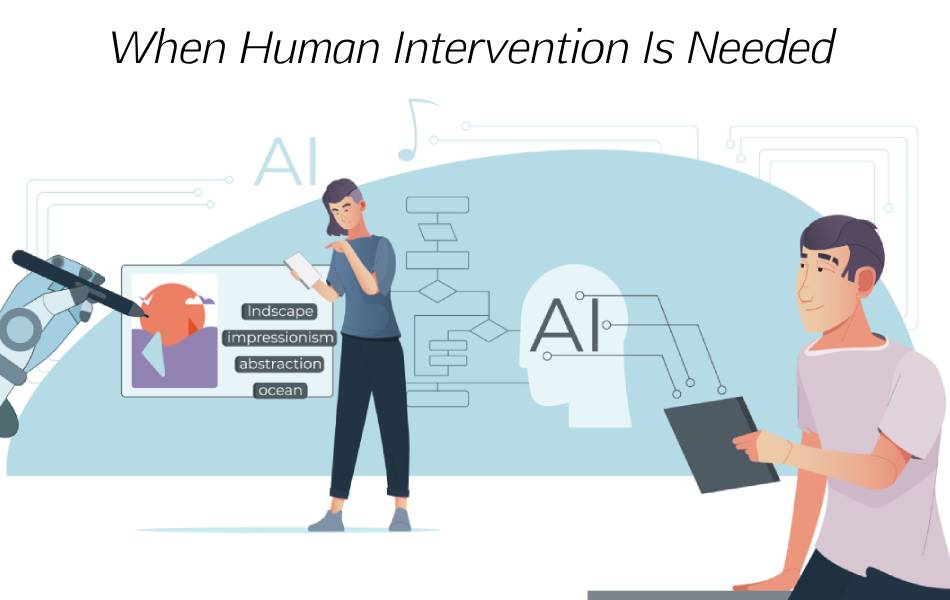
While AI brings remarkable efficiency, certain aspects still require human oversight. These include:
1. Data Preparation and Hygiene
Human teams must ensure the data used to train AI is clean, current, and relevant. Garbage in, garbage out—quality data underpins all successful training.
2. Workflow Design and Checkpoints
AI agents require well-designed workflows and clear intervention points. If content diverges post-compliance checks, humans must decide which priority (tone or legality) takes precedence.
3. Oversight for High-Risk Content
Campaigns with major visibility or regulatory exposure require human review. No matter how advanced, AI should not operate in isolation for critical outputs.
Scaling Marketers, Not Replacing Them
When deployed with the right training and oversight, AI marketing agents don’t replace marketers—they empower them. With faster turnaround, broader reach, and deeper personalization, marketers can focus more on strategy and creativity.
With proper brand voice training AI, integrated compliance checks, and modular roles, these systems unlock scalable and sustainable marketing advantages. This collaboration between human ingenuity and AI precision marks the future of marketing—and it’s already here.
By understanding how to train AI agents effectively, brands ensure they stay agile, compliant, and creatively resonant—ready for whatever tomorrow’s marketing landscape may bring.
Partner with our Digital Marketing Agency
Ask Engage Coders to create a comprehensive and inclusive digital marketing plan that takes your business to new heights.
Your audience is searching. We make sure they find you—fast, often, and ready to act. Engage Coders turns digital noise into real business results.
Get in touch today!


![The state of inclusive marketing in 2025 [new data + expert insight]](https://www.engagecoders.com/wp-content/uploads/2025/07/image1-1-450x350.png)

