
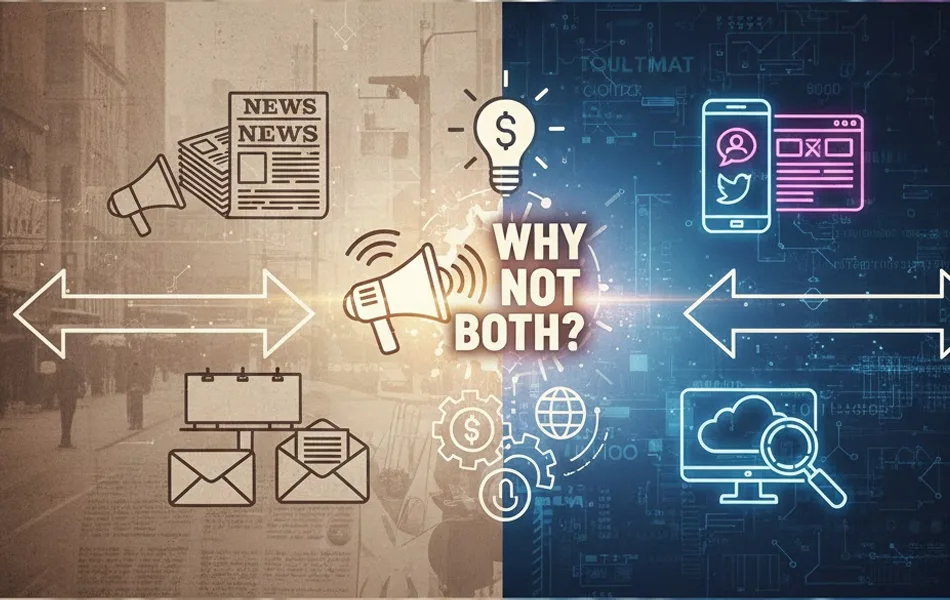
Traditional Marketing Vs. Digital Marketing: Why Not Both?
Marketing, at its core, is about reaching people, not just where they are physically, but where they are mentally, emotionally, and behaviorally. The conversation around traditional marketing vs digital marketing has been ongoing for over a decade. But in 2026, that debate is becoming increasingly irrelevant. The smart brands are not picking sides, they’re building integrated marketing campaigns that draw strength from both worlds.
In this blog, we’ll explore the digital marketing strategy 2026 landscape, revisit the benefits of traditional marketing, and understand why a blended marketing approach might just be the way forward.
Table of Contents
What is Traditional Marketing?
Traditional marketing refers to promotional strategies that predate the internet. Think television ads, radio spots, newspapers, flyers, direct mail, and billboards. These offline marketing examples once dominated the advertising world and still play a significant role in specific sectors and demographics.
While some might label these methods as outdated, the benefits of traditional marketing remain strikingly relevant, especially in building trust and offering wide geographic exposure. In fact, many brands are returning to these tried-and-true techniques, realizing that traditional vs digital advertising effectiveness isn’t always so black and white.
What Is Digital Marketing?
Digital marketing refers to campaigns that use online channels to reach audiences. These include social media advertising, SEO, email marketing, PPC (pay-per-click), influencer partnerships, and content marketing. As user behavior shifts online, developing a digital marketing strategy in 2026 is non-negotiable for businesses aiming to stay visible and competitive.
One of the key advantages here lies in precision. Marketers can reach highly specific audience segments, track performance metrics in real time, and adjust strategies quickly, an edge that traditional channels typically can’t match. But again, in the discussion of traditional marketing vs digital marketing, it’s not always a matter of which is better, but which is better for the moment and the message.
Traditional Marketing Vs. Digital Marketing
If we must compare the two head-on, let’s do so thoughtfully. Traditional marketing offers longevity and a tangible presence, the kind that builds familiarity and trust. On the other hand, digital marketing offers flexibility, scalability, and real-time engagement.
But here’s the nuance: in a modern digital marketing strategy 2026, most successful brands are no longer trying to separate the two. Instead, they’re designing integrated marketing campaigns that merge both formats. Think of a subway billboard promoting a product alongside a QR code that drives people to an online landing page, a seamless blend of offline and digital.
So, when debating traditional marketing vs digital marketing, remember that it’s no longer a competition. It’s a collaboration.
Types of Traditional Marketing
To truly appreciate the benefits of traditional marketing, let’s look at some enduring formats:
1. Print Media
Newspapers, magazines, brochures, and flyers still carry authority, especially among older audiences. These offline marketing examples can be incredibly persuasive in localized or high-trust environments.
2. Broadcasting
Television and radio ads may be expensive, but they offer unmatched reach and repetitive exposure. If placed correctly, they can dramatically reinforce brand memory.
3. Direct Mail
Contrary to what some believe, direct mail isn’t dead. When personalized and timed well, it can drive strong response rates and reinforce customer loyalty.
4. Out-of-Home Advertising (OOH)
Billboards, public transport signage, and in-store posters are examples of marketing that meet people during everyday routines. Think about how often you remember an ad simply because you saw it during your commute.
5. Event Marketing and Sponsorships
Face-to-face engagement through local events, trade shows, or sponsorships creates deeper emotional connections. These interactions are often the foundation for integrated marketing campaigns that continue online.
Importance of Traditional Marketing
The benefits of traditional marketing go beyond nostalgia. They tap into human psychology.
1. Trust and Credibility: Print and broadcast ads are often viewed as more trustworthy than digital pop-ups or social media ads.
2. Local Reach: When your audience is community-based, nothing beats a localized flyer or community radio ad.
3. Memorability: Physical media often lingers; on tables, in mailboxes, in the public eye.
Even in a digital age, offline marketing examples like these continue to deliver lasting impact. That’s why most experts are steering the conversation toward a blended marketing approach.
Pros and Cons of Traditional Marketing
Pros
- Builds long-term brand awareness.
- Ideal for reaching local or offline demographics.
- Creates a physical, sensory experience.
Cons
- Difficult to measure precisely.
- Less flexible and often more expensive.
- Lacks the real-time targeting that digital offers.
That said, the discussion about traditional vs digital advertising effectiveness is not about finding the “better” method. It’s about choosing the right method — or better yet, both.
Can Traditional and Digital Marketing Really Work Together?
Absolutely. In fact, they work best when they work together.
Let’s look at a quick example. A fitness brand might sponsor a marathon (traditional), hand out branded gear and flyers (traditional), then encourage participants to post their race photos online with a branded hashtag (digital). Meanwhile, they follow up with an email campaign and retargeting ads. That’s a textbook blended marketing approach.
Another real-world scenario: A luxury skincare company launches a new product with magazine ads and in-store posters, then supports it with influencer videos and Instagram ads. These are smart integrated marketing campaigns that leverage both reach and precision.
In 2026, the best-performing digital marketing strategy is one that doesn’t ignore traditional channels. Instead, it uses them to anchor a campaign in the real world, then amplifies that message online.
Conclusion
In the evolving world of advertising, the debate of traditional marketing vs digital marketing is no longer about picking sides. It’s about synergy. If your goal is sustainable growth, reach, and trust, then a blended marketing approach is your most reliable path forward.
Partner with our Digital Marketing Agency
Ask Engage Coders to create a comprehensive and inclusive digital marketing plan that takes your business to new heights.
Contact Us
By embracing offline marketing examples alongside modern digital strategies, and by aligning them into integrated marketing campaigns, you’re not just adapting to 2026, you’re building a brand that’s future-ready.
Because when it comes to traditional vs digital advertising effectiveness, the answer is simple: they work best when they work together.


