
SEO Trends for 2026: How to Rank Higher in the Age of AI Search
Have you ever wondered why some websites suddenly appear at the top of search results while others struggle to get noticed?
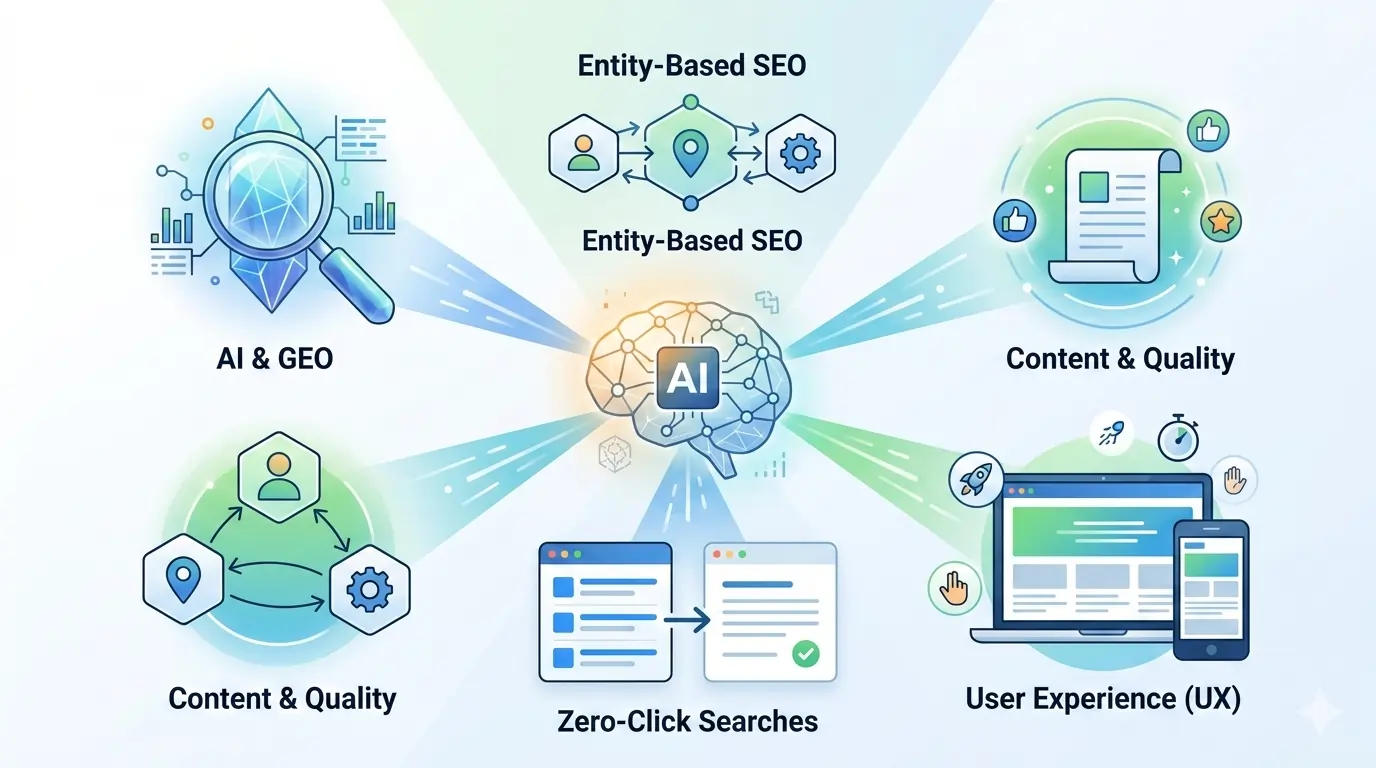
The answer lies in how search engines are evolving. SEO is no longer just about placing the right keywords in your content. In 2026, search engines rely heavily on artificial intelligence, user intent, and high-quality information to determine which pages deserve the top spots.
For businesses, bloggers, and marketers, this means adapting to smarter search systems. The latest SEO trends show that success now depends on creating helpful, structured, and trustworthy content that both users and AI systems can easily understand.
Let’s explore the key SEO trends shaping digital visibility in 2026.
Table of Contents
1. AI-Powered Search Is Transforming SEO
Search engines are becoming more intelligent thanks to artificial intelligence.
Instead of simply scanning pages for keywords, modern algorithms analyze the
context and meaning behind a search query.
AI-powered search tools can now provide summarized answers directly in the
results page. This allows users to quickly get information without opening
multiple websites.
How to adapt your strategy
To stay relevant in AI-driven search results:
- Write clear and informative content
- Use headings and structured formatting
- Answer common questions directly
- Provide reliable and well-researched information
Content that is easy to scan and understand has a better chance of appearing
in AI-generated summaries.
2. Generative Engine Optimization (GEO) Is Emerging
A new concept gaining attention in digital marketing is Generative Engine Optimization, often called GEO. This approach focuses on making your content visible in AI-generated responses.
AI systems gather information from various trusted sources when generating answers. If your content provides clear insights and structured explanations, it may be used as a reference.
Practical GEO strategies
You can improve your chances of being cited by:
- Creating in-depth guides on specific topics
- Adding FAQ sections
- Including statistics and expert insights
- Organizing content with logical headings
These elements help AI systems understand your content and highlight it in relevant search responses.
3. Entity-Based SEO Is Replacing Keyword Stuffing
Another major shift in SEO is the move toward entity-based optimization. Search engines now focus more on topics and relationships between concepts rather than just individual keywords.
For example, if someone searches for “best skincare routine,” search engines analyze related topics like moisturizers, cleansers, and skin types.
How to optimize for entities
To strengthen your content strategy:
- Cover topics in depth rather than repeating keywords
- Create content clusters around related subjects
- Link relevant articles together on your website
- Use natural language that matches how people actually search
This approach helps search engines recognize your site as an authoritative source within your niche.
4. Zero-Click Searches Are Becoming Common
Have you noticed how Google often answers questions directly on the results page? These are known as zero-click searches.
Featured snippets, knowledge panels, and AI summaries allow users to get quick answers without clicking a link.
While this may reduce some traffic, it also increases visibility for websites that appear in those snippets.
Ways to benefit from zero-click results
To improve your chances of appearing in these features:
- Provide short and clear definitions
- Use bullet points and numbered lists
- Structure content with clear headings
- Include frequently asked questions
These formatting techniques make it easier for search engines to extract information from your page.
5. High-Quality Content Still Wins
Despite all the technological changes, one thing remains constant: valuable content always performs best.
Search engines prioritize content that demonstrates:
- Expertise
- Experience
- Authority
- Trustworthiness
Websites that consistently publish well-researched and useful information are more likely to rank higher.
Tips for creating strong content
Consider these best practices:
- Focus on solving real user problems
- Write in a clear and conversational tone
- Provide practical insights and examples
- Update your content regularly to keep it relevant
Combining expert knowledge with reader-friendly writing helps build trust with both users and search engines.
User Experience Matters More Than Ever
SEO is not only about what you write but also about how users interact with your website. If visitors leave quickly because the site is slow or difficult to navigate, search engines may lower your rankings.
Important factors that influence user experience include:
- Fast page loading speed
- Mobile-friendly design
- Easy navigation
- Clean and readable formatting
When users can easily find the information they need, they tend to stay longer and explore more pages.
Partner with our Digital Marketing Agency
Ask Engage Coders to create a comprehensive and inclusive digital marketing plan that takes your business to new heights.
Contact Us
Final Thoughts
SEO in 2026 is evolving rapidly, but the core idea remains simple: help users find useful information quickly and easily. Artificial intelligence, generative search tools, and smarter algorithms are reshaping how websites appear in search results.
To stay competitive, focus on creating structured, high-quality content that answers real questions and delivers genuine value. By combining modern SEO strategies with a human-centered approach, your website can continue to attract traffic and achieve strong search rankings in the years ahead.
FAQs
The biggest SEO trends include AI-powered search, generative engine optimization (GEO), entity-based SEO, improved user experience, and high-quality content creation.
AI helps search engines better understand user intent and context. This means websites must focus on structured, informative content that clearly answers user questions.
Generative Engine Optimization is the process of optimizing content so that AI-powered search tools and answer engines can reference and display your information in their responses.
Yes, keywords still matter, but modern SEO focuses more on topic relevance and search intent rather than repeating keywords excessively.
A zero-click search occurs when users get the answer directly from the search results page through featured snippets, knowledge panels, or AI summaries without visiting a website.
Websites can improve rankings by creating valuable content, optimizing for AI-driven search, improving page speed, using structured formatting, and focusing on user experience.


![What Is a Landing Page [+ Case Study & Tips]](https://www.engagecoders.com/wp-content/uploads/2025/07/What-Is-a-Landing-Page-Case-Study-Tips-450x350.png)


