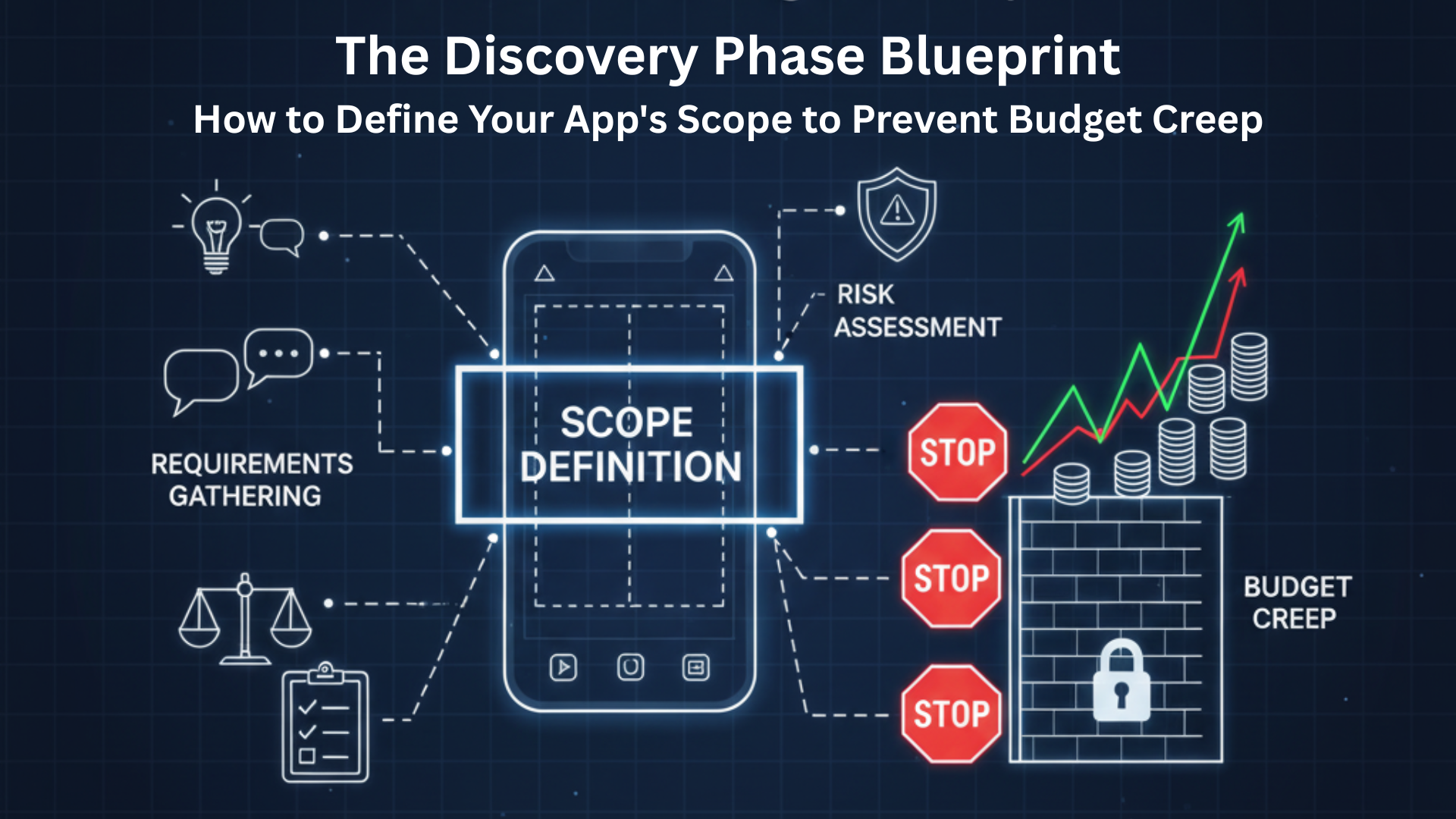
The Discovery Phase Blueprint: How to Define Your App’s Scope to Prevent Budget Creep
Your app idea is brilliant. You’re ready to build. The temptation to jump straight into coding and “move fast” is immense.
Let’s be blunt: that’s a terrible idea.
The digital graveyard is filled with brilliant app ideas that died from a thousand tiny cuts. These cuts have a name: scope creep. It’s the slow, silent expansion of features and requirements that bleeds your budget dry and pushes your launch date into oblivion. Industry data shows a staggering 45% of software projects go over budget, and over half are victims of scope creep.
This isn’t just a risk; for unprepared projects, it’s an inevitability.
The solution isn’t better crisis management. It’s a strategic, upfront investment in clarity. It’s called the Discovery Phase, and it’s the single most effective tool for ensuring your project is delivered on time, on budget, and actually solves the problem you set out to fix.
This blueprint is a crucial chapter in our complete guide, From Idea to Launch & Beyond, and will guide you through what a real Discovery Phase looks like and why it’s the foundation of every successful app project.
Why Discovery Isn’t Optional (It’s Financial Survival)
First, let’s get one thing straight: the Discovery Phase isn’t a “nice-to-have” preliminary meeting. It’s a rigorous, multi-week engagement designed to transform your ambitious idea into a predictable, actionable plan. Skipping it to “save money” is a classic false economy that almost always backfires.
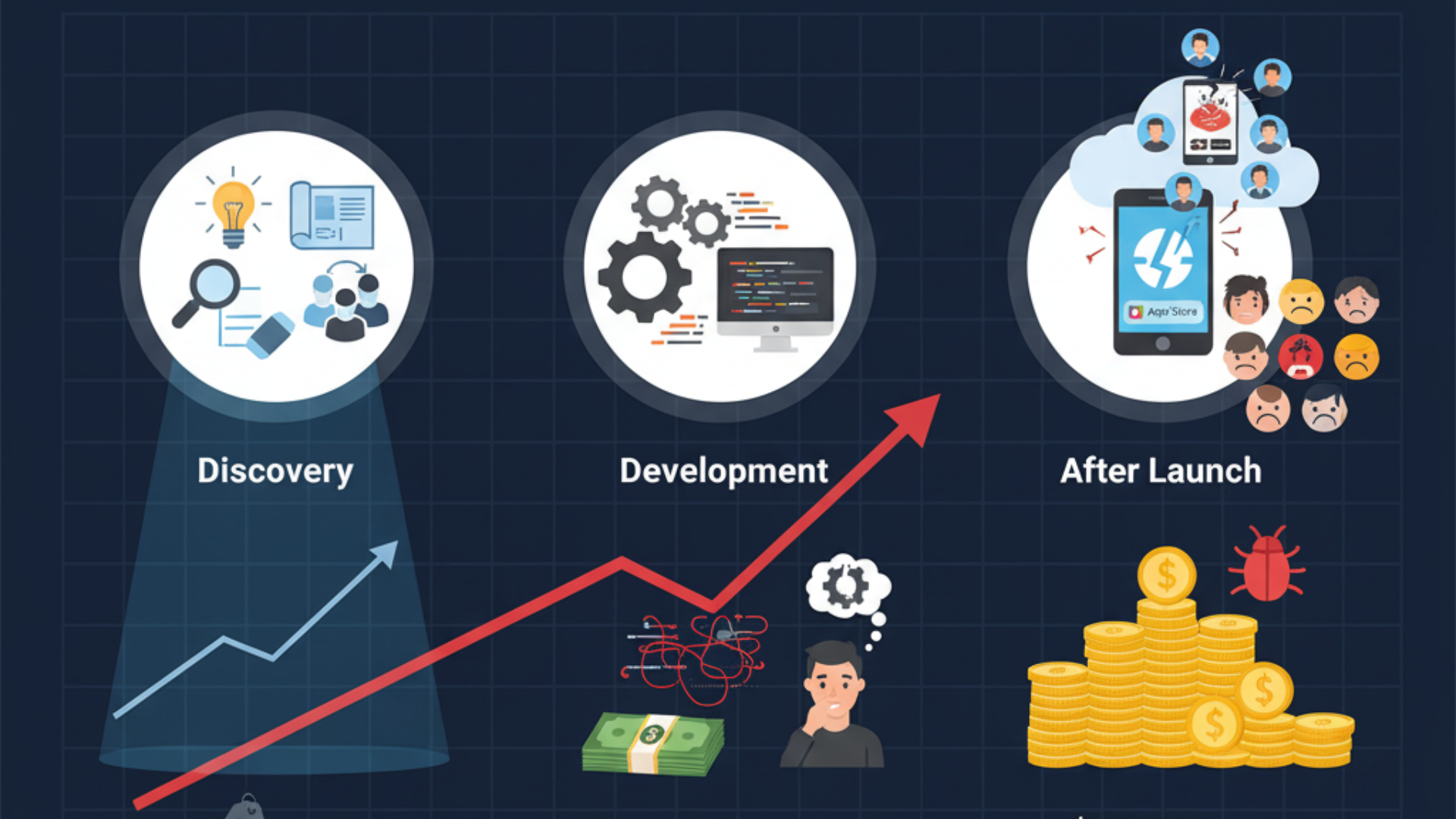
Here’s why: the cost of a mistake grows exponentially through the project lifecycle.
- During Discovery: Fixing a flawed assumption is the cost of a conversation.
- During Development: The same fix costs hundreds or thousands in developer hours, requiring them to stop, refactor code, and re-test.
- After Launch: The same fix becomes catastrophic, costing tens of thousands in redevelopment, data migration, and damage to your brand’s reputation.
The Discovery Phase is your mechanism for finding those hundred-dollar mistakes before they become ten-thousand-dollar disasters.
Reality Check: Scope Creep Isn’t Malice, It’s Ambiguity
Scope creep doesn’t happen because your stakeholders are trying to sabotage the project. It happens because their initial needs weren’t fully understood, the business goals were fuzzy, or communication was poor. It’s a symptom of a weak foundation. A thorough Discovery Phase builds a foundation of shared, unambiguous understanding that makes it incredibly difficult for creep to find a foothold.
The Blueprint for Defining Scope
A successful Discovery is a structured investigation. It’s about asking the hard questions upfront and aligning every stakeholder around a single, unified vision before the build begins.
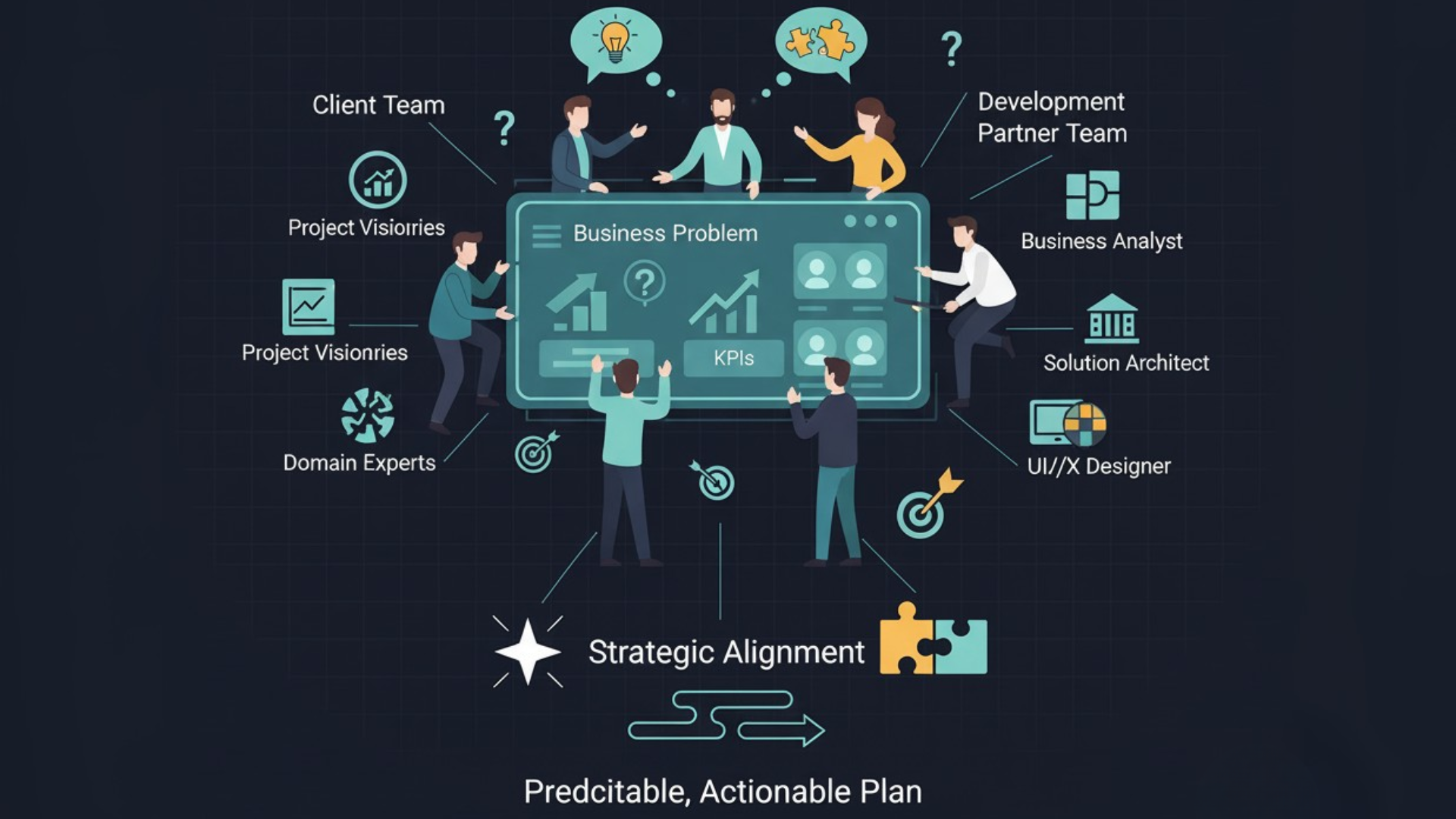
1. Assembling the Expedition: Stakeholders, Experts, and Alignment
The first step is getting the right people in the room. This is a team sport that requires experts from both sides of the table.
- From Your Team: The project visionaries—stakeholders and domain experts who know the business, the industry, and the user’s pain points inside and out.
- From Your Development Partner: A specialized crew including a Business Analyst, Project Manager, Solution Architect, and a UI/UX Designer.
The core of this stage is a series of stakeholder workshops. These aren’t just meetings; they are structured sessions designed to build consensus and answer the most critical questions:
- What is the fundamental business problem we are solving?
- What does success look like, and how will we measure it?
- Who is our target user, and what are their deepest frustrations?
The output isn’t a meeting summary; it’s strategic alignment. This shared vision becomes the project’s north star, guiding every subsequent decision.
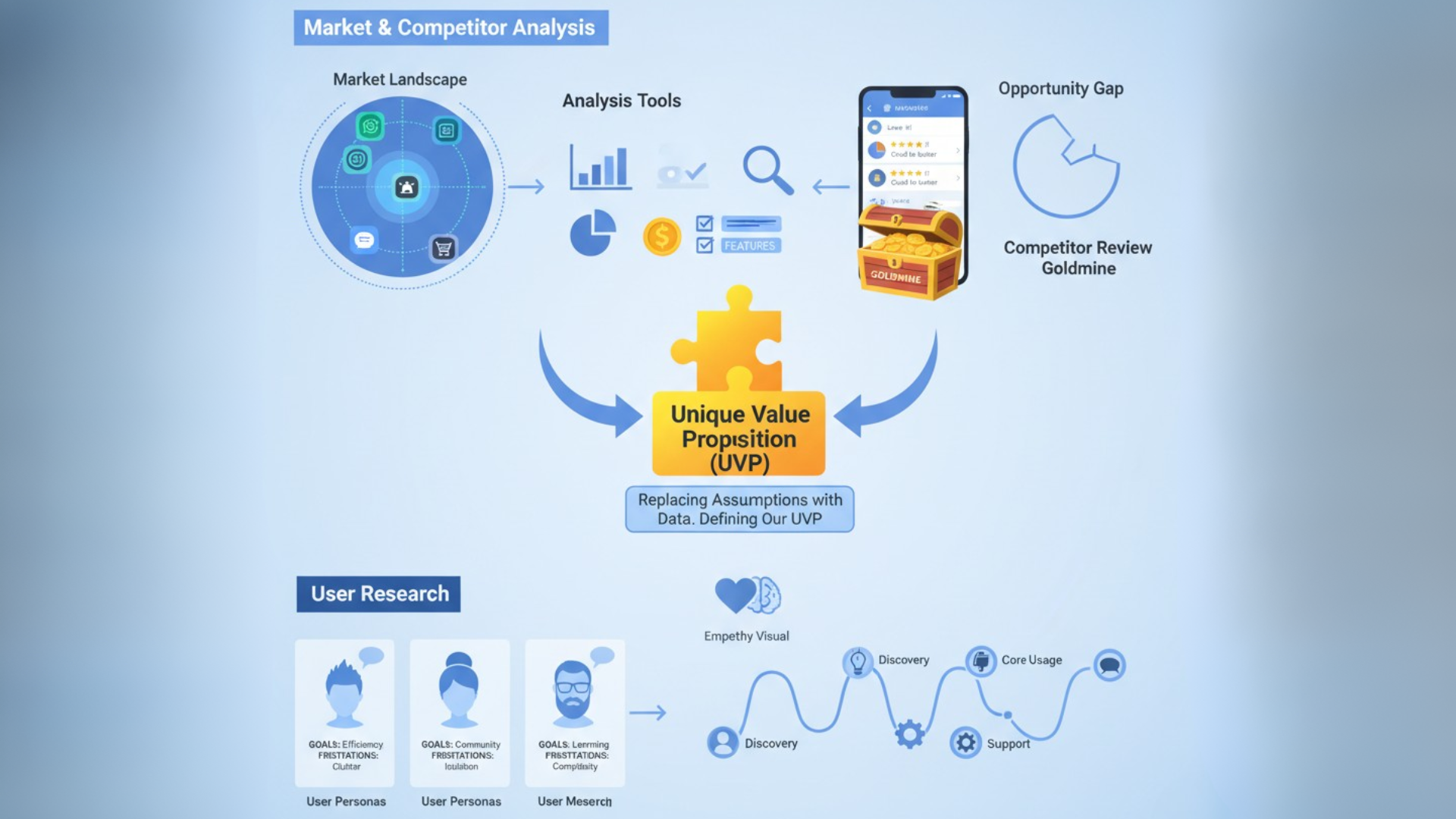
2. Mapping the Terrain: Market, Competitor, and User Intelligence
With an aligned internal vision, it’s time to test it against the real world. This is where you replace your assumptions with data.
- Market & Competitor Analysis: A deep dive into the existing landscape to find a viable “opportunity gap.” This means analyzing competitors’ features, pricing, and, most importantly, their user reviews. App store reviews are a goldmine for discovering what frustrates users and where your app can win. The goal is to define your Unique Value Proposition (UVP)—the compelling reason a user will choose you.
- User Research: This is where you get to know the people you’re building for.
- User Personas: Create fictional but realistic profiles of your key user segments. Give them names, goals, and frustrations. This helps your entire team empathize with the end-user.
- User Journey Mapping: Visualize the entire experience a user has with your product. This helps identify the most critical moments that your design and functionality must nail perfectly.
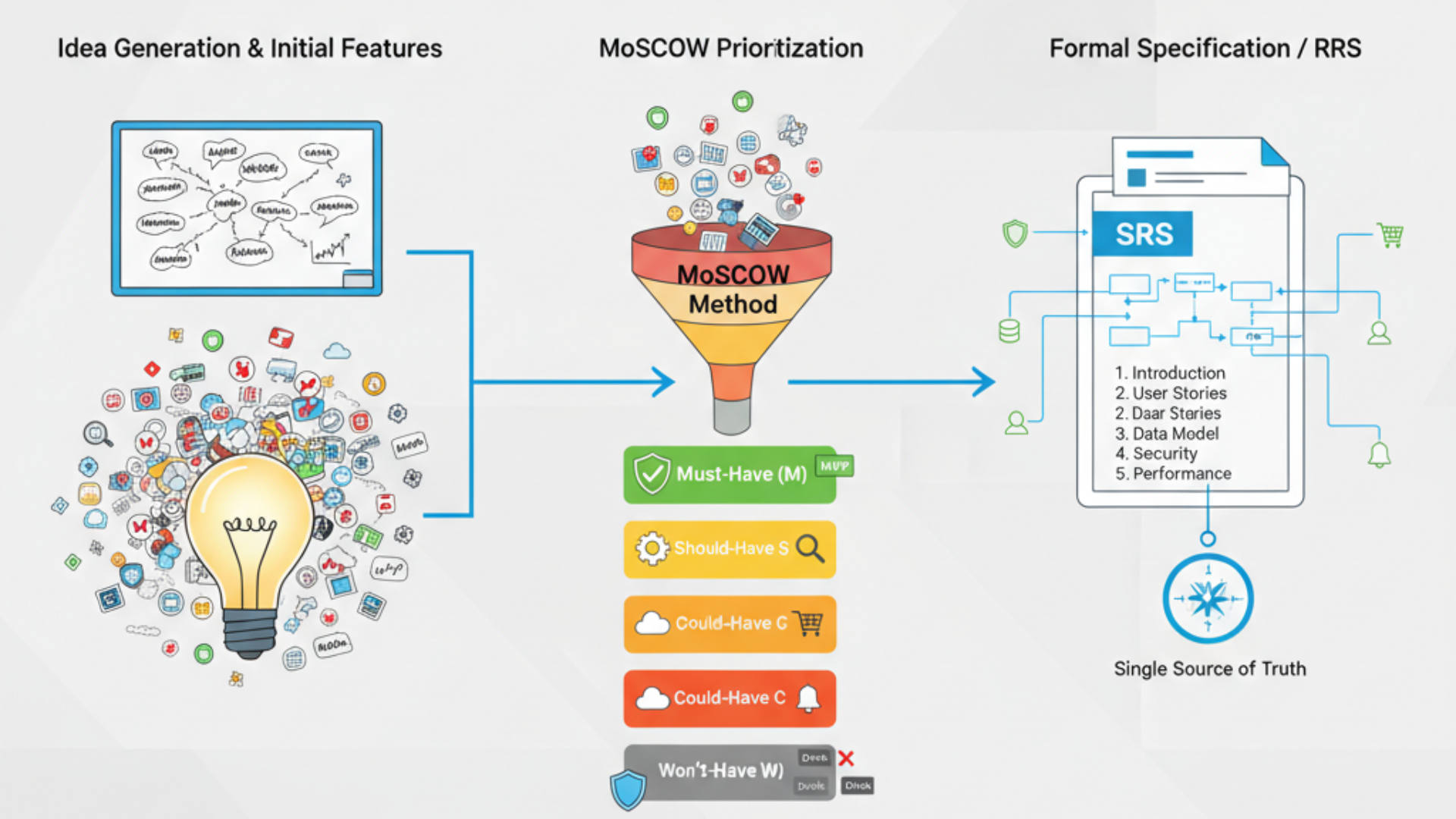
3. Architecting the Vision: From Features to a Formal Specification
This is where you translate strategy into a concrete plan. It starts with brainstorming every possible feature and then prioritizing them with ruthless discipline.
The most effective tool for this is the MoSCoW method:
- M – Must-Have: Non-negotiable core features. The app fails without them. This is your MVP.
- S – Should-Have: Important features that add major value but aren’t critical for launch.
- C – Could-Have: “Nice-to-have” features that are the first to be cut if time or budget is tight.
- W – Won’t-Have (this time): Features explicitly deferred to a future release.
Reality Check: The Power of “Won’t-Have”
The “Won’t-Have” list is your secret weapon against scope creep. By formally documenting and agreeing on what you are not building, you manage stakeholder expectations from day one. On a recent e-commerce project, formally adding a “complex admin analytics dashboard” to the Won’t-Have list prevented a three-week delay when a stakeholder suggested it late in development. It was a simple, non-confrontational way to protect the timeline.
This prioritized list becomes the core of your Software Requirements Specification (SRS), the project’s single source of truth that details every functional and non-functional (e.g., speed, security) requirement.
Further Reading: A well-crafted SRS is an art form. Dive deeper with our guide on How to Write a Technical Specification Document That Developers Will Love.
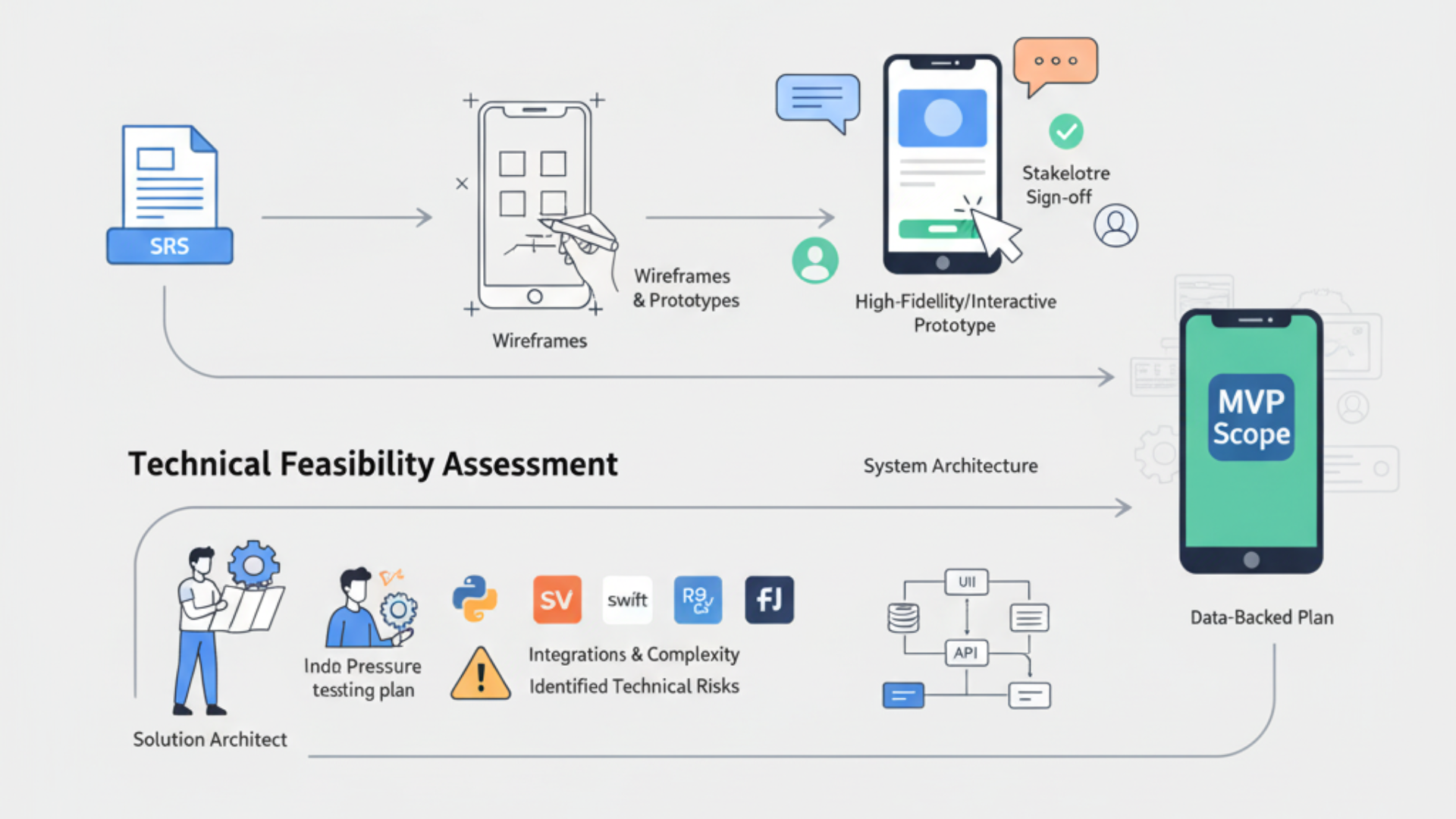
4. Building the Scale Model: Prototyping and Feasibility
Finally, you make the plan tangible and ensure it can actually be built.
- Wireframes & Prototypes: Your designer turns the SRS into a visual blueprint, starting with low-fidelity wireframes (skeletons) and evolving them into a high-fidelity, interactive prototype. A clickable prototype is invaluable—it allows you to get stakeholder sign-off and conduct usability testing before a single dollar is spent on coding.
- Technical Feasibility Assessment: Your solution architect pressure-tests the plan. They choose the right technology stack, identify potential technical risks (like complex integrations), and design the system architecture for a scalable and secure product.
This work culminates in a precisely defined Minimum Viable Product (MVP) scope. This isn’t a guess; it’s a data-backed plan for the leanest, most valuable version of your product that you can launch to start learning from real users.
Further Reading: The MVP approach is the smartest, most capital-efficient way to get to market. Learn more in our detailed guide: Why a Minimum Viable Product (MVP) is the Smartest Way to Launch Your App.
Planning for the Journey Ahead
While the Discovery Phase focuses on defining what to build, it’s also the perfect time to start planning for the entire lifecycle. Understanding the downstream implications of your early decisions is key to long-term success.
Further Reading: As you finalize your scope, explore these essential guides from our From Idea to Launch & Beyond series:
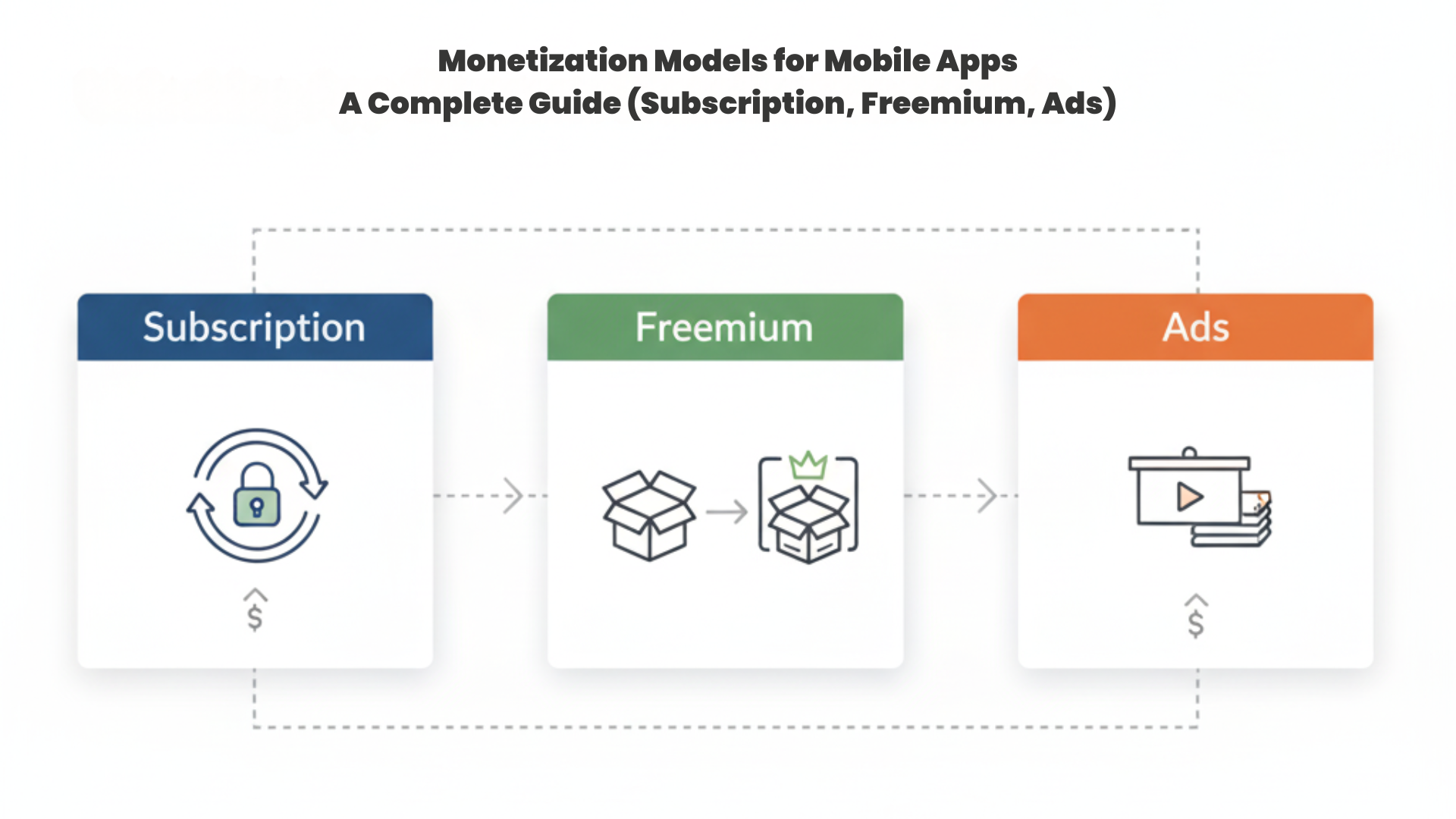
- Monetization Models for Mobile Apps: A Complete Guide to decide how your app will generate revenue.
- The Role of Quality Assurance (QA) Testing in a Successful Launch to understand how to build quality in from the start.
- The Ultimate Post-Launch Checklist for Your New Website or App to prepare for what comes after launch.
The ‘Engage Coders’ Difference: Why Our Discovery Goes Deeper
Most agencies will tell you they do a discovery phase. They’ll create flimsy user personas and give you a generic project plan. Frankly, that’s not good enough. Here’s our opinionated take on how to do it right:
- We Build ‘Buyer Profiles,’ Not Just Personas. A persona tells you who a user is. A Buyer Profile tells you why they buy. We build data-backed profiles focused on purchase triggers, core motivations, and the “Job To Be Done.” This ensures we’re not just building features users might like, but a solution they are compelled to adopt because it solves a deep, underlying need.
- We Prioritize Technical De-Risking. Many great ideas die because of a hidden technical iceberg. Our solution architects are involved from day one, pressure-testing every core feature for feasibility. We once saved a client six figures by discovering during a two-week discovery that their key third-party data integration was technically impossible as planned, allowing us to pivot to a viable alternative before a single line of code was written.
- Our Deliverables Are a Business Case. You don’t just get a technical document; you get a comprehensive business case. Our final deliverable is a plan you can take directly to your board or investors with confidence, because every recommendation is backed by market data, user research, and a rigorous technical assessment.
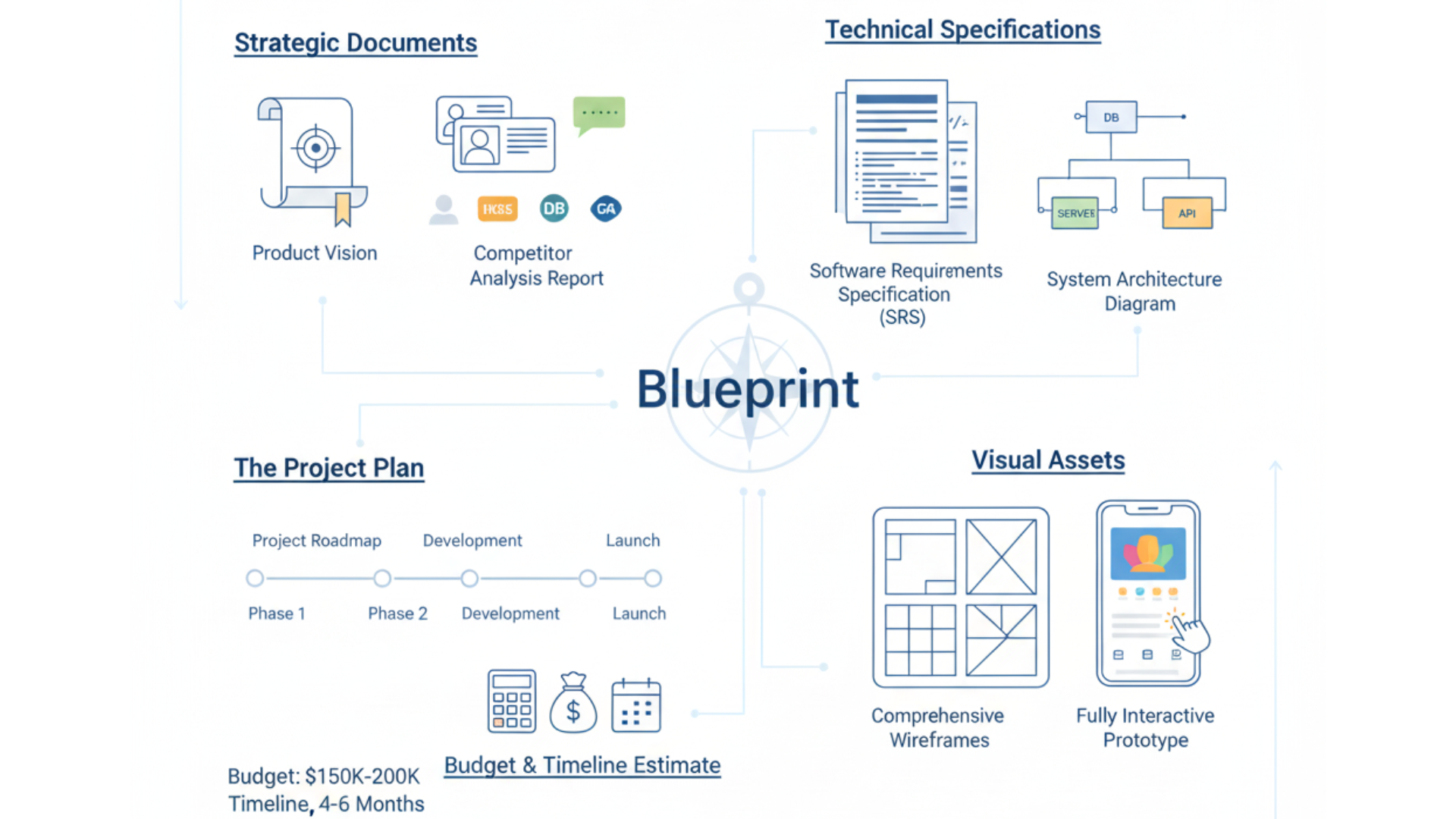
From Blueprint to Build-Ready
The Discovery Phase doesn’t just produce ideas; it produces a suite of concrete deliverables that serve as the project’s official blueprint. When you invest in a proper Discovery Phase, this is what you should demand:
- Strategic Documents: A Product Vision Document, data-backed Buyer Profiles, and a Competitor Analysis Report.
- Technical Specifications: A detailed Software Requirements Specification (SRS) and a System Architecture Diagram.
- Visual Assets: Comprehensive Wireframes and a fully Interactive Prototype.
- The Project Plan: A detailed Project Roadmap with milestones and, most importantly, an accurate, data-backed Budget and Timeline Estimate.
Conclusion: Invest in Foresight to Guarantee Success
The choice isn’t between doing a Discovery Phase or saving money. It’s between investing a small amount in foresight now or risking a catastrophic amount on hindsight later.
Dropbox validated their idea with a simple explainer video before writing any code. Airbnb started with a basic website and photos of their own apartment. They proved the market existed before they invested in building a global platform. The Discovery Phase is your mechanism for taking this same smart, lean approach. It aligns your team, validates your idea, and provides a predictable path forward, turning a high-stakes gamble into a well-managed execution. It’s the strategic foundation that partners like Engage Coders help you build, ensuring your vision is built to last.
Ready to Build Your Blueprint?
Navigating the Discovery Phase is the first—and most critical—part of the app development journey. Having an experienced guide in your corner can make all the difference.
At Engage Coders, we specialize in turning ambitious ideas into well-defined, build-ready plans. We partner with founders and businesses to conduct the rigorous discovery work that lays the foundation for on-time, on-budget project success. We’ve seen what works, and we know how to avoid the pitfalls.
If you’re ready to de-risk your vision and build a predictable path to launch, let’s talk.
Schedule Your Free Discovery Consultation
FAQs
How long does a Discovery Phase usually take?
Typically 2 to 4 weeks. But the real answer is: as long as it takes to get to a plan you can bet your business on. Any agency that gives you a fixed timeline before understanding your project’s complexity isn’t doing a real discovery; they’re just checking a box. We focus on the outcome—a predictable roadmap—not just the clock.
What if the Discovery Phase shows my idea isn’t viable?
Frankly, that’s a win. Consider it the cheapest and smartest ‘failure’ you’ll ever have. Our job isn’t just to build your vision; it’s to protect your investment. Finding a fatal flaw in week three costs a fraction of discovering it post-launch when you’ve burned through six figures and your reputation is on the line. We see this not as a dead end, but as a successful de-risking of your capital, freeing you to pivot to a winning idea.
Is a Discovery Phase expensive?
It’s a rounding error compared to the cost of building the wrong app. A proper Discovery is an investment, typically 5-10% of the total project budget. The real question is, can you afford not to do it? Skipping this phase is the most common reason projects go 50-200% over budget. It is the highest-ROI investment you’ll make in the entire development lifecycle.
Can’t my own team just do this?
Your team has invaluable internal knowledge. But they also have biases and blind spots. A strategic partner brings two things you can’t replicate internally: a battle-tested process honed across dozens of projects, and the objective, unvarnished truth. We aren’t afraid to challenge assumptions and ask the uncomfortable questions that internal teams, due to politics or proximity, often can’t. It’s that constructive friction that forges a truly resilient plan.
What is the single most important deliverable from this phase?
The deliverable isn’t a document; it’s predictability. While you’ll get a full suite of assets—from a prototype to a technical spec—the most valuable outcome is replacing “I think this will work” with “I have a data-backed plan that proves this will work.” It’s the blueprint that gives you the confidence to write the big checks for development, knowing your investment is secure.