
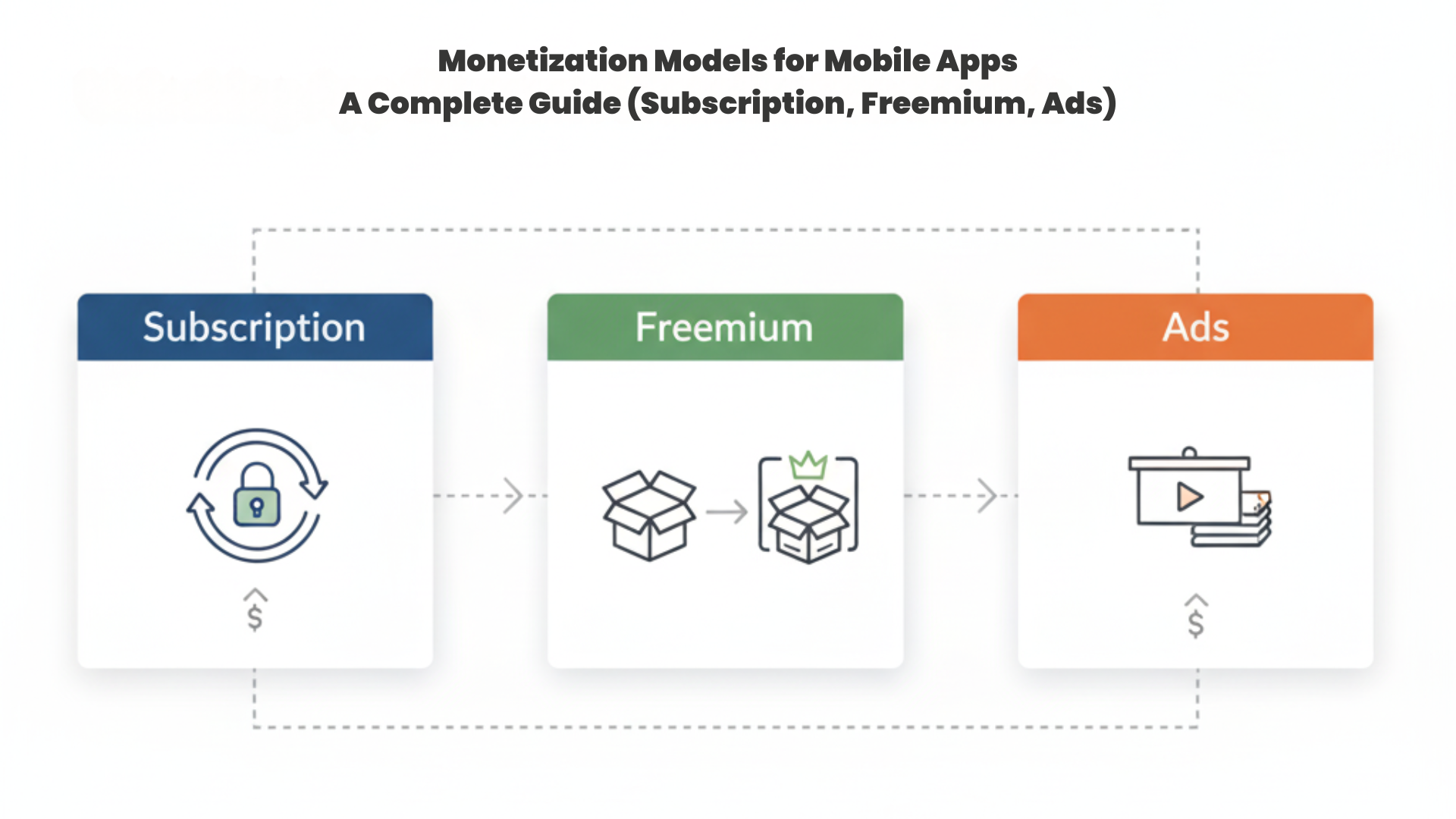
Monetization Models for Mobile Apps: A Complete Guide (Subscription, Freemium, Ads)
You’ve validated your idea, defined your MVP, and have a clear path to building your app. Now comes the billion-dollar question: how will it actually make money?
Choosing a monetization model isn’t just a financial decision; it’s a product design decision that will fundamentally shape your user experience. Get it right, and you create a sustainable business that funds its own growth. Get it wrong, and you can alienate your users, kill your retention, and starve your app of the revenue it needs to survive.
With the global app market projected to hit nearly $600 billion in 2025, the stakes have never been higher. This guide, a vital chapter in our From Idea to Launch & Beyond series, breaks down the dominant monetization strategies—Subscription, Freemium, and Ads—to help you make the right strategic choice for your business.
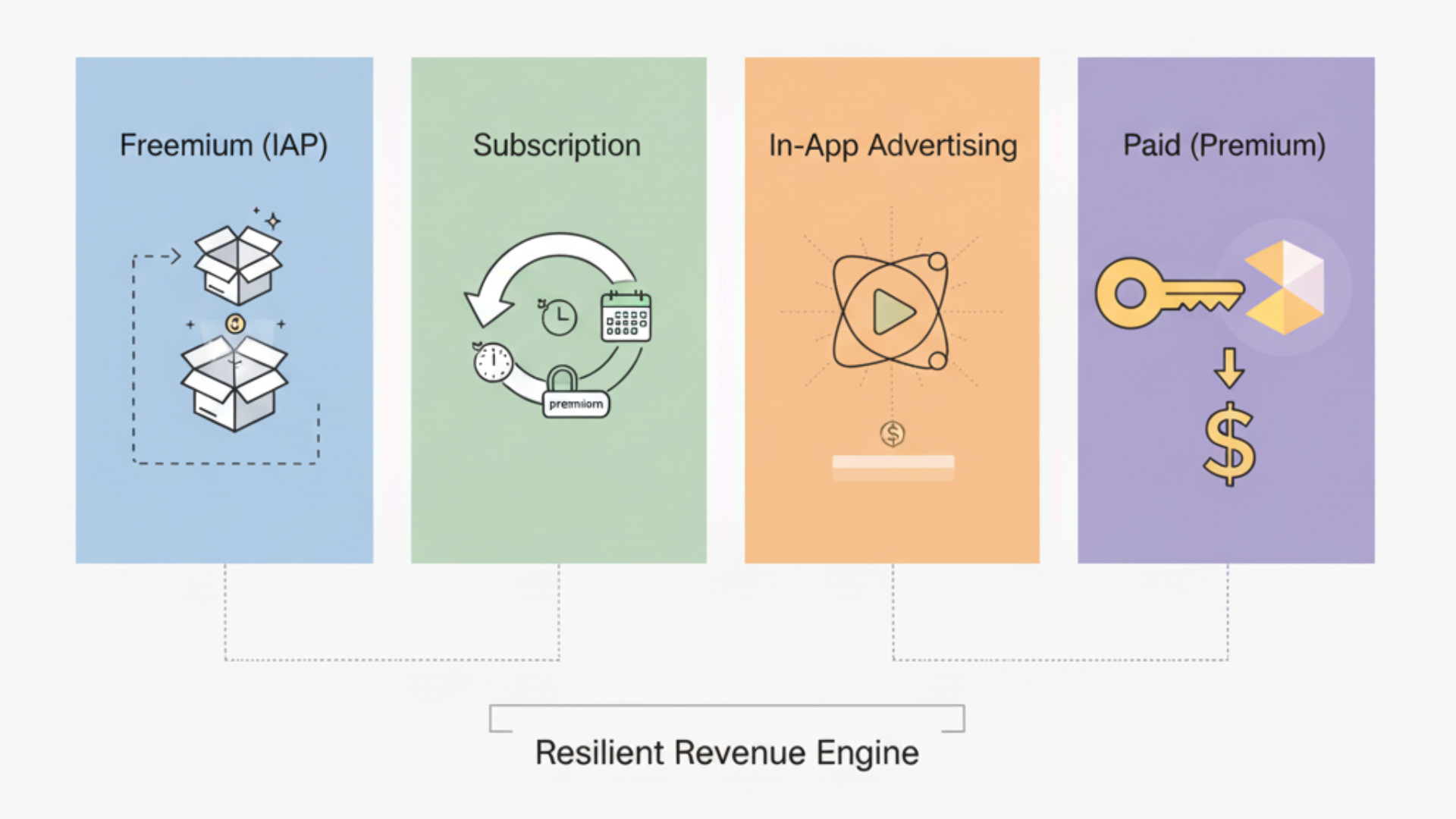
The Core Four Monetization Models
The modern app economy has consolidated around a few key strategies. Understanding the mechanics, pros, and cons of each is the first step to building a resilient revenue engine.
| Model | How You Make Money | User Experience Impact | Best Suited For |
|---|---|---|---|
| Freemium (IAP) | One-time purchases for features or virtual goods. | High. Users “try before they buy.” | Most apps, especially gaming, productivity, and dating. |
| Subscription | Recurring (monthly/yearly) fees for access. | Excellent. Premium, ad-free experience. | Content and service apps (streaming, news, fitness). |
| In-App Advertising | Payments from ad networks per view or click. | Can be disruptive if not implemented well. | Mass-market apps with high engagement (casual games, social). |
| Paid (Premium) | One-time, upfront fee to download. | Excellent. No ads or upsells. | Niche, high-value utility apps with a clear purpose. |
1. Freemium (with In-App Purchases)
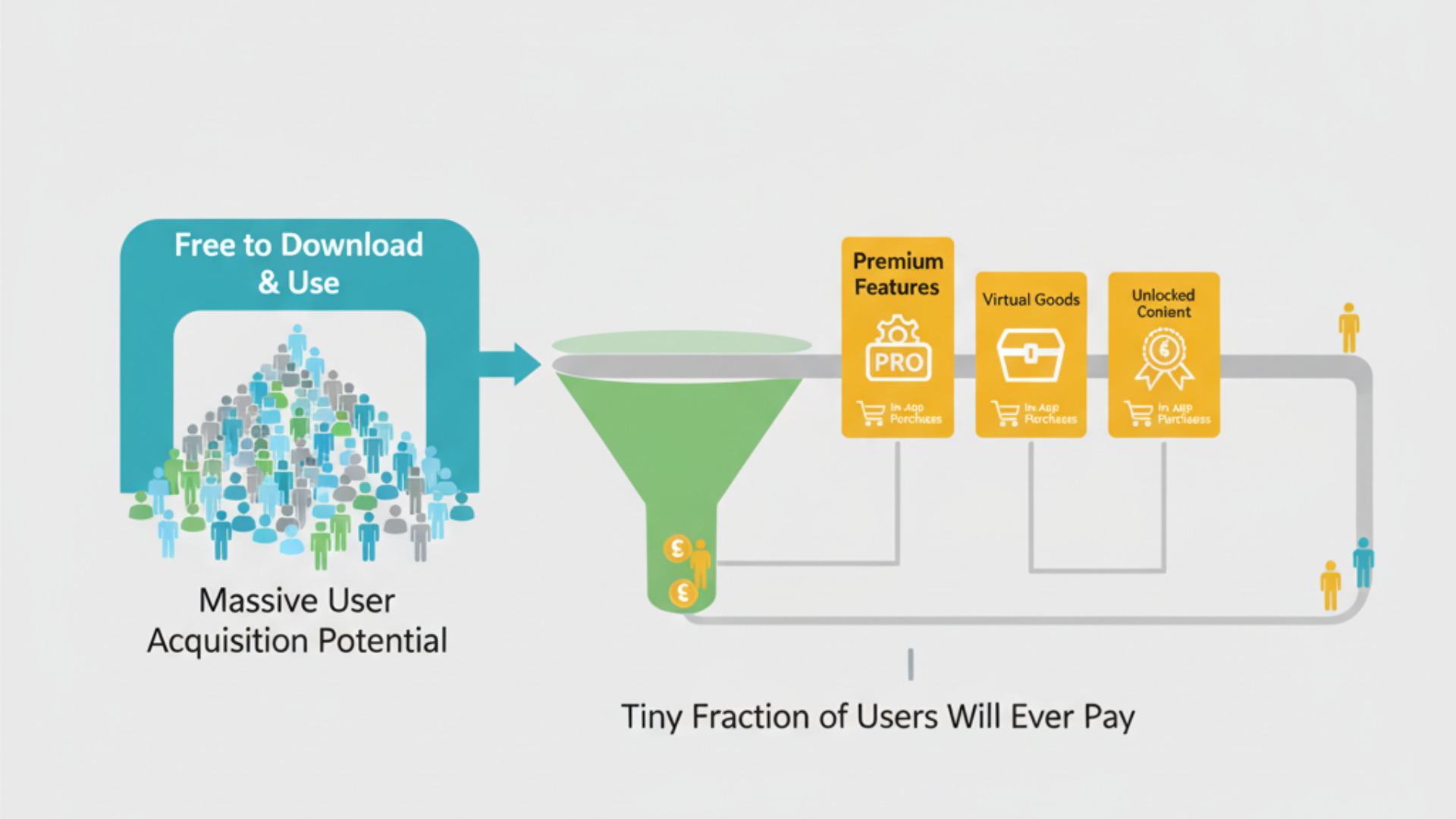
The Gist: The app is free to download and use, but premium features, content, or virtual goods are available for purchase. This is the dominant model for a reason: it removes the biggest barrier to entry—cost.
- Pros: Massive user acquisition potential. Allows users to experience the app’s value before committing, which can lead to higher-quality conversions.
- Cons: Only a tiny fraction of users (typically 1-5%) will ever pay. This means you must support a massive non-paying user base, making the balance of free vs. paid features absolutely critical.
Reality Check: It’s a Game of Conversion
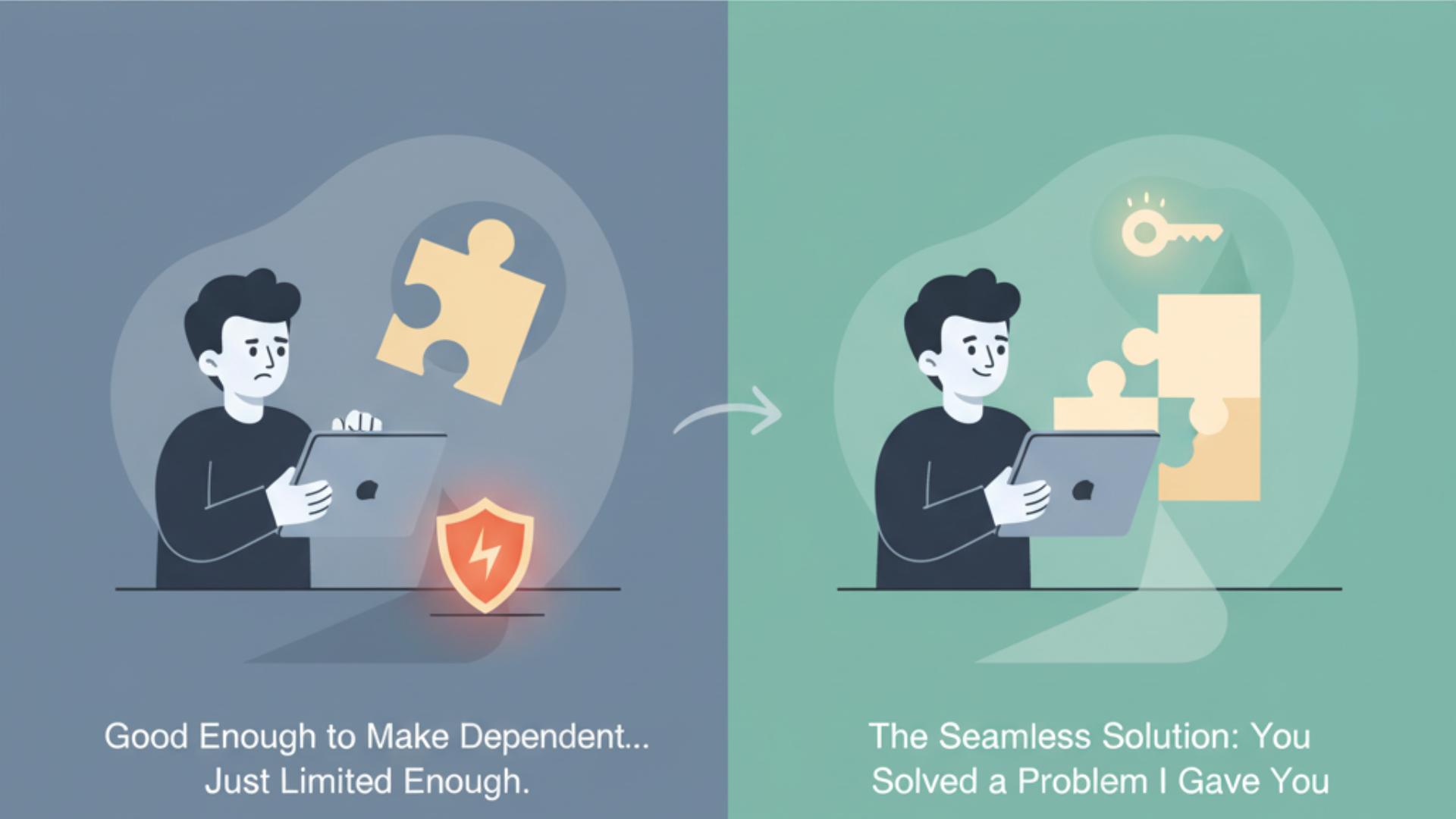
A successful freemium model is a psychological exercise. The free version must be good enough to make the user dependent on it, but just limited enough that the premium features solve a real, felt pain point. The goal isn’t just to sell features; it’s to sell the solution to a problem the user has experienced firsthand.
2. Subscription
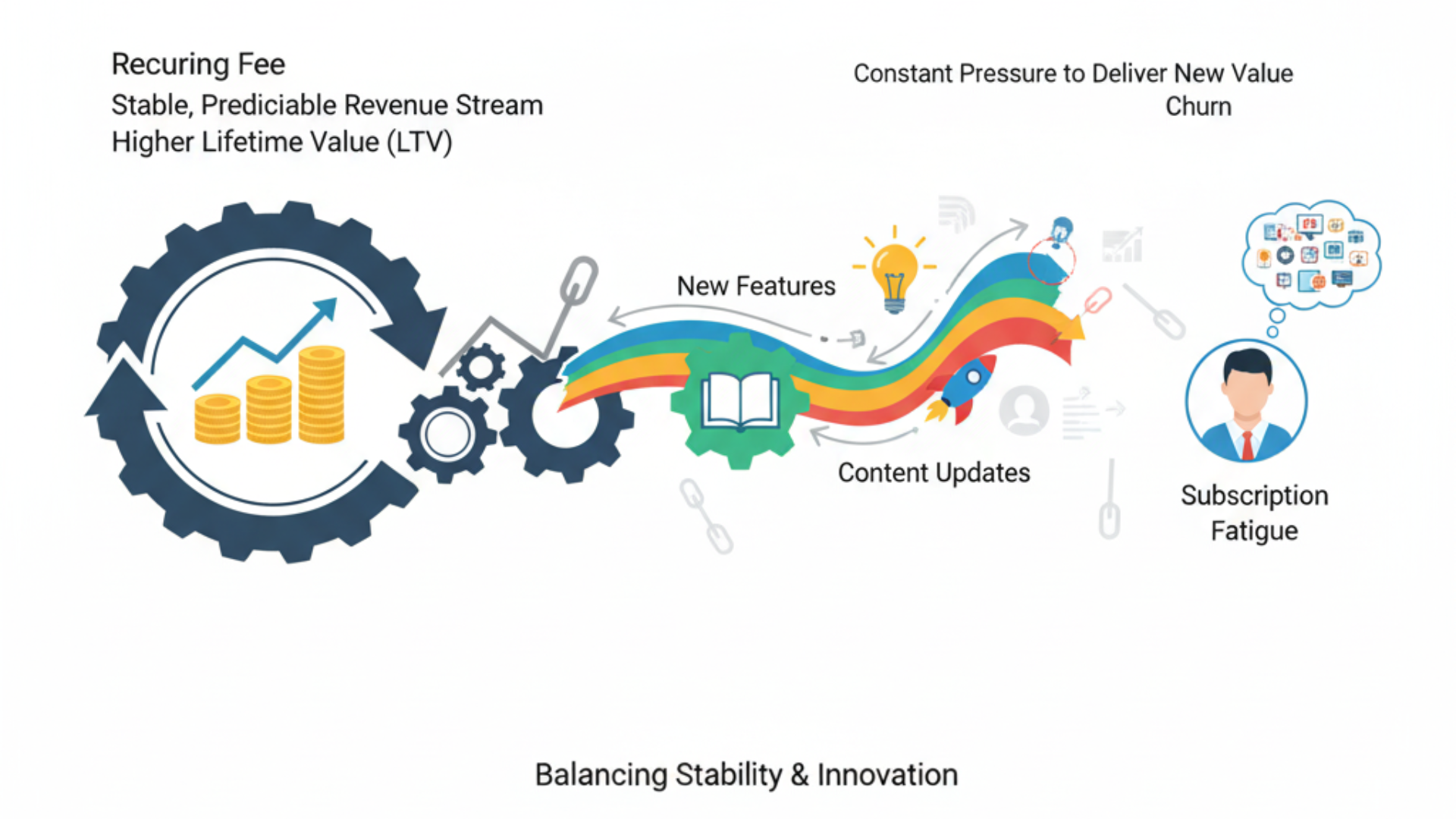
The Gist: Users pay a recurring fee (monthly or annually) for ongoing access to content or services. This is the gold standard for predictable revenue.
- Pros: Creates a stable, predictable revenue stream, which is fantastic for financial planning and business valuation. Fosters long-term customer relationships and a much higher Lifetime Value (LTV).
- Cons: You are under constant pressure to deliver new value. To prevent users from canceling (“churning”), you must regularly update the app with fresh content or new features. Consumers are also facing “subscription fatigue,” making them more selective.
3. In-App Advertising (IAA)
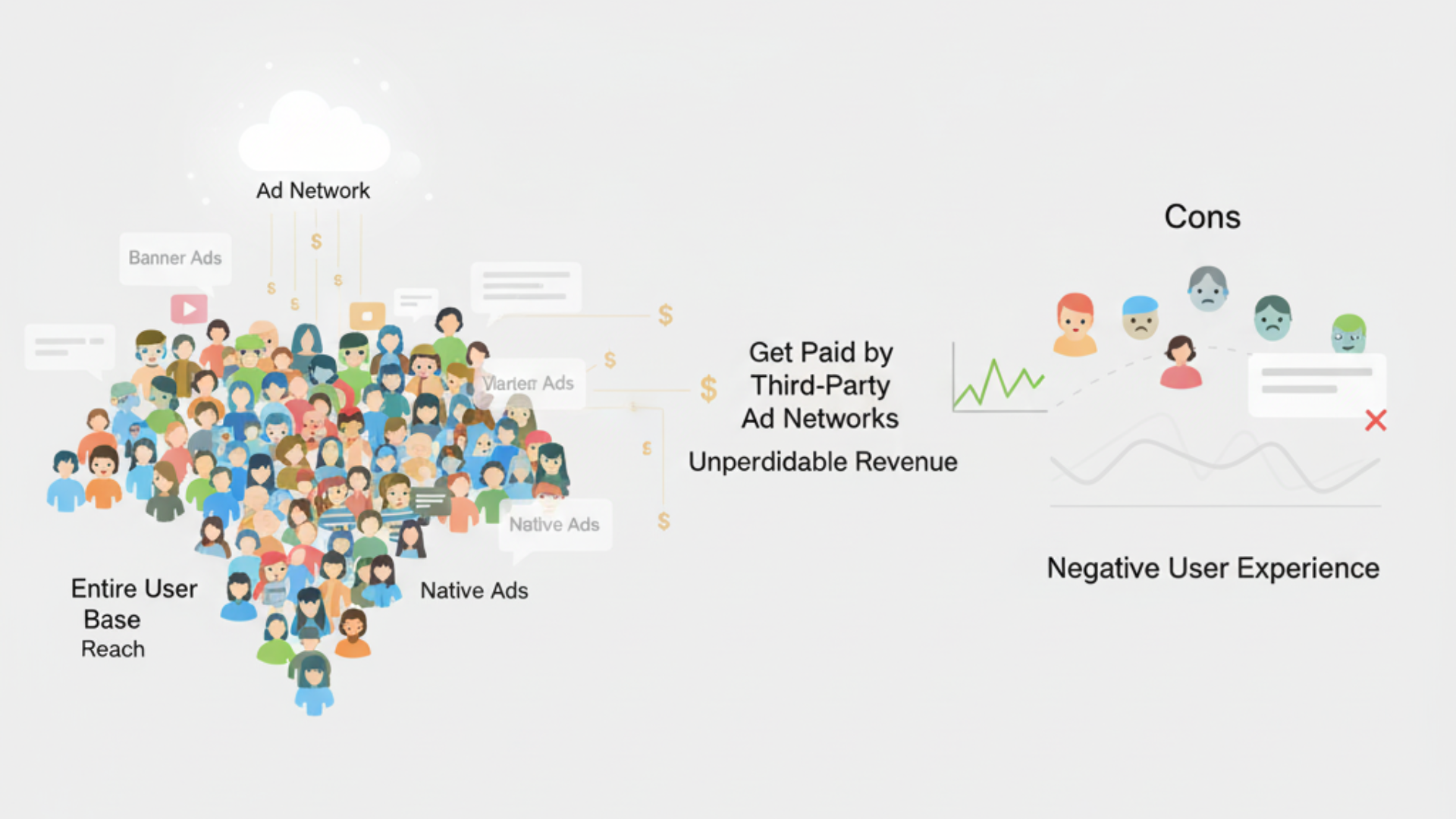
The Gist: You offer the app for free and get paid by third-party ad networks to display ads to your users.
- Pros: Monetizes your entire user base, including the 95-99% who will never make a direct purchase. It’s a proven method for generating revenue from high-volume, casual apps.
- Cons: Can severely damage the user experience if ads are intrusive or irrelevant. Revenue can be unpredictable, and you become dependent on the policies of ad networks.
The Modern Standard: Hybrid Monetization
Let’s be blunt: choosing just one model is an outdated strategy. The most successful apps in 2025 and beyond are masters of hybridization, strategically combining models to create a flexible and powerful financial engine.
The philosophy is simple: different users have different willingness to pay. A hybrid model caters to everyone. It allows you to earn ad revenue from casual users while capturing high-value direct payments from your most engaged “power users.”
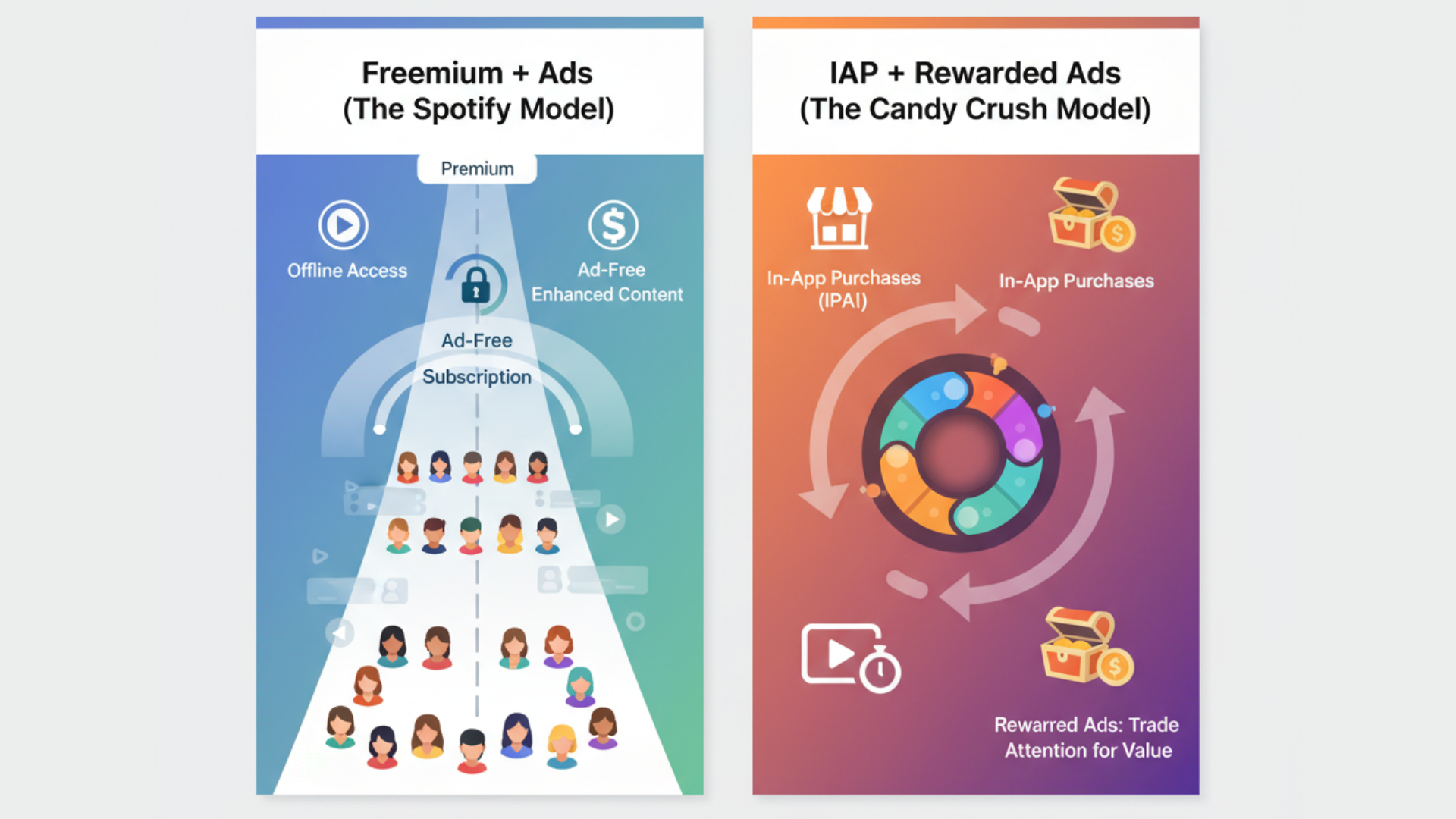
Proven Hybrid Models in Action:
- Freemium + Ads (The Spotify Model): The app is free and supported by ads. Users are then offered a subscription to remove the ads and unlock premium features (like offline downloads). This is the classic “value-add” upsell.
- IAP + Rewarded Ads (The Candy Crush Model): This is the engine of mobile gaming. Players can either buy in-game items with real money (IAP) or earn them by voluntarily watching a video ad. It brilliantly monetizes non-paying users by trading their attention for in-game value.
The Engage Coders Take: Start with a Hybrid Mindset
When we architect an app, we don’t ask “which one model?” We ask “how can we create multiple value exchanges?” Your monetization strategy shouldn’t be a gate; it should be a series of doors. Some users will pay to open a door, others will watch an ad. Your job is to make sure every door leads to a great experience that keeps them in your app.
A Strategic Framework for Choosing Your Model
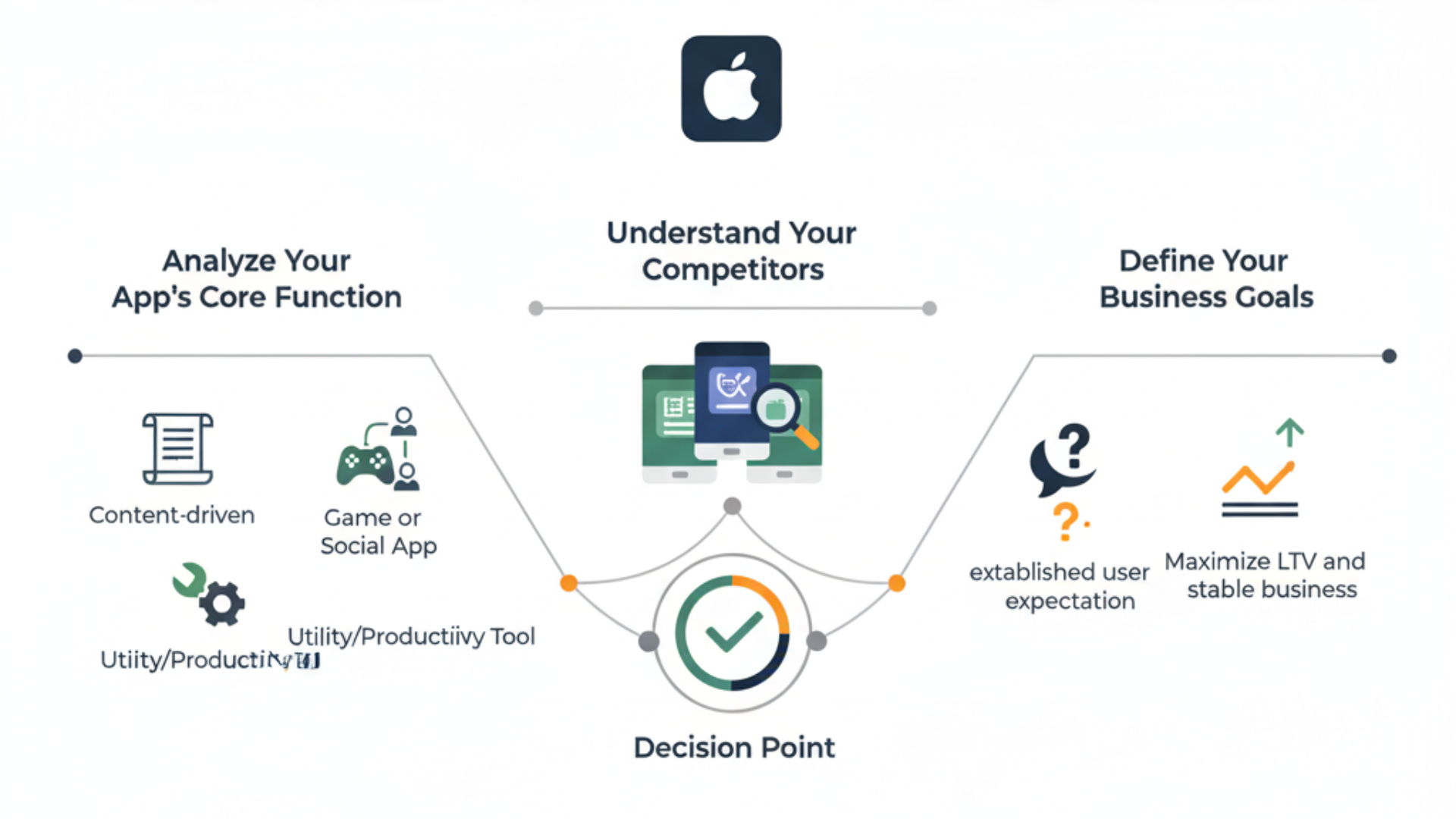
Your monetization model should not be an afterthought. It must be woven into your product strategy from day one. Here’s a simple framework to guide your decision.
- 1. Analyze Your App’s Core Function:
- Content-driven (News, Streaming): Subscription is your natural fit. Value is ongoing.
- Game or Social App: A hybrid of IAP and Rewarded Ads is the proven winner.
- Utility/Productivity Tool: Freemium with a subscription upsell for power features is often best.
- 2. Understand Your Competitors: Research the top apps in your category. What is the established user expectation? You don’t have to copy them, but you need to know what you’re up against. Are users accustomed to a free, ad-supported experience, or are they willing to pay for quality?
- 3. Define Your Business Goals: Is your primary goal rapid, mass-market growth? A freemium or ad-supported model with its low barrier to entry is your best bet. Is your goal to maximize LTV and build a stable, predictable business? A subscription model is superior.
Next Steps in Your Journey: Choosing your monetization model is a key outcome of a rigorous planning process. Ensure you’ve laid the right groundwork by reading:
- The Discovery Phase Blueprint: To ensure your scope is clear before you build.
- Why a Minimum Viable Product (MVP) is the Smartest Way to Launch: To get to market faster and start learning.
Conclusion: Monetization is a Conversation with Your Users
Your monetization strategy is not set in stone. It’s a dynamic, ongoing conversation with your users, told through data. The best strategy is one that provides a fair value exchange, respects the user’s experience, and generates the revenue needed to continuously invest in making your product better.
It’s a delicate balance, but getting it right is the key to transforming your innovative app into an enduring business.
Ready to Build a Profitable App?
Choosing and implementing the right monetization strategy is one of the hardest parts of the app development journey. The difference between a successful model and a failed one often comes down to experience.
At Engage Coders, we’ve helped dozens of founders and businesses design and build monetization systems that work. We don’t just write code; we partner with you to create a strategic financial engine for your app that aligns with your goals and delights your users.
Get a Free Consultation
Frequently Asked Questions (FAQs)
Can I change my monetization model after I launch?
Ans: Yes, but it can be very difficult, especially when moving from free to paid. It’s much easier to start with a hybrid model and adjust the balance over time (e.g., change ad frequency, test new IAP prices) than to introduce a hard paywall to a user base that expects the app to be free. Plan for flexibility from the start.
Which model makes the most money?
Ans: There’s no single answer. Gaming and social networking generate the most total revenue, primarily through IAP and ads. However, subscription apps often have a much higher Average Revenue Per User (ARPU). The “best” model depends entirely on your app’s category, audience size, and engagement levels.
How do Apple and Google’s fees affect my revenue?
Ans: Both Apple and Google take a standard 30% commission on all sales made through their app stores (paid apps, IAPs, and subscriptions). For subscriptions that retain a user for over a year, this rate often drops to 15%. This commission is a significant cost that you must factor into your pricing and financial projections.
What is LTV and why is it so important?
Ans: Lifetime Value (LTV) is the total revenue you can expect to generate from a single user over the entire time they use your app. For your business to be sustainable, your LTV must be higher than your Customer Acquisition Cost (CAC)—the amount you spend to get that user. It’s the single most important metric for measuring the long-term health of your monetization strategy.


