The Role of Quality Assurance (QA) Testing in a Successful Launch
It’s launch day. Your team is exhausted but excited. You push the button, your app goes live, and then… the reports start trickling in. The app is crashing on older phones. The payment gateway is failing. Your brand-new product is getting one-star reviews, and your dream launch has turned into a nightmare of crisis management.
This isn’t a hypothetical scenario; it’s the preventable reality for thousands of apps that treat Quality Assurance (QA) as an afterthought. Let’s be blunt: QA isn’t a “nice-to-have” final check. It’s not a cost center. It’s a strategic discipline that functions as your project’s immune system, proactively finding and neutralizing the threats that can kill your app before it has a chance to succeed.
In this critical chapter of our From Idea to Launch & Beyond series, we’ll demystify the world of QA and show you why a robust testing strategy is the single best investment you can make in your product’s future.
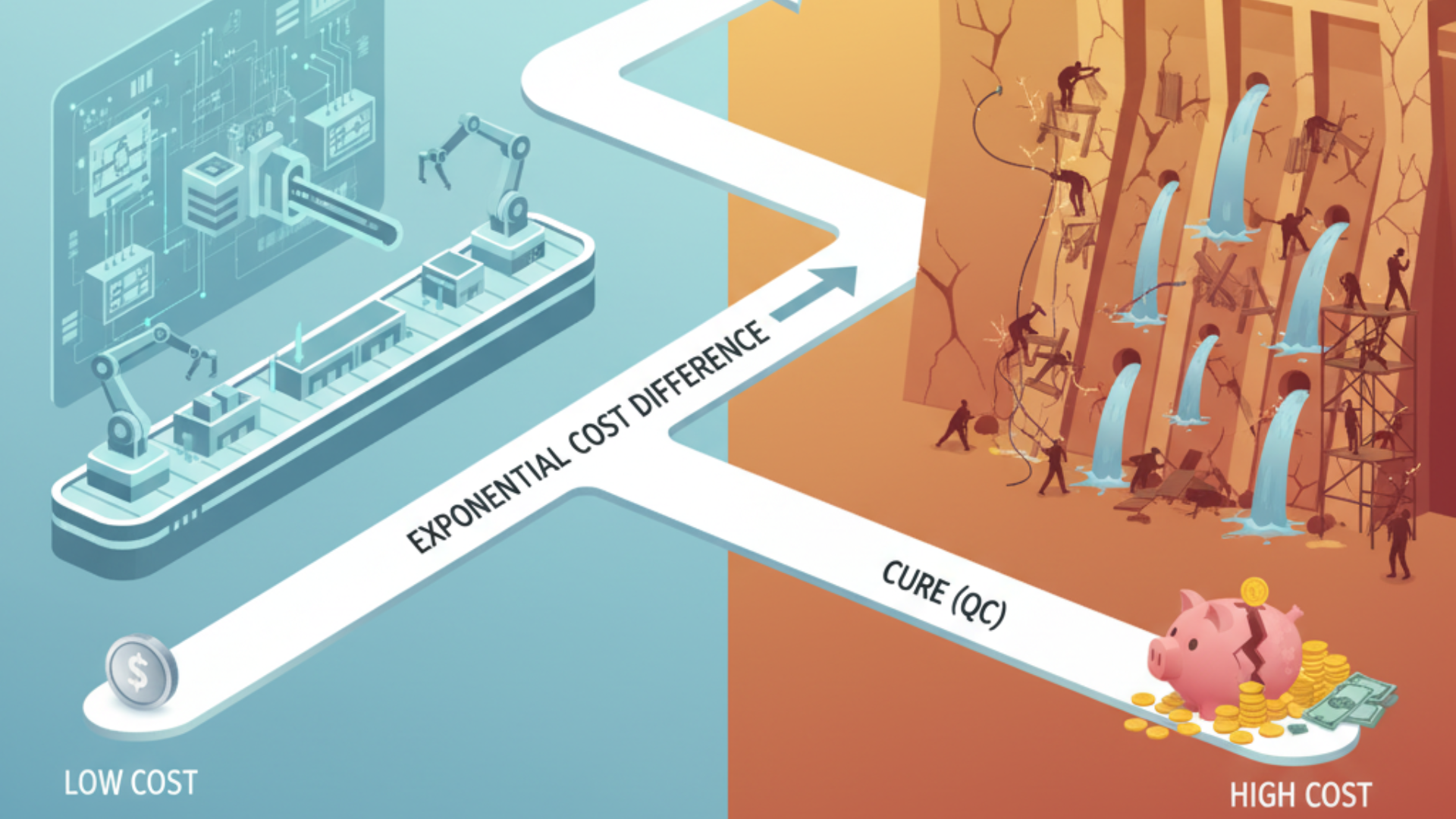
The QA Mindset – Prevention is Exponentially Cheaper Than Cure
The biggest misconception about QA is that it’s just about finding bugs. That’s Quality Control (QC). True Quality Assurance (QA) is a proactive philosophy focused on preventing defects from happening in the first place.
- Quality Assurance (QA) is process-oriented. It asks: “Are we building this the right way to prevent problems?”
- Quality Control (QC) is product-oriented. It asks: “Did we find all the problems in what we built?”
This distinction is crucial because of the economics of bug-fixing. A bug found during the design phase is cheap to fix. That same bug, found by a user after launch, can be 100 times more expensive to fix in terms of developer time, customer support costs, and damage to your brand reputation.
Reality Check: QA Isn’t a Department, It’s a Culture
In modern development, QA is not a siloed team that receives code “over the wall.” It’s a shared responsibility woven into every stage of the development lifecycle. A healthy engineering culture is one where developers, designers, and testers are in constant collaboration, all advocating for the end-user and collectively owning the quality of the final product.
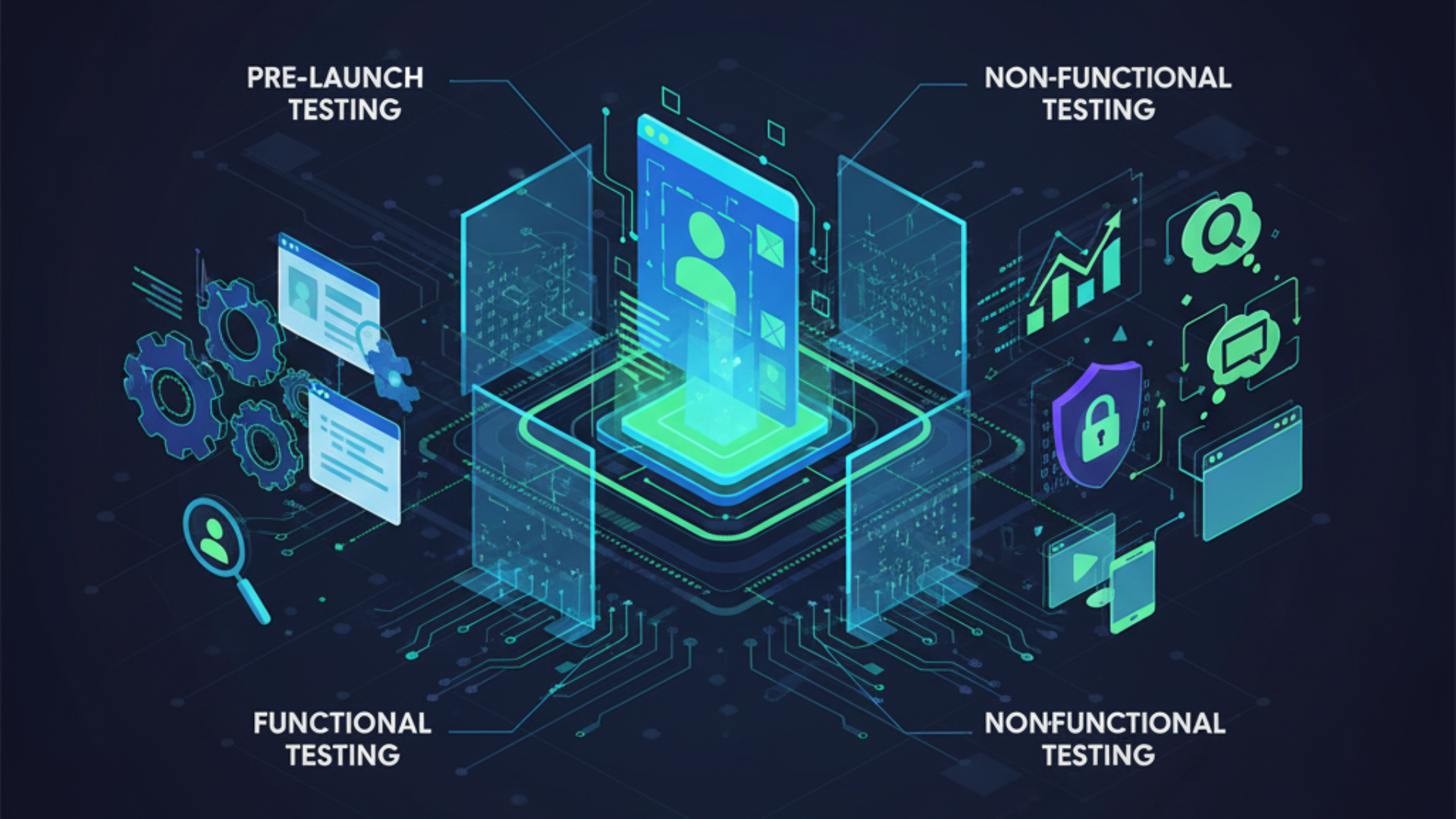
The Pre-Launch Testing Arsenal
A successful QA strategy employs a multi-layered arsenal of testing types, each designed to validate a specific aspect of your app. These fall into two main categories: validating what the app *does* (Functional) and how *well* it does it (Non-Functional).
Functional Testing: Does it Work?
This ensures your app’s features behave as expected and meet the specified requirements.
- Unit Testing: Developers test the smallest individual pieces of code in isolation. This is the first and most cost-effective line of defense.
- Integration Testing: Verifies that different modules or services work together correctly when combined.
- System Testing: Evaluates the complete, integrated app to ensure it works as a cohesive whole.
- User Acceptance Testing (UAT): The final step, where real end-users validate that the app meets their needs and solves their problem.
Non-Functional Testing: Is it Good?
This evaluates the critical characteristics that define the user experience.
- Performance Testing: Measures the app’s speed, responsiveness, and stability under load. Can it handle your expected launch traffic?
- Security Testing: Proactively identifies vulnerabilities to protect user data and prevent breaches. This is non-negotiable.
- Usability Testing: Assesses how intuitive and user-friendly the app is. This involves watching real users interact with the app to find points of friction.
- Compatibility Testing: Ensures the app works correctly across different devices, operating systems, and browsers.
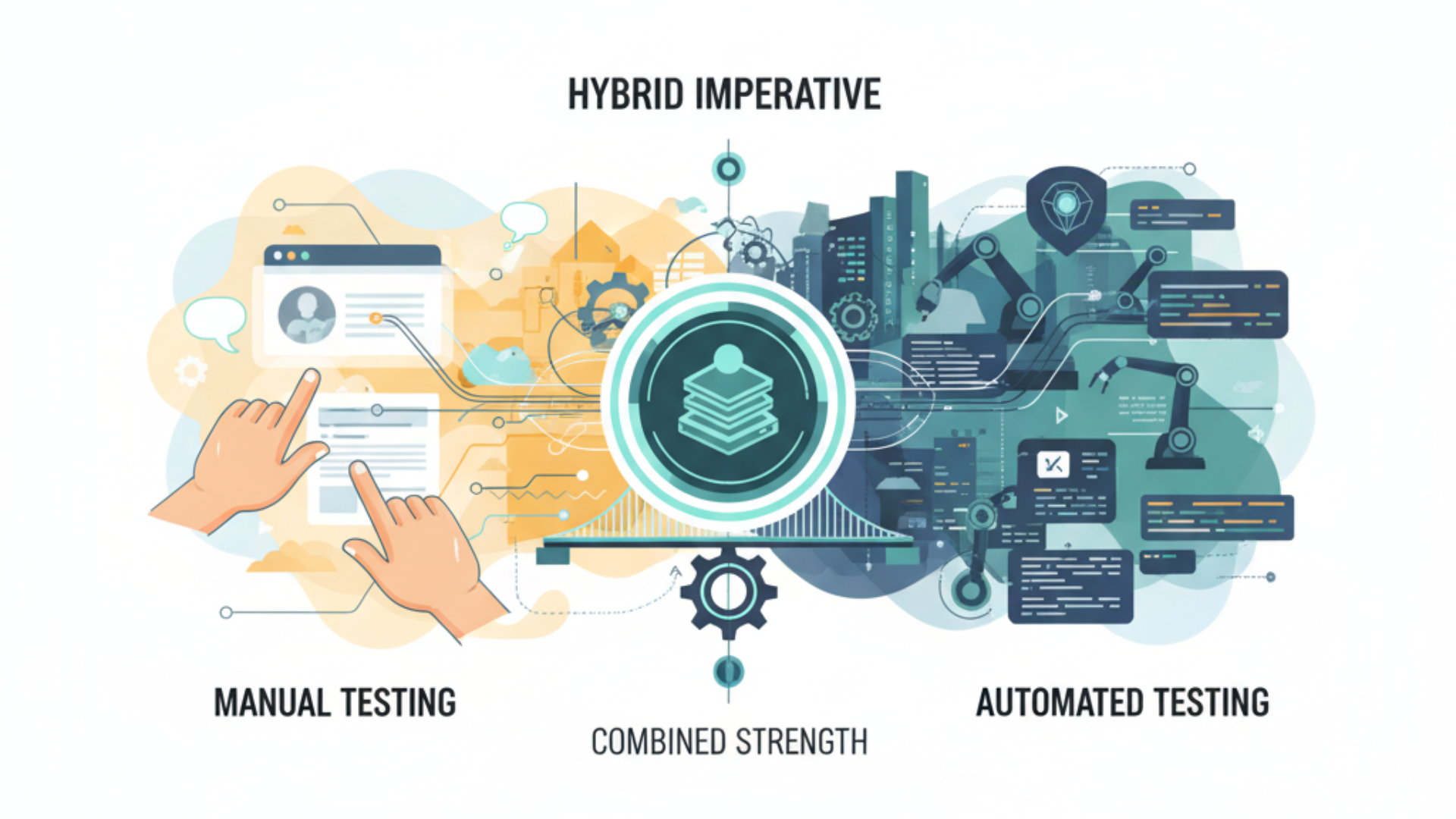
The Hybrid Imperative: Manual vs. Automated Testing
The debate over manual vs. automated testing is a false choice. A mature QA strategy doesn’t choose one; it leverages the unique strengths of both in a strategic, hybrid approach.
| Aspect | Manual Testing | Automated Testing |
|---|---|---|
| Best For | Exploratory, Usability, and UI testing that requires human intuition and empathy. | Repetitive, high-volume tasks like Regression and Performance testing. |
| Speed | Slower for repetitive tasks but fast for ad-hoc checks. | Significantly faster for executing large test suites 24/7. |
| Cost | Lower initial setup cost, but high long-term cost due to continuous human effort. | Higher initial investment in tools and setup, but lower long-term cost for repetitive tests. |
| Goal | To find bugs through creativity and exploration, acting as the user. | To ensure existing features don’t break when new code is added, acting as a safety net. |
The Engage Coders Take: Automate Your Safety Net, Manualize Your Exploration
We advise clients to think of automation as their essential safety net. It runs constantly, catching regressions and ensuring the core of your app is stable. This frees up your human testers to do what they do best: think like a user, explore the app creatively, and find the complex, unexpected bugs that scripts will always miss. One without the other is an incomplete strategy.
Conclusion: Quality is the Ultimate Feature
In a crowded market, a high-quality, bug-free user experience is no longer a luxury; it’s a powerful competitive advantage. A strategic investment in QA is an investment in your brand’s reputation, your users’ trust, and your business’s long-term financial health.
By shifting from a reactive “bug hunt” to a proactive culture of quality, you transform a potential launch-day disaster into a predictable, successful, and scalable release that delights users and drives growth.
Ready to Launch with Confidence?
A world-class app requires a world-class QA process. But building and managing a comprehensive testing strategy is a full-time discipline.
At Engage Coders, quality is in our DNA. We integrate rigorous QA and testing into every stage of development, from initial strategy to post-launch monitoring. We are the expert partners who ensure your product is not just functional, but reliable, secure, and ready to scale.
Discuss Your Project
Frequently Asked Questions (FAQs)
Q1: Will a thorough QA process slow down our launch?
This is a common myth. While it requires an upfront investment of time, a mature QA process actually accelerates development. By catching bugs early and preventing major issues, it minimizes the need for time-consuming rework, “fire drills,” and release delays. In an Agile environment, testing happens concurrently with development, ensuring a steady, predictable pace.
Q2: How much should we budget for QA?
Ans: There’s no magic number, but industry best practices suggest that QA and testing can account for 15-25% of the total project budget. The real question isn’t “how much does QA cost?” but “how much will it cost if we don’t do it?” The cost of a single major post-launch bug can easily exceed your entire initial QA investment.
Q3: Can’t our developers just test their own code?
Ans: Developers are essential for unit testing, but they can’t be solely responsible for QA. It’s incredibly difficult for anyone to find flaws in their own work due to inherent biases. A dedicated QA professional brings a different perspective—a mindset focused on breaking the software to make it stronger—which is essential for finding the kinds of bugs developers might overlook.
Q4: What’s the difference between Alpha and Beta testing?
Ans: Alpha Testing is internal testing done by your team in a controlled environment. It’s your first line of defense. Beta Testing involves releasing the app to a limited group of real, external users before the official launch. The feedback you get from beta testers is pure gold for finding real-world bugs and usability issues you’d never find in a lab.