OpenAI 2025 Breakdown: ChatGPT Memory, O3 Model, 04-Mini & Emerging Trends
Artificial Intelligence is evolving faster than anyone expected, and OpenAI is right at the center of that transformation. From game-changing new models to futuristic features like memory and even whispers of a social media platform, the landscape is shifting quickly. Whether you’re a developer, marketer, or curious creator, it can be hard to keep up with everything. This blog breaks down the most significant ChatGPT updates in 2025, including how to compare OpenAI’s latest models, what each one is best at, and what the future might hold.
And yes, let’s talk about those confusing names, too.
Table of Contents
- Why OpenAI Should Be Banned From Naming Things
- OpenAI Model Comparison: What’s What in 2025
- Best for Scientific and Mathematical Reasoning: o3
- Best AI Models for Coding: GPT-4.1 Full and o3
- Best for Writing, Creativity, and General Use: GPT-4
- Best Value: GPT-4.1 Nano
- How OpenAI’s Models Compare to Outside Models
- New Feature: ChatGPT Memory
- Coming Soon? OpenAI’s Social Media Network to Rival X
- How to Stay on Top of the AI Model Firehose
- Final Thoughts
Why OpenAI Should Be Banned From Naming Things
Let’s be honest — trying to understand OpenAI’s naming conventions feels like decoding a puzzle. Between GPT-4.1 vs GPT-4.5, o3, 04-mini, and now GPT-4.1 Nano, it’s hard to know which version does what — or which one is newer.
OpenAI has acknowledged the confusion and plans to streamline model selection in the future, likely with a unified system (maybe GPT-5) that automatically chooses the best backend. Until then, we’re left navigating acronyms and numbers that don’t always follow logic.
OpenAI Model Comparison: What’s What in 2025
Let’s simplify things. Below is an OpenAI model comparison that breaks down each current major model and what it’s best suited for.
1. Best for Scientific and Mathematical Reasoning: o3
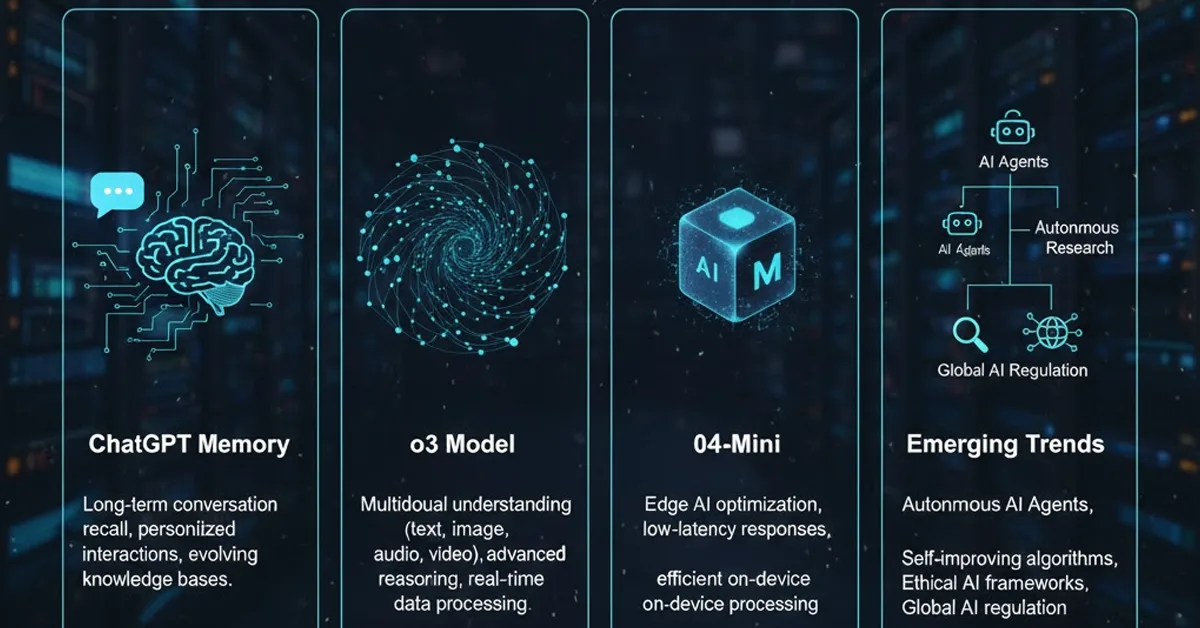
The OpenAI o3 model performance has quickly gained attention for its powerhouse capabilities in logic, science, and mathematics. Scoring a mind-blowing 99.5% on competitive math with tool assistance, o3 is not just another model — it’s leading the way in advanced reasoning.
When combined with Python or other tools, o3 can answer graduate-level science questions, handle dense logic puzzles, and even assist in technical research. If you’re doing deep thinking work, this model is your smartest companion.
2. Best AI Models for Coding: GPT-4.1 Full and o3
If your focus is development, debugging, or writing complex scripts, the best AI models for coding right now are GPT-4.1 Full and o3. GPT-4.1 was built specifically for instruction-following and code generation. Despite its lower version number, GPT-4.1 vs GPT-4.5 reveals that GPT-4.1 actually outperforms its predecessor in practical benchmarks.
Meanwhile, o3 continues to shine for logic-heavy coding scenarios and problem-solving. If you’re dealing with tough logic bugs, o3 might even outperform traditional IDE tools in some cases.
3. Best for Writing, Creativity, and General Use: GPT-4
When it comes to writing, storytelling, and overall fluency, GPT-4 still stands strong. Many users found GPT-4.5 impressive for its human-like tone and flow, but it has since been phased out. While GPT-4.1 Full may be better for technical work, GPT-4 remains the favorite for creative writing and daily use inside ChatGPT.
Its balance of speed, coherence, and nuance makes it the go-to for bloggers, content creators, and casual users alike.
4. Best Value: GPT-4.1 Nano
Not everyone needs super-powered AI for every task. GPT-4.1 Nano offers lightning-fast response times with performance that punches above its weight. With a million-token context window, it can handle longer tasks and summarize massive inputs efficiently.
If you’re looking to get solid AI output without spending too much, this model gives you access to many benefits of 4.x without the high cost. It’s the hidden gem in this OpenAI model comparison.
How OpenAI’s Models Compare to Outside Models
It’s not just OpenAI playing the game. Google’s Gemini 2.5 Pro has recently become a serious contender, especially in the realm of coding — and that’s saying something. Some experts even claim Google may now lead the space for developer tools. Meanwhile, Anthropic’s Claude 3.7 shows promise in creativity but has faced consistency issues.
Despite rising competition, OpenAI o3 model performance continues to lead in math, logic, and reasoning. That said, the future of AI in marketing, coding, and personalization may depend more on how well companies integrate these tools than on raw model specs.
New Feature: ChatGPT Memory
Perhaps the most revolutionary ChatGPT update in 2025 is the rollout of the ChatGPT Memory feature. This addition allows the model to remember facts about you — your name, tone preferences, past conversations — and apply them over time.
It transforms ChatGPT from a reactive assistant into an adaptive digital companion. Imagine an AI that knows how you write, what projects you care about, and even your favorite coding style or marketing strategy. That’s no longer science fiction.
From a business perspective, this has massive implications for personalized AI marketing tools in 2025. Brands can now engage users in deeper, more tailored ways, with AI that truly “knows” its audience.
Coming Soon? OpenAI’s Social Media Network to Rival X
Rumors are flying that OpenAI may be working on a social media platform to rival X (formerly Twitter), powered by ChatGPT Memory. Unlike traditional social platforms that use engagement-driven algorithms, this new network might offer hyper-personalized feeds curated by AI — based on what users actually care about.
While still speculative, this concept aligns with broader trends in the future of AI in marketing and digital experience. AI isn’t just automating content — it’s shaping how we discover, interact with, and respond to information in real time.
How to Stay on Top of the AI Model Firehose
The pace of ChatGPT updates in 2025 shows no signs of slowing. From o3’s analytical power to the creative fluidity of GPT-4, and from coding breakthroughs to memory-driven personalization, OpenAI is pushing boundaries fast.
Here’s what you can do:
- Test frequently. New doesn’t always mean better for your use case. Compare options like GPT-4.1 vs GPT-4.5 to see what fits.
- Use memory. The ChatGPT Memory feature will only get more powerful — start using it now to stay ahead.
- Build smarter workflows. Choose the best AI models for coding, marketing, or content based on need, not name.
- Keep watching the competition. With AI marketing tools in 2025 expanding across platforms, don’t ignore models like Gemini or Claude.
Partner with our Digital Marketing Agency
Ask Engage Coders to create a comprehensive and inclusive digital marketing plan that takes your business to new heights.
Contact Us
Final Thoughts
We’re not just using AI anymore; we’re beginning to collaborate with it. With powerful models like o3, smarter tools for creators, and the promise of a social platform shaped by your own preferences, the future of AI in marketing and beyond is becoming more personal, adaptive, and intelligent by the day.
Just don’t expect the naming conventions to make any more sense by next week.